Quick Answer
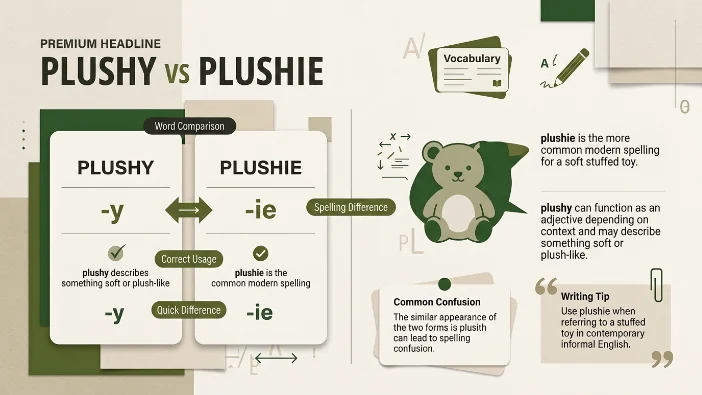
The short answer is that both “plushy” and “plushie” are acceptable spellings, though “plushie” is more commonly used today. “Plushy” traditionally refers to something soft and luxurious in texture, while “plushie” specifically describes a soft stuffed toy. Both spellings have gained popularity in online communities, but “plushie” has become the preferred spelling among collectors and in modern internet culture.
If you’ve ever shopped for stuffed animals online or browsed collector forums, you’ve probably encountered both “plushy” and “plushie” and wondered which one is correct. It’s a common confusion that even native English speakers stumble over, and the answer isn’t as straightforward as you might expect.
Both terms refer to soft, stuffed toys that many of us grew up with. However, understanding the subtle differences between these spellings can help you communicate more clearly, whether you’re writing product descriptions, chatting with fellow collectors, or creating content about these beloved toys. In this comprehensive guide, we’ll explore the nuances between “plushy” and “plushie,” when to use each version, and why word choice matters in different contexts.
What’s the Difference Between Plushy and Plushie?
At its core, the difference between “plushy” and “plushie” comes down to usage rather than meaning. Both words refer to soft stuffed toys, but they’ve evolved along different paths in the English language.
“Plushy” has roots as an adjective describing something soft, luxurious, or plush in texture. When used as a noun, it refers to a stuffed toy made from plush fabric. “Plushie,” on the other hand, emerged more recently as a noun specifically for soft toys, gaining particular traction in online communities, gaming culture, and among collectors.
Comparison Table
| Aspect | Plushy | Plushie |
|---|---|---|
| Meaning | Soft, luxurious texture; stuffed toy | Soft stuffed toy specifically |
| Part of Speech | Both adjective and noun | Primarily noun |
| Primary Context | Describing texture or older usage | Modern collector and online communities |
| Common Usage | Less common today, more formal | More common, especially among younger speakers |
| Example | “This plushy blanket feels amazing.” | “I bought a new plushie for my collection.” |
| Popularity | Declining in noun usage | Increasing, especially online |
The key takeaway here is that while both words are understood and accepted, “plushie” has become the go-to term in modern English for stuffed toys, particularly in informal contexts and online spaces. “Plushy” carries a more traditional feel and often appears when describing texture rather than the toy itself.
Is This a Grammar, Vocabulary, or Usage Issue?
This is primarily a usage issue, though it sits at the intersection of vocabulary and spelling. Let’s break it down:
Grammar Classification: Neither “plushy” nor “plushie” creates a grammatical error. Both function as nouns when referring to toys and adjectives when describing texture (though “plushy” has this dual role more naturally).
Vocabulary Difference: The vocabulary difference between these words is minimal in everyday conversation. However, in professional or academic writing, “plushy” appears more frequently as an adjective describing texture, while “plushie” remains firmly in the noun category for toys.
Usage Difference: This is where the real distinction lies. “Plushie” has become the standard term in online communities, social media, and casual conversation. “Plushy” still appears in more formal contexts, product descriptions that emphasize texture, and among older speakers who have used the term for decades.
Interchangeability: In most casual contexts, these words are fully interchangeable. However, in professional writing about textiles or product descriptions, “plushy” may be preferred when emphasizing the softness or luxury of the material. In collector communities, “plushie” is almost universally preferred.
Educational Context
In educational settings, teachers might use “plushy” when describing textures in art or design classes. This fabric has a plushy feel,” an art teacher might say. In English or creative writing classes, “plushie” would appear in students’ narratives about their childhood toys.
Professional Context
In business writing, especially in retail and manufacturing, “plushy” appears more frequently, particularly in technical specifications or material descriptions. “The plushy exterior provides superior comfort,” reads more professionally than “the plushie exterior” in product documentation.
Everyday Context
In daily conversation, “plushie” dominates. I’m taking my plushie to the hospital” sounds natural to most English speakers, while “I’m taking my plushy” might sound slightly dated or regional.
Practical Takeaway: Use “plushie” for stuffed toys in informal contexts and “plushy” when describing soft textures or in more formal writing.
Understanding Plushy
Meaning
“Plushy” originally emerged as an adjective describing something soft, luxurious, and comfortable, similar to plush fabric. Over time, it evolved into a noun referring to soft stuffed toys. Think of it as describing both the texture and the object itself.
Pronunciation
/ˈplʌʃ.i/ – The same pronunciation applies to both “plushy” and “plushie,” adding to the confusion. The “sh” sound is soft, and the final “y” or “ie” creates a long “e” sound at the end.
Part of Speech
- Adjective: Describing texture or softness
- Noun: Referring to a stuffed toy
Common Collocations
- Plushy fabric
- Plushy blanket
- Plushy texture
- Plushy surface
- Plushy feel
Typical Sentence Patterns
- Adjective usage: The [blank] has a plushy feel.
- Noun usage: I bought a plushy at the store.
Examples
Workplace Example:
“The new office chairs have a plushy cushion that makes long work hours more comfortable.” (Adjective usage)
Academic Example:
“Researchers studied the plushy texture of synthetic fibers and their impact on consumer comfort perception.” (Adjective usage in formal context)
Technology Example:
“The virtual reality headset features a plushy interior lining for extended gaming sessions.” (Adjective usage in product description)
Email Example:
“Dear Team, I’ve ordered new plushy seating for the conference room. Please let me know your delivery preferences.” (Adjective usage in professional communication)
Daily Conversation Example:
“My grandmother still has the plushy bear she gave me when I was three years old.” (Noun usage)
Learner Mistake:
❌ Incorrect: “I love sleeping with my plushy bear because it so soft.”
✅ Correct: “I love sleeping with my plushy bear because it’s so soft.”
Mini Recap: “Plushy” works well as both an adjective describing soft textures and as a noun for stuffed toys. It leans slightly more formal and has been in use longer than “plushie.”
Understanding Plushie
Meaning
“Plushie” emerged as a noun specifically for soft, stuffed toys, particularly in online communities, gaming culture, and among younger generations. It’s more specific than “plushy” and rarely appears as an adjective.
Pronunciation
/ˈplʌʃ.i/ – Yes, it sounds exactly the same as “plushy”! This identical pronunciation contributes significantly to the spelling confusion.
Part of Speech
Noun Only: Unlike “plushy,” “plushie” functions exclusively as a noun. You wouldn’t describe a blanket as “plushie” – you’d use “plushy” instead.
Common Collocations
- Collectible plushie
- Custom plushie
- Giant plushie
- Anime plushie
- Handmade plushie
Typical Sentence Patterns
- I collect [blank] plushies.
- My favorite plushie is…
- The plushie features…
Examples
Workplace Example:
“Our company mascot plushies have become popular promotional items at trade shows.” (Business context, product promotion)
Academic Example:
“The study examined how children’s attachment to plushies affects emotional development in early childhood.” (Academic research context)
Technology Example:
“Gamers can purchase in-game character plushies through the official merchandise store.” (Gaming/technology context)
Email Example:
“Hi everyone, the limited edition plushies have arrived! Please pick up your preorders from the reception desk.” (Professional communication about products)
Daily Conversation Example:
“I’ve been collecting Pokémon plushies since I was eight years old.” (Casual conversation)
Learner Mistake:
❌ Incorrect: “I bought a plushie blanket for my new apartment.”
✅ Correct: “I bought a plushy blanket for my new apartment.” (Remember, “plushie” is only for toys!)
Mini Recap: “Plushie” is the modern, informal choice for soft stuffed toys, especially in online communities and casual conversation. It’s purely a noun, unlike its counterpart.
When Not to Use Each Word
Understanding when not to use these words can save you from common mistakes.
When to Avoid “Plushy”
1. Describing a toy in modern, informal context
Stick with “plushie” if you’re posting in online collector communities or speaking casually about stuffed toys. “My new plushy” might sound slightly outdated in these spaces.
2. Product descriptions targeting younger audiences
If you’re marketing to teens or young adults, “plushy” might feel less appealing. “Check out our new plushie collection!” resonates better with modern consumers.
3. When referring to digital or virtual items
In gaming contexts, “plushie” is the standard. “I need that in-game plushie!” sounds natural, while “plushy” seems out of place.
4. In online communities and social media
The internet has firmly embraced “plushie.” Using “plushy” in these spaces might mark you as less connected to the community.
5. In collector terminology
Collectors almost universally use “plushie.” “I’m looking for rare 1990s plushies” is standard terminology.
6. When distinguishing from other plush items
Plushie” specifically means toy, while “plushy” might refer to any plush item. Use “plushie” when you need to be specific about the object being a toy.
When to Avoid “Plushie”
1. Describing textures
Never use “plushie” to describe how something feels. “The plushie sofa” is incorrect – use “plushy” instead.
2. In formal business writing
Technical specifications, product documentation, and formal reports should use “plushy” when describing materials. “The upholstery has a plushy feel” sounds professional.
3. Academic or scientific contexts
Research papers and scholarly articles should use “plushy” for textural descriptions. “The plushy surface texture” is appropriate; “plushie” would seem informal.
4. When adjective form is needed
Remember that “plushie” is a noun only. If you need an adjective, use “plushy” or “plush.”
5. Professional retail contexts
When describing the quality of plush materials in product descriptions for adults or luxury items, “plushy” feels more sophisticated.
6. Writing about non-toy plush items
Don’t use “plushie” for blankets, pillows, upholstery, or any other plush item that isn’t a stuffed toy.
Common Mistakes Table
| Correct Sentence | Incorrect Sentence | Explanation |
|---|---|---|
| I bought a new plushie at the convention. | I bought a new plushy at the convention. | In modern collector contexts, “plushie” is preferred. |
| This blanket feels so plushy. | This blanket feels so plushie. | “Plushie” is only for toys; use “plushy” for textures. |
| My Pokémon plushie collection is growing. | My Pokémon plushy collection is growing. | “Plushie” is standard for character-based stuffed toys. |
| The sofa’s plushy cushions are comfortable. | The sofa’s plushie cushions are comfortable. | “Plushie” cannot be used as an adjective. |
| Children often sleep with their favorite plushies. | Children often sleep with their favorite plushies. | Both correct in casual contexts, but “plushies” is more common. |
| These plushies are handmade in the USA. | These plushies are handmade in the USA. | “Plushie” is correct for products labeled as toys. |
Decision Box
If you mean a soft stuffed toy in informal conversation → Use plushie
If you mean a soft texture or material → Use plushy
If you’re writing product descriptions for general audiences → Use plushie (for toys)
If you’re writing technical or formal documentation → Use plushy (for textures)
If you’re in an online community or forum → Use plushie
If you’re describing a blanket, furniture, or fabric → Use plushy
Real World Examples
Office Communication
“Marketing requested 500 custom plushies for the upcoming product launch. Can you confirm the production timeline?” – Professional correspondence discussing promotional merchandise.
Business Email
“Dear Supplier, We need to clarify that our plushy fabric order refers to the material quality, not the toys. The plushies (stuffed toys) are a separate order.” – Business communication distinguishing between the two usages.
School or University
“The child development study requires participants to bring their favorite plushie from home. Students should document the plushy texture of the materials used in its construction.” – Academic setting using both terms correctly.
Customer Support
“Thank you for contacting us about your defective plushie. We’ll send a replacement immediately. The manufacturer confirms the plushy exterior meets all safety standards.” – Customer service addressing a product issue.
Technology
“The new gaming console comes with a collectible character plushie. The controller features plushy grip textures for comfortable extended play.” – Tech product description using both terms correctly.
Daily Conversation
“My grandma still has the plushy bunny she gave me as a baby. Now I’m buying plushies for my own kids!” – Natural conversation showing the evolution of the term.
Artificial Intelligence
“AI-powered chatbots can help customers choose the perfect plushie based on their preferences. The virtual assistant asks about texture preferences, recommending plushy fabrics for sensitive skin.” – Modern technology application.
Plushy and Plushie in Modern Technology
In today’s digital landscape, both “plushy” and “plushie” have found new contexts:
Artificial Intelligence: AI systems trained on modern internet data use “plushie” as the primary term for stuffed toys, but may still encounter “plushy” in older texts and professional documents.
Virtual Assistants: Voice search optimization has made spelling distinctions less critical, as both words sound identical. However, AI text generation tools need to understand the context to choose the correct spelling.
Chatbots: E-commerce chatbots must distinguish between “plushy” (texture descriptions) and “plushie” (toy products) to provide accurate search results.
Software: Inventory management systems typically use “plushie” for toy categories but “plushy” in material specifications. This distinction helps maintain clear product categorization.
Business Tools: Marketing analytics tools track both terms as separate keywords, with “plushie” showing higher search volumes in consumer searches and “plushy” appearing more in B2B contexts.
Word Origin and History
Plushy” traces its roots to the French word “pluche,” meaning a soft fabric with a long pile. “Plush” entered English in the 16th century, and by the 17th century, “plushy” emerged as an adjective describing something like plush fabric.
Plushie” likely developed as an American English variant in the 20th century, gaining particular traction in the 1990s and 2000s. The “-ie” suffix creates a diminutive, friendly feel, making it perfect for describing cute stuffed toys.
Interestingly, the internet age dramatically accelerated “plushie’s” popularity. Online communities, fan cultures, and e-commerce platforms embraced the spelling, and it’s now the preferred term for many younger speakers.
Expert Insight
Having taught English to hundreds of students over the years, I’ve noticed that this particular confusion tends to be less about grammar rules and more about cultural context. When I teach students about these words, I emphasize that both are correct but serve different purposes.
The best approach is to think about your audience and context. Are you talking to a group of collectors in an online forum? Go with “plushie.” Are you describing a high-end sofa to a client? Use “plushy.” This distinction isn’t about right or wrong – it’s about choosing the word that feels most natural in your situation.
I’ve also observed that non-native speakers often worry too much about choosing the “correct” term. In practice, people will understand you regardless of which spelling you choose, as long as the context is clear. The key is consistency – once you’ve chosen your spelling, stick with it in your writing.
Error Prevention Checklist
- ✅ Always use plushie when referring to stuffed toys in casual contexts
- ✅ Always use plushy when describing soft textures or materials
- ✅ Never use plushie as an adjective – it’s a noun only
- ✅ Remember that both words sound identical, so choose based on written context
- ✅ Use plushy in formal business and academic writing about materials
- ✅ Use plushie in online communities, social media, and informal writing
- ✅ When in doubt, check if you’re describing a toy (use plushie) or a texture (use plushy)
- ✅ Consider your audience – younger or casual readers prefer “plushie”
- ✅ Professional contexts like product specs often prefer “plushy”
- ✅ Memorize this memory tip: Toy uses “ie” (plushie), Texture uses “y” (plushy)
Related Grammar Confusions
It’s vs. Its – Confusing these common contractions and possessives creates misunderstandings similar to mixing up plushy and plushie.
Your vs. You’re – Another classic pair that often trips up writers, showing how context clarifies meaning.
Affect vs. Effect – Like our plushy/plushie distinction, these words sound similar but serve different roles in sentences.
Then vs. Than – Understanding whether you’re describing sequence or comparison prevents common errors.
There vs. Their vs. They’re – Multiple words, one sound – similar to the plushy/plushie confusion.
To vs. Too vs. Two – Homophones that require context for correct usage, much like our main topic.
Who vs. Whom – A more formal grammatical distinction that affects writing clarity.
Where vs. Were vs. We’re – Another trio of words that sound similar but have different meanings.
Lose vs. Loose – A common spelling confusion that demonstrates how one letter changes meaning entirely.
Except vs. Accept – These words sound similar but have opposite functions, much like accepting/excepting the different plush terms.
FAQs
Are “plushy” and “plushie” both correct spellings?
Yes, both are legitimate words, but they don’t always serve the same function. Plushie is commonly used as an informal noun for a soft stuffed toy, while plushy is primarily an adjective meaning soft, plush, or toy-like. Context determines which word fits best.
Which spelling should I use for SEO or e-commerce?
For e-commerce content about stuffed toys, plushie is generally the more recognizable consumer term. However, using related terms such as plush toy and stuffed toy can help your content reach a broader audience without relying on a single keyword.
Is “plushie” a real word?
Yes. Plushie is an established informal noun referring to a soft stuffed toy. It is especially common in casual online communities, retail listings, and conversations about collectible or character-based stuffed toys.
What’s the difference between “plushy” and “plush”?
Plush is commonly used as an adjective meaning soft, thick, and luxurious, and it can also be a noun referring to plush fabric. Plushy is an adjective meaning soft or plush-like and is less common. Neither word is simply a different spelling of plushie.
Why do people spell it “plushie” instead of “plushy”?
The -ie ending gives the word a diminutive, informal feel that works naturally for cute or soft toys. Over time, plushie became widely associated specifically with stuffed toys, helping distinguish the noun from plush, which can describe the material or texture.
Can I use “plushie” in formal writing?
Plushie is informal, so stuffed toy or plush toy is usually better for academic, technical, or highly formal writing. In casual content, product descriptions, social media, and consumer-focused writing, plushie is perfectly natural.
Conclusion
The distinction between “plushy” and “plushie” represents a fascinating evolution in English usage. Both words are correct, but they’ve developed distinct roles in modern communication. “Plushy” serves as both an adjective for soft textures and a noun for stuffed toys, leaning toward more formal contexts. “Plushie” has become the darling of internet culture, specifically referring to soft stuffed toys in casual conversations.
Understanding when to use each spelling helps you communicate more effectively with different audiences. Remember the simple rule: toys use “ie” (plushie), and textures use “y” (plushy). This memory aid will serve you well whether you’re writing product descriptions, posting in online forums, or simply describing your favorite childhood companion.
The English language continues to evolve, and “plushie” is a perfect example of how internet culture shapes our vocabulary. Embrace both spellings, use them appropriately, and communicate with confidence.
Read More Related Articles:
- Pronounciation vs Pronunciation | Common Error You Can Avoid In 2026
- Privilege vs Priviledge | Learn the Correct Word Fast In 2026
- Suing or Sueing | Don’t Let This Spelling Trip You Up In 2026

Zoe Chambers works as a content writer at synoseek.com, contributing thoughtful pieces on everyday subjects and ideas. She writes in a simple, grounded way, often drawing from real-world experiences. Her focus is on keeping content natural, clear and easy for readers to connect with.
1 thought on “Plushy or Plushie | Simple Guide to the Difference In 2026”