Quick Answer
The phrase “happy to announce” is a common way to share exciting news, but it can feel overused in professional writing. It means you are pleased to share a new development, update, or achievement with your audience.Strong alternatives include: We are pleased to inform you, We are excited to share, It is with great pleasure that we announce, We are proud to reveal, We are delighted to let you know.
Whether you are writing a company-wide email, posting on LinkedIn, opening a speech, or sending a press release, the way you frame your announcement sets the entire tone of your message. Using the same phrase every time makes your communication feel robotic and uninspired. This guide gives you 40+ Other Ways to Say Happy to Announce organized by tone, situation, and channel so you always have exactly the right phrase at your fingertips.
What Users Are Looking For Other Ways to Say Happy to Announce
The Real Search Intent Behind This Query
When someone searches for other ways to say happy to announce, they are usually not just looking for a synonym. They want the right phrase for a specific situation. A job offer letter needs a different tone than a casual team chat message. A press release opening sounds nothing like a LinkedIn post. People searching this phrase are professionals, students, writers, and communicators who want to sound natural, polished, and appropriate for their audience.
Spoken vs Written Usage
In spoken English, phrases like “I am thrilled to share” or “I have some exciting news” feel warm and natural. In written English, especially formal documents, phrases like “We are pleased to inform you” or “It is with great pleasure that we announce” carry more authority. Understanding this difference is what separates native-sounding communication from awkward, over-translated writing.
Formal vs Informal Communication Intent
Informal expressions in English like “Guess what?” or “Big news!” are perfect for team chats or social media. Professional English phrases like “We are honored to announce” or “We wish to inform you” belong in boardroom emails and official statements. This article covers the full range so you can pick based on your actual context, not just gut feeling.
Tone Ladder System
How to Read the Tone Levels
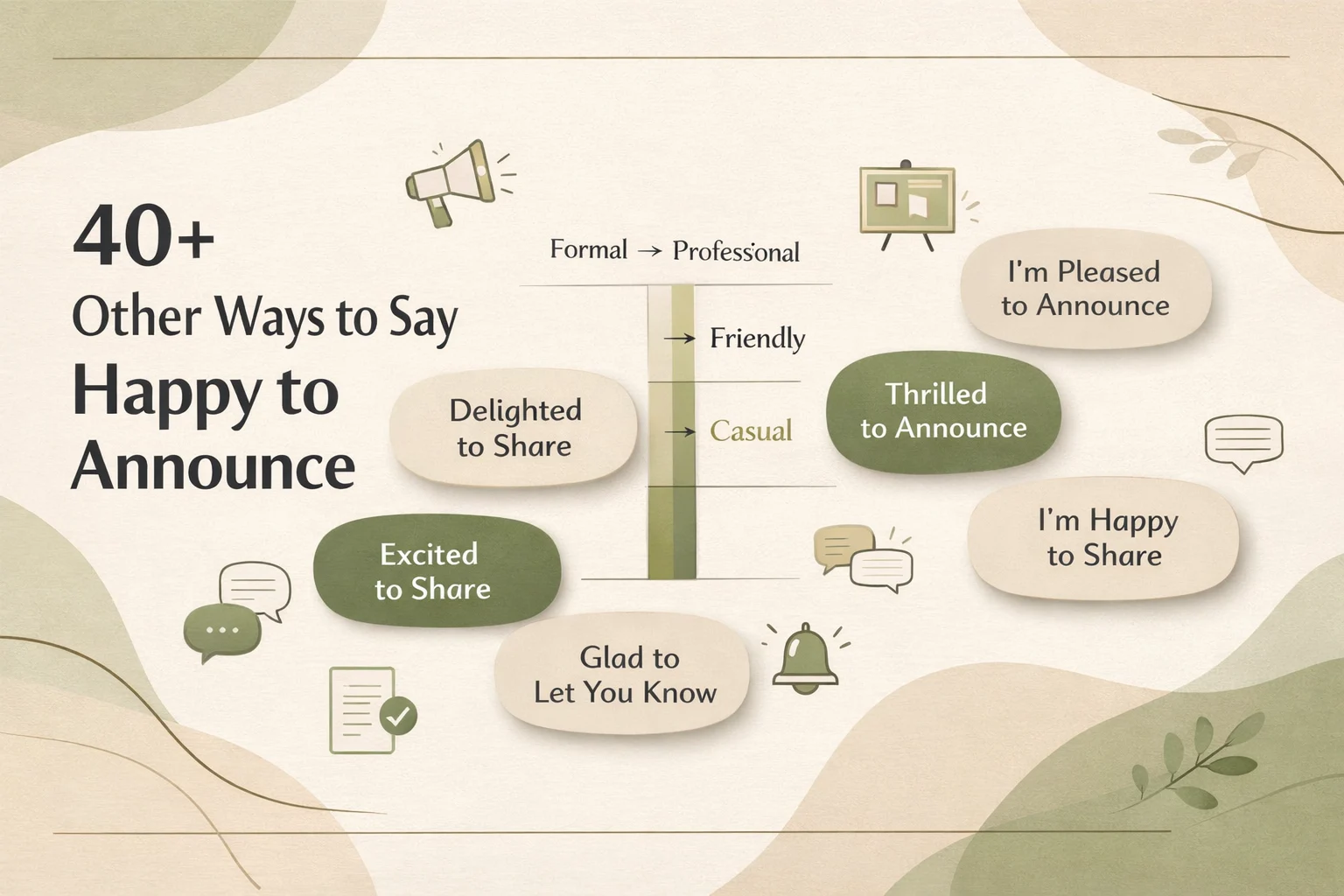
Every phrase in English sits on an invisible scale from very formal to very informal. Using a very formal phrase in a casual conversation sounds stiff. Using a casual phrase in a board presentation sounds unprofessional. The tone ladder below helps you place each alternative in its natural zone before you use it.
Very Formal
Reserved for press releases, legal announcements, academic publications, and official statements. Examples: “It is our honor to announce,” “We hereby inform you,” “We are privileged to present.”
Formal
Used in professional emails, company-wide announcements, and business correspondence. Examples: “We are pleased to inform you,” “We are delighted to announce,” “We wish to share.”
Neutral
Works in both professional and casual settings. Safe for most communication channels. Examples: “We are excited to share,” “We want to let you know,” “Here is some great news.”
Casual
Best for team updates, internal messages, and friendly professional relationships. Examples: “We have some exciting news,” “Big news from our team,” “We are thrilled to tell you.”
Informal
Suitable for social media, personal messages, and relaxed team environments. Examples: “Guess what?”, “We have an announcement!”, “Something exciting just happened.”
Table: Tone Classification of Key Phrases
| Phrase | Tone Level | Formality | Best Situation |
|---|---|---|---|
| It is our honor to announce | Very Formal | High | Press releases, ceremonies |
| We are pleased to inform you | Formal | High | Business emails, HR communications |
| We are delighted to announce | Formal | High | Company-wide announcements |
| We are excited to share | Neutral | Medium | LinkedIn posts, team updates |
| We want to let you know | Neutral | Medium | Internal emails, newsletters |
| We are thrilled to tell you | Casual | Low-Medium | Team chats, friendly announcements |
| Big news from our side | Casual | Low | Social media, Slack messages |
| Guess what? | Informal | Very Low | Personal messages, casual team chats |
| We are proud to reveal | Formal | High | Product launches, award announcements |
| We have some exciting news | Casual | Low-Medium | Newsletters, team meetings |
Quick Selection Guide
Choose the Right Phrase Instantly
Job interview or formal letter: We are pleased to inform you / It is with great pleasure that we announce
Professional email: We are delighted to announce / We are honored to share
Networking or LinkedIn post: We are excited to share / We are proud to reveal
Casual conversation or team chat: We have some exciting news / Big news from our team
Press release or official statement: It is our honor to announce / We hereby inform you
Social media post: Something exciting just happened / Big announcement ahead
Real-Life Conversation Transformations
Job Interview Scenario
Before: “I am happy to announce that I have been selected for the final round.”
After: “I am pleased to share that I have been selected for the final round.”
Why it works: “Pleased to share” sounds more composed and professional in a formal interview context.
Networking Event Scenario
Before: “Happy to announce that our startup just closed its seed round.”
After: “We are excited to share that our startup just closed its seed round.”
Why it works: “Excited to share” sounds human and enthusiastic without being too casual for a business crowd.
Email Scenario
Before: “Happy to announce that we are launching our new product line next month.”
After: “We are delighted to inform you that our new product line will be launching next month.”
Why it works: “Delighted to inform you” gives the email a polished, professional tone that builds credibility with the reader.
Casual Conversation Scenario
Before: “Happy to announce I got promoted.”
After: “We have some exciting news I just got promoted!”
Why it works: The casual structure matches the conversational setting and sounds more natural among friends or colleagues.
40+ Other Ways to Say Happy to Announce
1. We Are Pleased to Inform You
Meaning: A formal way to share positive news with a professional audience.
Explanation: This phrase is a staple in business communication because it is clear, respectful, and confident. It does not oversell the emotion but still signals good news.
Example: We are pleased to inform you that your application has been approved.
Tone: Formal
Best Use: HR letters, business emails, official correspondence
Worst Use: Casual team chats or social media posts
Context Variability: Works across industries and organizational levels
2. We Are Delighted to Announce
Meaning: Signals excitement and positive energy while remaining professional.
Explanation: “Delighted” adds warmth to a formal announcement. It is slightly more enthusiastic than “pleased” but still appropriate for formal writing.
Example: We are delighted to announce the opening of our second location in Chicago.
Tone: Formal
Best Use: Company announcements, newsletters, press releases
Worst Use: Legal documents where neutral language is preferred
Context Variability: High works across corporate, nonprofit, and academic settings
3. We Are Excited to Share
Meaning: A warm, human way to open an announcement with energy.
Explanation: This phrase bridges formal and casual perfectly. It sounds enthusiastic without being unprofessional, making it ideal for LinkedIn posts, newsletters, and team updates.
Example: We are excited to share that our team has doubled in size this year.
Tone: Neutral
Best Use: LinkedIn, internal announcements, newsletters
Worst Use: Legal notices or somber communications
Context Variability: Very high suits most modern professional environments
4. It Is With Great Pleasure That We Announce
Meaning: A ceremonial, high-formality phrase used for major announcements.
Explanation: This structure is common in award ceremonies, graduation announcements, and major corporate milestones. It adds gravitas to the message.
Example: It is with great pleasure that we announce the recipient of this year’s Excellence Award.
Tone: Very Formal
Best Use: Ceremonies, award presentations, major milestone announcements
Worst Use: Casual or quick updates
Context Variability: Low reserve for high-stakes formal moments
5. We Are Proud to Reveal
Meaning: Emphasizes a sense of accomplishment alongside the announcement.
Explanation: “Proud to reveal” works well for product launches, project completions, or team achievements because it ties the announcement to a sense of earned success.
Example: We are proud to reveal our redesigned platform, built entirely around user feedback.
Tone: Formal to Neutral
Best Use: Product launches, portfolio reveals, achievement announcements
Worst Use: Routine internal updates
Context Variability: Medium strongest in product or achievement contexts
6. We Are Honored to Announce
Meaning: Suggests a high level of respect and significance around the news.
Explanation: Using “honored” implies the announcement carries special weight. It signals to the reader that this news matters deeply to the organization.
Example: We are honored to announce the appointment of Dr. Sarah Lin as our new Chief Medical Officer.
Tone: Very Formal
Best Use: Leadership appointments, partnerships, major recognitions
Worst Use: Minor product updates or casual news
Context Variability: Low to Medium reserved for news with genuine significance
7. We Are Thrilled to Let You Know
Meaning: A friendly, enthusiastic way to open a positive message.
Explanation: “Thrilled” expresses high excitement, and pairing it with “let you know” keeps it conversational. Great for companies with a friendly brand voice.
Example: We are thrilled to let you know that your order has been shipped and is on its way.
Tone: Casual to Neutral
Best Use: Customer emails, team messages, newsletters
Worst Use: Very formal corporate announcements
Context Variability: High especially strong in customer-facing communication
8. We Wish to Inform You
Meaning: A polite, measured phrase used in formal written communication.
Explanation: This phrase is neutral in emotion but high in professionalism. It does not signal whether the news is good or bad, making it useful for a wide range of formal announcements.
Example: We wish to inform you of an important update to our service terms.
Tone: Formal
Best Use: Policy updates, formal correspondence, academic communications
Worst Use: Exciting product launches where enthusiasm is needed
Context Variability: High in formal environments
9. We Have Some Exciting News
Meaning: A direct, casual opener that creates immediate curiosity.
Explanation: Short and punchy, this phrase grabs attention fast. It works especially well at the start of a speech or team meeting where you want people to lean in before you drop the news.
Example: We have some exciting news we just secured a major partnership with TechCorp.
Tone: Casual
Best Use: Team meetings, social media, informal announcements
Worst Use: Formal emails or press releases
Context Variability: High in casual and semi-professional settings
10. It Is Our Pleasure to Announce
Meaning: A formal but warm alternative that keeps professionalism intact.
Explanation: This phrase is common in hospitality, education, and corporate settings. It signals that the speaker or organization takes genuine satisfaction in sharing the news.
Example: It is our pleasure to announce that the new community center will open its doors this spring.
Tone: Formal
Best Use: Community announcements, formal emails, public communications
Worst Use: Informal team chats
Context Variability: Medium to High
11. We Are Glad to Share
Meaning: A simple, warm phrase that feels natural and approachable.
Explanation: “Glad” is softer than “delighted” or “thrilled,” giving this phrase a genuine, low-key warmth. It works when you want to sound sincere without overdoing the enthusiasm.
Example: We are glad to share that our customer satisfaction scores have hit an all-time high.
Tone: Neutral
Best Use: Internal reports, newsletters, team emails
Worst Use: High-energy product launches
Context Variability: High
12. We Are Overjoyed to Announce
Meaning: Communicates exceptional excitement and emotional investment.
Explanation: This phrase is strong and emotive. Use it only for announcements that genuinely warrant a high level of celebration, such as a major milestone, award, or long-awaited achievement.
Example: We are overjoyed to announce that we have officially reached one million customers worldwide.
Tone: Formal to Casual depending on delivery
Best Use: Milestone announcements, major achievements
Worst Use: Routine updates where the level of emotion would feel exaggerated
Context Variability: Medium most powerful when the news genuinely matches the emotion
13. We Are Privileged to Present
Meaning: A ceremonial phrase that adds distinction to a formal presentation.
Explanation: This phrase is common in academic, nonprofit, and award settings. It signals that what is being shared carries importance and that the speaker considers it a privilege to deliver the news.
Example: We are privileged to present the findings of our three-year climate research study.
Tone: Very Formal
Best Use: Academic presentations, award ceremonies, research launches
Worst Use: Business emails or casual announcements
Context Variability: Low best kept for genuinely ceremonial contexts
14. We Are Excited to Unveil
Meaning: Creates a sense of reveal and anticipation around the announcement.
Explanation: “Unveil” suggests that something has been hidden or in development and is now being shown for the first time. It is particularly powerful for product launches, brand reveals, and major project completions.
Example: We are excited to unveil our brand-new mobile app, built from the ground up for speed and simplicity.
Tone: Neutral to Casual
Best Use: Product launches, rebranding, event reveals
Worst Use: Announcements that do not involve something being revealed for the first time
Context Variability: Medium strongest in marketing and product contexts
15. We Are Happy to Report
Meaning: A structured phrase common in reporting and updates.
Explanation: “Happy to report” works well in business reports, investor updates, and performance reviews where you are sharing results. It sounds organized and professional without being stiff.
Example: We are happy to report that Q3 revenue exceeded projections by 18 percent.
Tone: Neutral to Formal
Best Use: Business reports, investor communications, performance summaries
Worst Use: Emotional or personal announcements
Context Variability: High in data-driven communication
16. We Are Proud to Announce
Meaning: Ties the announcement to a sense of achievement and organizational pride.
Explanation: This phrase works best when the news reflects hard work, values, or a significant accomplishment. It gives the reader a sense that this was earned, not just delivered.
Example: We are proud to announce that we have been certified as a Great Place to Work for the third year in a row.
Tone: Formal to Neutral
Best Use: Certifications, awards, team achievements
Worst Use: Routine operational updates
Context Variability: High
17. We Would Like to Inform You
Meaning: A polite, measured way to open a formal message.
Explanation: Slightly more formal than “we want to let you know,” this phrase is very common in corporate and government communication. It keeps a respectful distance without sounding cold.
Example: We would like to inform you that our office will be closed on December 26th in observance of the holiday.
Tone: Formal
Best Use: Official notices, policy emails, HR communications
Worst Use: Social media or casual messages
Context Variability: High in formal written contexts
18. We Are Eager to Share
Meaning: Shows enthusiasm and a desire to communicate the news quickly.
Explanation: “Eager” gives this phrase energy and forward momentum. It signals that the organization is genuinely enthusiastic about what it is sharing, not just going through the motions.
Example: We are eager to share the results of our community impact survey with all stakeholders.
Tone: Neutral
Best Use: Stakeholder communications, reports, partnerships
Worst Use: Very formal or somber communications
Context Variability: Medium to High
19. Big News
Meaning: A short, punchy opener that creates instant attention.
Explanation: Two words that do a lot of work. Perfect for social media captions, email subject lines, and the opening slide of a presentation. It sets a high-energy tone immediately.
Example: Big news we are officially expanding to three new markets this year.
Tone: Informal
Best Use: Social media, casual team announcements, email subject lines
Worst Use: Formal business emails or official reports
Context Variability: Very high in digital and social media contexts
20. We Are Glad to Inform You
Meaning: A gentle, friendly alternative to more formal announcement phrases.
Explanation: This phrase lands between formal and casual. It is warm but not overly enthusiastic, making it a reliable choice when you need to share positive news without overselling the emotion.
Example: We are glad to inform you that your request has been reviewed and approved.
Tone: Neutral to Formal
Best Use: Customer service emails, approval notifications, HR responses
Worst Use: High-energy marketing announcements
Context Variability: High
21. We Are Excited to Introduce
Meaning: Used when presenting a new person, product, or initiative for the first time.
Explanation: “Introduce” signals a first-time reveal, giving the announcement a clean, fresh energy. It is common in team onboarding announcements, product launches, and partnership reveals.
Example: We are excited to introduce our newest team member, James Rivera, who joins us as Head of Operations.
Tone: Neutral
Best Use: Team introductions, product launches, initiative reveals
Worst Use: Updates about things that already exist
Context Variability: High
22. We Are Thrilled to Announce
Meaning: A high-energy phrase that signals exceptional enthusiasm.
Explanation: “Thrilled” is one step above “excited” on the enthusiasm scale. It is suitable when the news is genuinely significant and the organization wants to mirror that energy in the language.
Example: We are thrilled to announce that our documentary series has been selected for the international film festival.
Tone: Casual to Neutral
Best Use: Awards, partnerships, major milestones
Worst Use: Routine operational updates
Context Variability: High in brand and culture communication
23. We Take Great Pride in Announcing
Meaning: Emphasizes organizational identity and values tied to the announcement.
Explanation: This phrase signals that the announcement is not just news but a reflection of who the organization is. It adds a layer of meaning beyond the surface-level update.
Example: We take great pride in announcing our fifth consecutive year of carbon-neutral operations.
Tone: Formal
Best Use: Sustainability milestones, diversity achievements, certification announcements
Worst Use: Quick team updates
Context Variability: Medium strongest when the news reflects values or mission
24. We Are Pleased to Share
Meaning: A balanced, professional phrase suitable for a wide range of communications.
Explanation: This phrase is one of the most versatile on this list. It is warm enough to feel genuine but formal enough to use in professional settings. A reliable go-to for most business announcements.
Example: We are pleased to share the highlights from our annual stakeholder report.
Tone: Formal to Neutral
Best Use: Reports, newsletters, formal emails
Worst Use: Informal social media posts
Context Variability: Very High
25. Exciting News
Meaning: A crisp, high-impact opener for social media and short-form communication.
Explanation: Like “Big News,” this phrase is designed to stop the scroll. It works best as a standalone hook before you follow with the actual announcement. Short, direct, and effective.
Example: Exciting news our new collection is now available in all stores worldwide.
Tone: Informal
Best Use: Social media, email subject lines, casual announcements
Worst Use: Formal documents or reports
Context Variability: Very High in digital marketing
26. We Are Happy to Share
Meaning: A warm, everyday professional phrase for sharing positive news.
Explanation: This is the closest plain-language alternative to “happy to announce.” It is simple, approachable, and appropriate for most professional emails and newsletters.
Example: We are happy to share that our volunteer program helped over 500 families this year.
Tone: Neutral
Best Use: Internal communications, newsletters, stakeholder updates
Worst Use: Formal press releases
Context Variability: Very High
27. We Hereby Announce
Meaning: A very formal phrase used in legal, official, or ceremonial contexts.
Explanation: “Hereby” signals a formal declaration. This phrase should only appear in legal documents, official statements, or highly structured formal communications. Using it in a casual context will feel jarring.
Example: We hereby announce the merger of Brightside Technologies and DataCore Solutions, effective January 1st.
Tone: Very Formal
Best Use: Legal notices, official declarations, formal public announcements
Worst Use: Anything casual, internal, or conversational
Context Variability: Very Low highly situational
28. We Are Delighted to Share
Meaning: A refined, enthusiastic phrase that carries warmth without being casual.
Explanation: Similar to “delighted to announce” but slightly more conversational. It fits well in situations where you want to share good news in a way that feels genuinely warm rather than stiff.
Example: We are delighted to share that our foundation has awarded 32 scholarships this semester.
Tone: Formal to Neutral
Best Use: Nonprofit communications, formal emails, stakeholder updates
Worst Use: Quick social media posts
Context Variability: High
29. Allow Us to Announce
Meaning: A slightly ceremonial phrase that gives the announcement a formal flourish.
Explanation: “Allow us to” is a polite, slightly archaic construction that adds elegance to an announcement. It is used in formal presentations, product unveilings, and ceremonial communications.
Example: Allow us to announce the grand opening of our flagship store in New York City.
Tone: Formal
Best Use: Events, grand openings, product presentations
Worst Use: Everyday team updates or quick emails
Context Variability: Low to Medium
30. We Are Happy to Inform You
Meaning: A clear, direct phrase that delivers positive news with warmth.
Explanation: This phrase is the closest traditional substitute for “happy to announce” in formal written communication. It is clean, professional, and easy to read.
Example: We are happy to inform you that your subscription has been successfully renewed.
Tone: Neutral to Formal
Best Use: Customer emails, HR notifications, service updates
Worst Use: Major press releases or formal public statements
Context Variability: Very High
31. We Have Wonderful News
Meaning: An emotionally warm opener that sets a positive tone immediately.
Explanation: “Wonderful” carries genuine warmth. This phrase works well for heartfelt announcements like charitable achievements, community milestones, or deeply personal organizational news.
Example: We have wonderful news the treatment trial has shown remarkable results in all three patient groups.
Tone: Casual to Neutral
Best Use: Healthcare communication, nonprofit updates, community announcements
Worst Use: Formal corporate or legal communications
Context Variability: Medium
32. We Are Pleased to Present
Meaning: Common in academic, event, and product presentation contexts.
Explanation: “Present” implies something is being formally shown or delivered to an audience. It is slightly more structured than “share” and fits well in presentations, conferences, and award programs.
Example: We are pleased to present the keynote speaker for this year’s Innovation Summit.
Tone: Formal
Best Use: Events, conferences, award programs, academic settings
Worst Use: Casual or short-form digital content
Context Variability: Medium strongest in live or structured presentation settings
33. This Is an Exciting Update
Meaning: A framing statement that positions the announcement as notable before revealing it.
Explanation: Instead of announcing from your own perspective, this phrase points to the news itself as exciting. It is slightly less self-referential, which can feel more objective and engaging.
Example: This is an exciting update we have officially launched our API for all developer partners.
Tone: Casual to Neutral
Best Use: Developer blogs, newsletters, internal tech announcements
Worst Use: Formal reports or legal announcements
Context Variability: High in tech and startup culture
34. We Are Glad to Report
Meaning: A measured, professional phrase suited to reporting positive outcomes.
Explanation: Similar to “happy to report” but slightly softer. Works well in business reviews, board updates, and annual reports where the tone needs to be informative rather than celebratory.
Example: We are glad to report that all safety compliance targets were met ahead of schedule this quarter.
Tone: Formal to Neutral
Best Use: Business reports, compliance updates, stakeholder briefings
Worst Use: Brand marketing or customer-facing excitement campaigns
Context Variability: High in corporate reporting
35. We Are Excited to Report
Meaning: Combines the energy of enthusiasm with the structure of formal reporting.
Explanation: A good middle ground for investor updates, annual reports, and performance announcements where you want to sound data-driven but still convey genuine excitement about the results.
Example: We are excited to report that user engagement has grown by 45 percent in the past six months.
Tone: Neutral
Best Use: Performance reports, investor updates, quarterly announcements
Worst Use: Very formal or ceremonial announcements
Context Variability: High in data-driven business communication
36. We Are Pleased to Reveal
Meaning: Signals a deliberate disclosure something that was previously unknown or hidden.
Explanation: “Reveal” adds a layer of intentionality. It suggests the news was kept under wraps and is now being officially disclosed. Works well for strategic announcements and major reveals.
Example: We are pleased to reveal the finalists for this year’s Innovation Award.
Tone: Formal
Best Use: Award reveals, strategic announcements, partnership disclosures
Worst Use: Routine updates or casually shared news
Context Variability: Medium
37. We Cannot Wait to Tell You
Meaning: A conversational phrase that expresses genuine excitement about sharing the news.
Explanation: This phrase creates a sense of anticipation from the organization’s perspective. It is energetic, human, and casual best suited for brand voice content, social media, or customer-facing emails with a friendly tone.
Example: We cannot wait to tell you about the biggest feature update we have ever released.
Tone: Casual
Best Use: Social media, brand newsletters, product launch emails
Worst Use: Formal business or HR communications
Context Variability: High in consumer-facing digital content
38. There Is Something We Would Like to Share
Meaning: A gentle, low-key way to open an announcement without heavy emphasis.
Explanation: This phrase is best for announcements that are positive but not necessarily high-energy. It invites the reader in softly before delivering the news, which makes it well-suited for sensitive or nuanced communications.
Example: There is something we would like to share with our community about the changes happening within our organization.
Tone: Neutral
Best Use: Community updates, sensitive organizational news, thoughtful announcements
Worst Use: High-energy campaigns or celebratory moments
Context Variability: Medium
39. We Are Delighted to Inform You
Meaning: Combines warmth and formality in a single smooth phrase.
Explanation: A slightly warmer version of “pleased to inform you,” this phrase suits formal communication where you still want the reader to feel personally acknowledged and valued.
Example: We are delighted to inform you that your proposal has been accepted and will move into the next stage of review.
Tone: Formal
Best Use: Acceptance letters, award notifications, formal approvals
Worst Use: Casual team updates
Context Variability: High in formal written communication
40. We Have an Announcement to Make
Meaning: A neutral, straightforward way to signal that news is coming.
Explanation: This phrase functions as a lead-in rather than an announcement opener with emotion. It works best when spoken aloud, at the start of a meeting, event, or live broadcast. In writing, it can feel too vague unless followed immediately by the announcement itself.
Example: We have an announcement to make about an exciting change to our product roadmap.
Tone: Neutral
Best Use: Opening a speech, meeting, or live event announcement
Worst Use: Email subject lines or social media captions
Context Variability: Medium strongest in spoken communication
41. We Are Proud to Share
Meaning: Connects an announcement to a deeper sense of organizational values and accomplishment.
Explanation: This phrase is particularly effective when the news reflects community impact, team effort, or long-term dedication. It grounds the announcement in earned pride rather than surface excitement.
Example: We are proud to share that 100 percent of our packaging is now made from recycled materials.
Tone: Formal to Neutral
Best Use: Sustainability, social impact, team achievement announcements
Worst Use: Quick operational updates
Context Variability: High when tied to values-based messaging
42. We Are Pleased to Let You Know
Meaning: A friendly yet professional alternative for formal and semi-formal communication.
Explanation: This phrase reads naturally in both corporate and customer-facing contexts. It is warm without being casual, making it one of the most reliable substitutes for “happy to announce” in email communication.
Example: We are pleased to let you know that your account upgrade has been processed successfully.
Tone: Neutral to Formal
Best Use: Customer emails, account notifications, service confirmations
Worst Use: Formal ceremonies or press releases
Context Variability: Very High
Table: Usage Comparison Table
| Phrase | Spoken Use | Written Use | Context |
|---|---|---|---|
| We are pleased to inform you | Rarely | Frequently | Business emails, formal letters |
| We are excited to share | Often | Often | LinkedIn, newsletters, team updates |
| It is our honor to announce | Rarely | Occasionally | Ceremonies, press releases |
| We are thrilled to let you know | Often | Often | Customer emails, team messages |
| Big news | Often | Often | Social media, casual announcements |
| We are proud to reveal | Sometimes | Often | Product launches, award announcements |
| We hereby announce | Rarely | Occasionally | Legal documents, official declarations |
| We cannot wait to tell you | Often | Often | Brand content, consumer emails |
| We are pleased to share | Sometimes | Very Often | Stakeholder reports, newsletters |
| We have an announcement to make | Very Often | Sometimes | Speeches, live events, meetings |
Email and LinkedIn Ready Expressions
Professional Email Greetings and Announcement Openers
- We are pleased to inform you of an important update to our partnership terms.
- We are delighted to share that our annual report is now available for review.
- We would like to inform you that we have recently achieved ISO certification.
- We are excited to present our updated service offerings for the coming quarter.
- It is our pleasure to announce a new collaboration that will benefit all stakeholders.
LinkedIn Connection and Announcement Messages
- We are excited to share that our team has grown to over 200 employees across four continents.
- Big news: we just closed our Series B funding round and we could not be more thrilled to share this with our network.
- We are proud to announce that our platform has officially surpassed one million active users.
- We are honored to share that we have been recognized as one of the top 50 most innovative companies this year.
Follow-Up Announcement Lines
- We look forward to sharing more details in the coming weeks.
- Stay tuned for a full breakdown of what this announcement means for our customers.
- We will be sharing a detailed walkthrough shortly watch this space.
Native Speaker Insight
What Native Speakers Actually Say
Native English speakers rarely say “happy to announce” in spoken conversation. In meetings and speeches, they are more likely to say “we have some exciting news,” “big announcement,” or simply “here’s the thing we just [news].” The phrase “happy to announce” lives almost exclusively in written form, and even then, native professionals tend to prefer “pleased to share,” “excited to share,” or “proud to announce” depending on the emotional weight of the news.
Phrases like “I am elated to announce” or “I am ecstatic to share” can sound unnatural or exaggerated to native speakers unless the context genuinely warrants that level of emotion. Shortened spoken versions include “quick announcement,” “just wanted to share,” and “here is something worth celebrating.”
Common Mistakes and What Not to Say
Unnatural Phrases to Avoid
“I am very much pleased to announce” The phrase “very much pleased” is grammatically awkward in modern English. Use “we are very pleased to announce” instead.
“Happy to announce you that” This is a direct translation error. “Announce you” is not correct. Say “happy to inform you” or “happy to let you know.
“We are joyous to announce” “Joyous” is technically correct but sounds unnatural and overly literary in business communication.
“We are so so excited to announce” Repetition like “so so” reads as informal and unprofessional in written communication.
Using “hereby” in casual emails “We hereby announce” belongs in legal documents, not a team email update.
Tone mismatch: Using “Big news!” in a formal press release or “We are pleased to inform you” in a social media story creates a jarring disconnect between the message and the audience’s expectations.
Expansion Phrases
Greeting Variations for Announcements
We are reaching out with some important news. We wanted to take a moment to share an exciting update. A quick but important update from our team. We have been waiting to share this with you.
Introduction Phrases for Formal Communication
On behalf of our entire team, we are pleased to present. It is a privilege to introduce. We are honored to bring to your attention. This letter serves to formally announce.
Polite Communication Alternatives
We would like to draw your attention to. We are writing to let you know. Please be informed that. It is with genuine excitement that we share.
Conversational English Upgrades
Here is what we have been working on. Something exciting is happening. We have news worth celebrating. Here is an update we think you will love.
Table: Decision-Making Table
| Situation | Best Phrase | Why It Works |
|---|---|---|
| Press release | It is with great pleasure that we announce | Ceremonial tone matches public-facing formal communication |
| Company-wide email | We are pleased to inform you | Professional, clear, and respected across all departments |
| LinkedIn post | We are excited to share | Human, warm, and fits the platform’s conversational but professional tone |
| Product launch | We are excited to unveil / We are proud to reveal | Creates a sense of revelation and anticipation |
| Award announcement | We are honored to announce | Signals the weight and significance of the recognition |
| Team meeting | We have some exciting news | Natural and direct for spoken communication |
| Social media | Big news / Exciting news | Short, punchy, stops the scroll |
| Customer email | We are happy to let you know | Friendly and approachable for customer relationships |
| Investor update | We are pleased to share / We are excited to report | Data-driven but still positive in tone |
| Nonprofit communication | We are proud to share / We have wonderful news | Warm and mission-aligned, connects to community impact |
Quick Fast List:
- We are pleased to inform you
- We are excited to share
- We are delighted to announce
- It is with great pleasure that we announce
- We are proud to reveal
- We are honored to announce
- We are thrilled to let you know
- We are happy to report
- Big news
- We are pleased to share
Mini Quiz: Test Your Understanding
Question 1
You are writing a formal press release about a major corporate merger. Which phrase is most appropriate?
A. Big news we just merged!
B. It is with great pleasure that we announce the merger of both companies.
C. We cannot wait to tell you about our merger.
D. Guess what? We merged!
Correct Answer: B The formal register matches the gravity of a press release audience.
Question 2
You are posting on LinkedIn about reaching 10,000 followers. Which phrase fits best?
A. We hereby announce our follower milestone.
B. We are excited to share that we have just hit 10,000 followers.
C. We wish to inform stakeholders of our digital growth.
D. Allow us to announce our social media achievement.
Correct Answer: B LinkedIn rewards warm, human language, and “excited to share” hits the right tone perfectly.
Question 3
You are sending a customer an email confirming their account upgrade. Which phrase works best?
A. Big news! Your account is upgraded.
B. We hereby inform you of the upgrade.
C. We are pleased to let you know that your account has been upgraded successfully.
D. Allow us to announce your new subscription tier.
Correct Answer: C It is warm, professional, and appropriate for a transactional customer service message.
Question 4
You are opening a team meeting with a surprise milestone. Which opener sounds most natural spoken aloud?
A. It is with great pleasure that we announce today’s milestone.
B. We have some exciting news we just hit our annual target three months early.
C. We are pleased to inform you of this quarter’s performance outcome.
D. We hereby announce the achievement of our team target.
Correct Answer: B Natural spoken English in a meeting setting needs energy and directness, not formality.
FAQs
Is it polite to say “happy to announce” in a professional email?
Yes, it is polite, but it has become a cliché in professional writing. Phrases like “we are pleased to inform you” or “we are delighted to share” often sound more polished and considered in formal email communication.
What is more professional than “happy to announce”?
More professional alternatives include “we are pleased to inform you,” “it is with great pleasure that we announce,” “we are honored to announce,” and “we are delighted to share.” These phrases carry the same positive intention but with a more refined tone.
Can I use “happy to announce” in an email subject line?
It works as an email subject line but shorter, punchier alternatives like “Exciting News,” “Big Announcement,” or a specific headline like “We Just Hit One Million Users” tend to generate higher open rates because they are more direct and curiosity-driven.
What do native speakers say instead of “happy to announce”?
In spoken English, native speakers commonly use “we have some exciting news,” “big announcement,” “here’s the thing,” or “just wanted to share something exciting.” In written English, they prefer “we are pleased to share,” “we are excited to let you know,” or “we are proud to announce.
What is the best alternative to “happy to announce” for LinkedIn?
“We are excited to share” and “we are proud to announce” are two of the strongest alternatives for LinkedIn. They are enthusiastic, personal, and well-matched to the professional but conversational culture of the platform.
Can I use “we are delighted to announce” in a press release?
Yes, “we are delighted to announce” is appropriate for press releases. However, for very major or formal announcements, “it is with great pleasure that we announce” or “we are honored to announce” carries more gravitas and is often preferred.
Conclusion
Finding the right alternatives to “happy to announce” is not just about swapping one phrase for another. It is about understanding your audience, your tone, and the weight of the news you are sharing. Whether you need something polished for a press release, warm for a customer email, or punchy for a social media post, this guide has given you 40+ tested, context-specific options to communicate your announcement with confidence and clarity.
The best communicators are not those who know the most words. They are the ones who understand when to use which word and why. Practice reading your announcement out loud before you send it. Ask yourself whether the phrase you chose matches the setting, the audience, and the emotion you want to convey. Over time, choosing the right opening phrase will become second nature and your communication will be more powerful for it.
Read More Related Articles:
- 35+ Other Ways to Say “Looking Forward to Meeting You” | Formal & Casual In 2026
- 30+ Other Ways to Say Nice to Connect With You | Avoid Repetition In 2026
- 34+ Other Ways to Say “It Was a Pleasure Meeting You” | For Better English Fluency In 2026

Zoe Chambers works as a content writer at synoseek.com, contributing thoughtful pieces on everyday subjects and ideas. She writes in a simple, grounded way, often drawing from real-world experiences. Her focus is on keeping content natural, clear and easy for readers to connect with.