Quick Answer
“Happy for you” is a warm phrase used to celebrate someone else’s good news, success, or milestone without making the moment about yourself. It works well in most situations, but it can start to feel repetitive if it’s the only line you ever reach for.Five strong alternatives are: “I’m thrilled for you,” “So glad this happened for you,” “This made my day,” “You deserve this,” and “I’m rooting for you.” Each carries a slightly different level of warmth and formality, which makes it easier to match the moment instead of sounding like a copy-paste reaction.
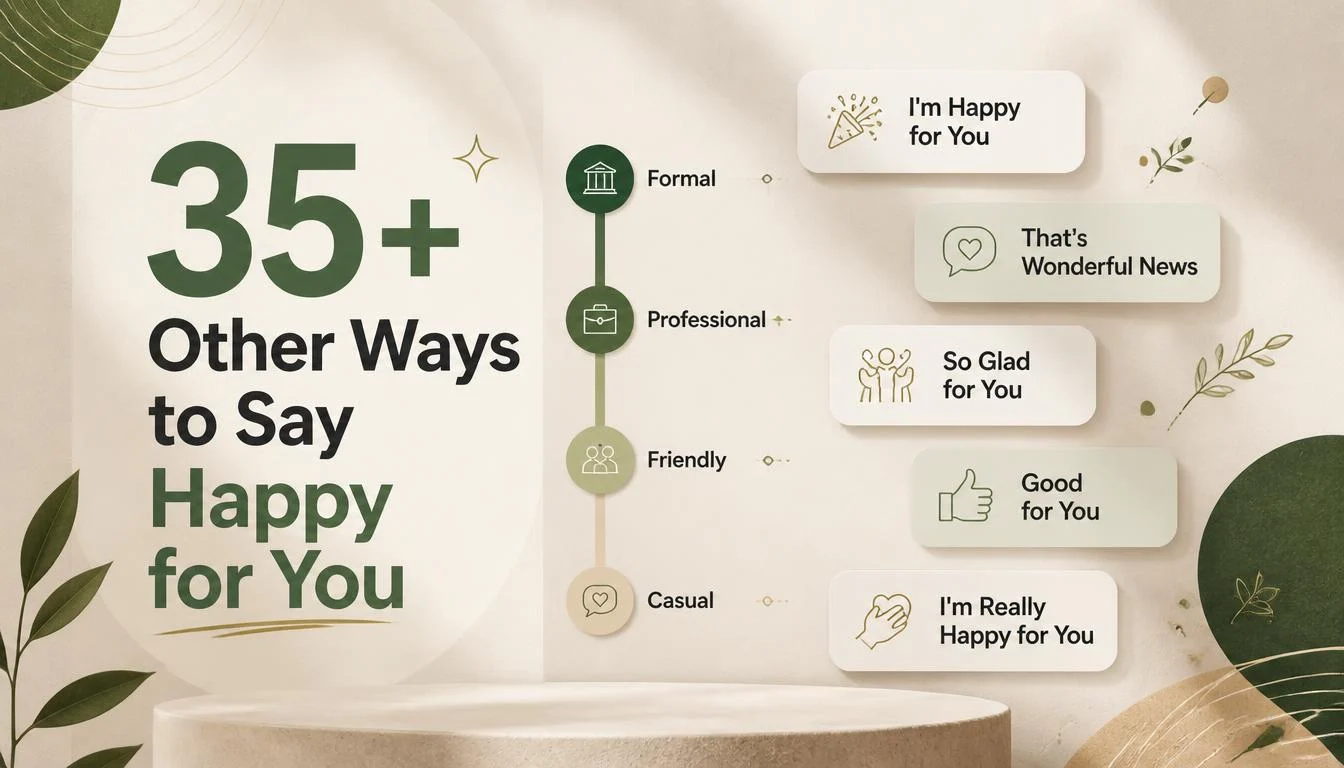
Looking for different ways to say Happy for You? Whether someone has achieved a goal, received exciting news, or reached an important milestone, the right words can make your congratulations feel more genuine and personal.
From warm and heartfelt expressions to casual and enthusiastic responses, there are plenty of alternatives to Happy for You that fit different relationships and situations. This guide explores 35+ ways to express your happiness and support naturally.
Why People Search for Other Ways to Say Happy for You
Most people don’t search this phrase out of curiosity. They search it right before typing a text message, a comment, or an email, usually a few seconds after reading someone’s good news. A friend got engaged. A coworker got promoted. A sibling passed an exam they were stressed about for weeks. In that moment, “happy for you” is the first thing that comes to mind, but it can feel flat, especially in writing, where tone is harder to read than it is in speech.
There’s also a difference between how this phrase behaves in spoken English and written English. Spoken out loud, with the right facial expression and warmth in your voice, “I’m so happy for you” lands perfectly. Typed in a text or an email, the same words can read as short or even automatic, especially if the other person has shared something emotionally significant.
This is why searches for alternatives to happy for you spike around specific triggers, weddings, job offers, pregnancy announcements, exam results, and recovery updates. People are looking for phrasing that matches the size of the news. A small win might only need a casual line. A major life event usually calls for something warmer and more specific.
Formal versus informal intent matters here too. In a professional setting, like congratulating a colleague on a promotion in a company Slack channel or email, people want professional English phrases that sound sincere but appropriate for the workplace. In personal conversations, they’re looking for informal expressions in English that feel natural between friends, not stiff or overly polished.
Tone Ladder for Expressing Happiness for Someone
Not every situation calls for the same energy. A useful way to think about this is a tone ladder, ranked from very formal to very informal.
At the very formal end, you get phrases suited to official messages, client communication, or addressing someone you don’t know well, such as a senior manager or a client. These lines tend to be a little more structured and polished.
Formal phrases sit just below that. They still sound professional but are common enough for everyday workplace use, like congratulating a coworker or a business contact.
Neutral phrases are the safest middle ground. They work almost anywhere, whether you’re talking to a friend, a coworker, or a distant relative, and they don’t carry a strong formal or casual signal either way.
Casual phrases are for friends, close coworkers, or anyone you’d naturally text without overthinking your wording. They sound relaxed and genuine.
Informal phrases are the most relaxed tier, often used between close friends or in fast-paced spoken conversation. These are the versions that sound most natural out loud but can feel too loose in a formal email.
Generally, the higher up the ladder you go, the more suited a phrase is to writing and professional contexts. The lower you go, the better it sounds spoken, especially with friends where tone and delivery carry more weight than word choice.
Tone Classification Table
| Phrase | Tone Level | Formality | Best Situation |
|---|---|---|---|
| I am delighted to hear this | Very Formal | High | Client emails, official messages |
| Congratulations on this achievement | Formal | High | Workplace announcements |
| I’m so pleased for you | Neutral | Medium | General use, most situations |
| That’s amazing, I’m happy for you | Casual | Medium-Low | Friends, family, texts |
| Yesss, so proud of you | Informal | Low | Close friends, spoken conversation |
Quick Selection Guide
Sometimes you don’t have time to think through tone theory, you just need the right line fast. Here’s a shortcut based on setting.
Interview
If you’re congratulating an interviewer, a hiring manager, or referencing someone’s achievement during a professional conversation, go with something clean and composed, like “Congratulations, that’s a well-earned achievement.” It signals respect without overdoing the emotion.
For email, especially with coworkers or clients, “I wanted to say congratulations, this is wonderful news” strikes a good balance between warmth and professionalism. It reads as sincere without slipping into casual territory.
Networking
At a networking event or in a LinkedIn message, something like “This is fantastic, congratulations on the new role” keeps things upbeat and appropriate for a semi-professional relationship where you’re still building rapport.
Casual Conversation
With friends or family, don’t overthink it. “Dude, that’s huge, so happy for you” or “I’m literally so excited for you right now” fits the energy of a relaxed, personal relationship far better than a formal line would.
Real Life Conversation Transformations
Seeing a phrase in isolation is useful, but seeing it inside a real exchange shows how much smoother it can sound.
Job Interview Scenario
Before: “Happy for you on the new position.”
After: “Congratulations on the new position, it’s clear all your hard work paid off.”
The after version acknowledges effort specifically, which sounds more genuine in a professional context than a generic reaction.
Networking Event Scenario
Before: “That’s nice, happy for you.”
After: “That’s fantastic, congratulations, I’d love to hear more about how that came together.”
The after version keeps the conversation open instead of closing it off with a short, flat reply.
Email Scenario
Before: “Just wanted to say happy for you about the promotion.”
After: “I wanted to reach out and congratulate you on the promotion, it’s well deserved and a great next step for you.”
The after version reads warmer and more considered, which matters in written communication where tone is easy to misread.
Casual Conversation Scenario
Before: “Happy for you, that’s cool.”
After: “No way, that’s amazing, I’m so happy for you, we need to celebrate this.”
The after version matches the excitement of good news instead of underplaying it.
35+ Other Ways to Say “Happy for You”
I’m Thrilled for You
Meaning: A strong, energetic version of being happy for someone.
Explanation: Used when the news is exciting enough to warrant real enthusiasm rather than a mild reaction.
Example: “I’m thrilled for you, this opportunity couldn’t have gone to a better person.”
Tone: Casual to neutral
Best use: Friends, close coworkers, exciting personal news
Worst use: Very formal client communication
Context variability: Works in both spoken and written form with equal warmth
So Glad This Happened for You
Meaning: Expresses relief and happiness that something positive occurred.
Explanation: Slightly softer than “thrilled,” often used when someone has been waiting or hoping for good news.
Example: “So glad this happened for you after everything you’ve been through this year.”
Tone: Neutral to casual
Best use: Situations involving a long wait or struggle before good news
Worst use: Sudden, low stakes good news where it may feel overstated
Context variability: Common in texts and heartfelt conversations
This Made My Day
Meaning: The news brought genuine joy to the listener as well.
Explanation: Shifts focus slightly to show the news impacted you too, which deepens the sense of shared happiness.
Example: “Hearing this made my day, congratulations!”
Tone: Casual
Best use: Personal relationships, close friends and family
Worst use: Formal workplace announcements
Context variability: Mostly spoken or informal text use
You Deserve This
Meaning: Acknowledges that the good outcome is a direct result of the person’s effort or character.
Explanation: Adds validation, not just celebration, which can feel especially meaningful after visible hard work.
Example: “You deserve this so much, you’ve worked incredibly hard.”
Tone: Neutral to casual
Best use: Achievements tied to effort, like promotions or exam results
Worst use: Situations involving luck rather than effort, where it may sound odd
Context variability: Works well in both spoken and written contexts
I’m Rooting for You
Meaning: Shows ongoing support, not just a reaction to one event.
Explanation: Suggests you’ve been supportive throughout the process, adding a sense of continuity.
Example: “I’ve been rooting for you this whole time, so happy it worked out.”
Tone: Casual to neutral
Best use: Long term goals, job searches, personal projects
Worst use: One time surprise announcements with no prior context
Context variability: Common in supportive, ongoing relationships
I Am Delighted to Hear This
Meaning: A refined, formal way of expressing happiness.
Explanation: Suited to professional or polite settings where enthusiasm needs to stay composed.
Example: “I am delighted to hear this, congratulations on such a wonderful achievement.”
Tone: Very formal
Best use: Client emails, official correspondence
Worst use: Casual texts with close friends, where it can sound stiff
Context variability: Almost exclusively written or spoken formally
Congratulations on This Achievement
Meaning: A direct, respectful acknowledgment of success.
Explanation: Keeps the focus on the accomplishment rather than personal emotion.
Example: “Congratulations on this achievement, it reflects real dedication.”
Tone: Formal
Best use: Workplace recognition, announcements, LinkedIn posts
Worst use: Very personal or emotional milestones, where it may feel distant
Context variability: Works well in both written and spoken professional settings
What Wonderful News
Meaning: An exclamation style reaction to positive information.
Explanation: Works as an opener before a more specific message of support.
Example: “What wonderful news, I couldn’t be happier for you.”
Tone: Neutral to formal
Best use: Emails, cards, semi formal conversations
Worst use: Very casual texting between close friends
Context variability: Common in both written notes and spoken reactions
I Couldn’t Be Happier for You
Meaning: Emphasizes the maximum level of happiness on someone’s behalf.
Explanation: A stronger, more emotional version of the standard phrase.
Example: “I couldn’t be happier for you, this is exactly what you deserved.”
Tone: Neutral to casual
Best use: Close friends, family, meaningful milestones
Worst use: Minor, low stakes good news
Context variability: Suits spoken conversation particularly well
This Is Such Great News
Meaning: A simple, versatile way to react positively.
Explanation: Neutral enough to use almost anywhere without sounding forced.
Example: “This is such great news, thank you for sharing it with me.”
Tone: Neutral
Best use: Nearly any setting, formal or casual
Worst use: Rarely inappropriate, though it can feel generic without added detail
Context variability: Extremely flexible across spoken and written use
Wishing You Continued Success
Meaning: Extends happiness into a hope for future outcomes as well.
Explanation: Common in professional messages that want to sound forward looking.
Example: “Congratulations, and wishing you continued success in this new role.”
Tone: Formal
Best use: Workplace promotions, LinkedIn messages
Worst use: Casual personal news among friends
Context variability: Mostly written, especially in professional messages
I’m So Proud of You
Meaning: Combines happiness with a sense of pride in the person’s effort or growth.
Explanation: Adds emotional depth beyond a simple reaction.
Example: “I’m so proud of you, you’ve worked so hard for this.”
Tone: Casual to neutral
Best use: Close relationships, achievements tied to personal growth
Worst use: Professional settings without a personal relationship
Context variability: Common in both spoken and written personal messages
That’s Incredible News
Meaning: A strong, enthusiastic reaction to good news.
Explanation: Slightly more animated than “great news,” suited to bigger announcements.
Example: “That’s incredible news, congratulations to you and your family.”
Tone: Casual to neutral
Best use: Big life events, milestones
Worst use: Very small or routine updates, where it may feel exaggerated
Context variability: Works in both spoken and written contexts
This Is a Well Earned Success
Meaning: Similar to “you deserve this,” but slightly more formal in delivery.
Explanation: Frames the outcome as connected to effort and merit.
Example: “This is a well earned success, congratulations on the recognition.”
Tone: Formal
Best use: Professional achievements, awards, promotions
Worst use: Casual conversations between friends
Context variability: Primarily written, professional tone
I’m Over the Moon for You
Meaning: An idiomatic, highly enthusiastic expression of happiness.
Explanation: Adds personality and warmth, often used between close friends.
Example: “I’m over the moon for you, this is the best news I’ve heard all week.”
Tone: Casual
Best use: Personal, exciting news among friends or family
Worst use: Formal or professional communication
Context variability: Mostly spoken or informal writing
Congrats, That’s Amazing
Meaning: A short, upbeat casual reaction.
Explanation: Common in quick texts or messages where brevity matters.
Example: “Congrats, that’s amazing, so happy for you!”
Tone: Casual
Best use: Text messages, quick reactions
Worst use: Formal emails or official communication
Context variability: Almost exclusively informal written use
You Totally Deserve This Moment
Meaning: Combines happiness with recognition of the person’s journey.
Explanation: Slightly more personal and specific than a general congratulations.
Example: “You totally deserve this moment after everything you’ve put into it.”
Tone: Casual to neutral
Best use: Milestones following visible effort or struggle
Worst use: Sudden, effortless good news
Context variability: Works in spoken conversation and personal messages
I’m So Happy This Worked Out for You
Meaning: Highlights relief alongside happiness.
Explanation: Useful when the outcome was uncertain for a while.
Example: “I’m so happy this worked out for you, you were so nervous about it.”
Tone: Casual to neutral
Best use: Situations involving uncertainty or anxiety beforehand
Worst use: Confident, expected outcomes
Context variability: Common in spoken and text conversation
This Is Honestly So Exciting
Meaning: A casual expression that shares in the excitement of the news.
Explanation: Focuses on shared emotion rather than formal congratulations.
Example: “This is honestly so exciting, I can’t wait to celebrate with you.”
Tone: Casual
Best use: Close friends, informal group chats
Worst use: Professional or formal settings
Context variability: Mostly spoken or informal text
Sending You So Much Happiness Right Now
Meaning: A warm, expressive way to share in someone’s joy.
Explanation: Slightly more poetic, often used in written messages or cards.
Example: “Sending you so much happiness right now, you deserve every bit of this.”
Tone: Casual to neutral
Best use: Cards, heartfelt texts, personal messages
Worst use: Professional or workplace communication
Context variability: Mostly written, personal tone
This News Made Me Smile So Much
Meaning: A personal, reflective reaction to someone’s happiness.
Explanation: Focuses on your own emotional response as a way of validating theirs.
Example: “This news made me smile so much, thank you for sharing it.”
Tone: Casual
Best use: Personal messages, close friendships
Worst use: Formal or professional communication
Context variability: Mostly written, informal tone
What a Fantastic Achievement
Meaning: A formal, respectful acknowledgment focused on the accomplishment itself.
Explanation: Common in workplace recognition or public congratulations.
Example: “What a fantastic achievement, well deserved after all your effort.”
Tone: Formal
Best use: Professional recognition, public announcements
Worst use: Very casual, personal conversations
Context variability: Mostly written, professional settings
I Knew You Could Do It
Meaning: Combines happiness with expressed confidence in the person.
Explanation: Works well when you supported them throughout the process.
Example: “I knew you could do it, congratulations, I’m so happy for you.”
Tone: Casual to neutral
Best use: Situations where you encouraged them beforehand
Worst use: Situations where you had no prior involvement
Context variability: Common in both spoken and written personal messages
This Is the Best News I’ve Heard All Week
Meaning: Emphasizes how significant the news feels to you personally.
Explanation: Adds emphasis through comparison, making the reaction feel bigger.
Example: “This is the best news I’ve heard all week, congratulations!”
Tone: Casual
Best use: Personal, exciting updates
Worst use: Formal professional communication
Context variability: Mostly spoken or informal written use
I’m Genuinely Happy for You
Meaning: Adds sincerity to a common phrase, especially useful in written form.
Explanation: The word “genuinely” reassures the reader the reaction isn’t automatic.
Example: “I’m genuinely happy for you, this is such great news.”
Tone: Neutral
Best use: Written messages where tone might otherwise feel flat
Worst use: Rarely inappropriate, though redundant if said in person with visible enthusiasm
Context variability: Works well across most contexts
Congratulations, You’ve Earned Every Bit of This
Meaning: Strongly ties the achievement to the person’s own effort.
Explanation: Adds emphasis and validation beyond a simple congratulations.
Example: “Congratulations, you’ve earned every bit of this success.”
Tone: Neutral to formal
Best use: Career milestones, exam results, promotions
Worst use: Situations driven mostly by luck
Context variability: Works in both spoken and written contexts
This Is Such a Big Moment for You
Meaning: Acknowledges the significance of the event, not just the reaction to it.
Explanation: Useful for milestones like weddings, graduations, or major life changes.
Example: “This is such a big moment for you, I’m so happy I get to see it.”
Tone: Neutral to casual
Best use: Major life events
Worst use: Small, routine good news
Context variability: Works well spoken, especially in person
I’m Cheering for You From Here
Meaning: A supportive, slightly playful way to express happiness from a distance.
Explanation: Useful when you can’t celebrate in person.
Example: “I’m cheering for you from here, congratulations on the big win.”
Tone: Casual
Best use: Long distance friendships, remote coworkers
Worst use: Formal professional communication
Context variability: Common in texts and social media messages
Well Done, This Is Fantastic
Meaning: A short, energetic acknowledgment of success.
Explanation: Common in workplace settings for quick, genuine recognition.
Example: “Well done, this is fantastic news, congratulations.”
Tone: Neutral to casual
Best use: Workplace chats, quick verbal recognition
Worst use: Very formal written communication
Context variability: Works well spoken and in casual written messages
I’m So Happy Things Are Going Your Way
Meaning: Broader than a single event, suggesting an overall positive trend.
Explanation: Useful when someone has had a string of good news or a turnaround.
Example: “I’m so happy things are going your way lately, you deserve it.”
Tone: Casual to neutral
Best use: Ongoing positive changes, not just one time news
Worst use: Isolated, unrelated good news
Context variability: Common in both spoken and written personal conversation
Usage Comparison Table
| Phrase | Spoken Use | Written Use | Context |
|---|---|---|---|
| I am delighted to hear this | Low | High | Formal emails, official notes |
| I’m over the moon for you | High | Medium | Personal, excited reactions |
| Congratulations, you’ve earned every bit of this | Medium | High | Career and academic milestones |
| This made my day | High | Medium | Close friends and family |
| Well done, this is fantastic | High | Low | Quick workplace acknowledgment |
Email and LinkedIn Ready Expressions
Email Greetings
“I hope this message finds you well, I just wanted to reach out with some warm congratulations.”
Professional Introductions
“I heard the wonderful news through the team and wanted to personally congratulate you.”
LinkedIn Connection Messages
“Congratulations on the new role, it’s exciting to see your career moving in such a great direction.”
Follow Up Lines
“I’d love to hear more about how things are going once you’ve settled into the new position.”
Native Speaker Insight
Native speakers rarely rely on “happy for you” alone in real conversation. It usually gets paired with something more specific, like a reference to the effort involved or the timing of the news. A common spoken pattern is stacking phrases together, such as “Oh my gosh, congratulations, I’m so happy for you, that’s amazing,” rather than using just one line.
Shortened spoken versions are common too. “So happy for you” without the “I’m” is frequent in casual speech, as is simply “Aww, happy for you” in relaxed settings. What tends to sound unnatural is overusing very formal phrases like “I am delighted to hear this” in casual texting, where it can come across as sarcastic or overly polished rather than sincere.
Professional alternatives that consistently sound natural to native speakers include “Congratulations, that’s well deserved” and “This is great news, congratulations,” both of which strike a balance between warmth and professionalism without sounding scripted.
Common Mistakes and What Not to Say
One common mistake is using overly formal phrasing in casual settings, such as texting a close friend “I am delighted to hear this news,” which can sound distant or even sarcastic.
Another mistake is tone mismatch, where someone responds to major news with a phrase that feels too small, like reacting to an engagement announcement with a flat “cool, happy for you.” The size of the reaction should generally match the size of the news.
Grammar mistakes also show up often, particularly dropping articles or prepositions, such as saying “I’m happy for,” without completing the sentence, or awkwardly combining phrases into something like “I’m so happy for you achievement,” which doesn’t follow natural sentence structure.
Over-formal or awkward usage can also happen when people try too hard to sound impressive, layering multiple formal phrases together in a single message, which ends up sounding stiff rather than genuine.
Expansion Phrases
Related expressions that pair naturally with happiness reactions include greeting variations like “Hey, I just heard the news,” introduction phrases such as “I wanted to reach out personally,” polite communication alternatives like “Thank you for sharing this with me,” and conversational English upgrades such as “This really made my day, thank you for telling me.
Decision Making Table
| Situation | Best Phrase | Why It Works |
|---|---|---|
| Job interview reference | Congratulations, that’s a well earned achievement | Sounds composed and respectful |
| Professional email | I wanted to say congratulations, this is wonderful news | Balances warmth and formality |
| Networking event | This is fantastic, congratulations on the new role | Upbeat but appropriate for new relationships |
| Casual text with a friend | Dude, that’s huge, so happy for you | Matches informal, personal tone |
| Major life event | I couldn’t be happier for you | Conveys strong emotional sincerity |
Quick Fast List
- I’m thrilled for you
- So glad this happened for you
- This made my day
- You deserve this
- I’m rooting for you
- I couldn’t be happier for you
- This is such great news
- I’m over the moon for you
Mini Quiz
1. You’re Congratulating a Close Friend Over Text About a Small Win
A) I am delighted to hear this news
B) Congrats, that’s amazing
C) Wishing you continued success
Correct answer: B – It matches the casual tone of a text between friends.
2. You’re Emailing a Colleague About Their Promotion
A) Dude, that’s huge
B) I wanted to say congratulations, this is wonderful news
C) Yesss, so proud of you
Correct answer: B – It’s professional but still warm.
3. Your Friend Just Got Engaged and Told You in Person
A) Cool, happy for you
B) I’m over the moon for you
C) I am delighted to hear this
Correct answer: B – It matches the emotional size of the news.
4. You’re Writing a LinkedIn Message to Someone Who Got a New Job
A) Congratulations on the new role, it’s exciting to see your career moving in such a great direction
B) Yesss, so proud of you
C) This made my day
Correct answer: A – It’s suited to a professional networking context.
5. A Coworker Mentions Their Exam Results in a Casual Chat
A) I am delighted to hear this
B) Well done, this is fantastic
C) Wishing you continued success
Correct answer: B – It’s natural for quick, casual workplace recognition.
FAQs
Is It Polite to Say “Happy for You”?
Yes, it’s a polite and widely accepted phrase, though it can feel a little plain in written communication, especially for significant news.
What Is More Professional Than “Happy for You”?
Phrases like “I am delighted to hear this” or “Congratulations on this achievement” tend to sound more polished in professional settings.
Can I Use “Happy for You” in an Email?
Yes, though pairing it with a more specific line, such as referencing the achievement itself, tends to sound more sincere than the phrase alone.
What Do Native Speakers Say Instead?
Native speakers often stack reactions together, combining phrases like “Oh my gosh, congratulations, I’m so happy for you” rather than relying on a single short phrase.
What Is the Best Alternative for a Formal Email?
“I am delighted to hear this” or “Wishing you continued success” both work well in formal written communication.
Conclusion
Having more than one way to say happy for you makes a real difference in how genuine your reaction sounds, especially in writing, where tone can be harder to read. Matching the phrase to the setting, whether that’s a quick text, a professional email, or a heartfelt in-person reaction, shows the other person that you actually paid attention to their news rather than reaching for a generic line.
The more you practice noticing tone, both your own and the message you’re replying to, the easier it becomes to react naturally instead of relying on the same phrase every time. Small adjustments in wording go a long way toward making someone else’s good news feel genuinely celebrated.
Read More Related Articles:
- 34+ Other Ways to Say “It Was a Pleasure Meeting You” | For Better English Fluency In 2026
- 30+ Other Ways to Say I’m Sorry for Your Loss | When Words Aren’t Enough In 2026
- 30+ Other Ways to Say “It Was Good to See You Again” | For Any Occasion In 2026

Caleb Dawson is a content writer at synoseek.com, where he works on simple, reader-focused articles across a range of everyday topics. His writing style is practical and grounded, aiming to present information in a clear and relatable way without unnecessary complexity.
6 thoughts on “35+ Other Ways to Say Happy for You | Heartfelt Phrases That Feel Genuine In 2026”