Quick Answer
“I don’t want to bother you” is a polite phrase used to show consideration before asking for someone’s time or help. The best alternatives include: “I don’t want to be a burden,” “Sorry to interrupt,” “If you have a moment,” “No pressure, but,” and “Whenever you get a chance.”
Looking for natural ways to say “I Don’t Want to Bother You”? This phrase is polite and thoughtful, but repeating it can make your messages sound overly cautious. Choosing the right alternative can help you sound respectful while still making your request clear.
Whether you’re writing a professional email, messaging a coworker, or talking to a friend, the right wording depends on your relationship and situation. In this guide, you’ll find 30+ ways to say “I Don’t Want to Bother You” with options ranging from formal and professional to casual and friendly.
Why People Search for Other Ways to Say “I Don’t Want to Bother You”
People look for alternatives to “I don’t want to bother you” because the original phrase, while polite, can start to feel repetitive, overly apologetic, or even a little insecure if it’s used too often. Someone might be writing a work email, texting a friend, or preparing for a networking conversation, and they want a phrase that fits the moment better.
This phrase sits at an interesting intersection. It’s used both in spoken and written English, but it carries different weight depending on the setting. In speech, it often comes out naturally before a small favor or a quick question. In writing, especially emails, it can sound softer or more considerate, but overused, it can also read as hesitant.
There’s also a difference between formal and informal communication intent here. A formal version might be needed when emailing a manager or client, while an informal version fits better with friends, roommates, or casual coworkers. People searching for alternatives to this phrase are usually looking for professional English phrases for work contexts, or informal expressions in English for daily conversation. Understanding this distinction is the difference between sounding awkward and sounding genuinely thoughtful.
The Tone Ladder System
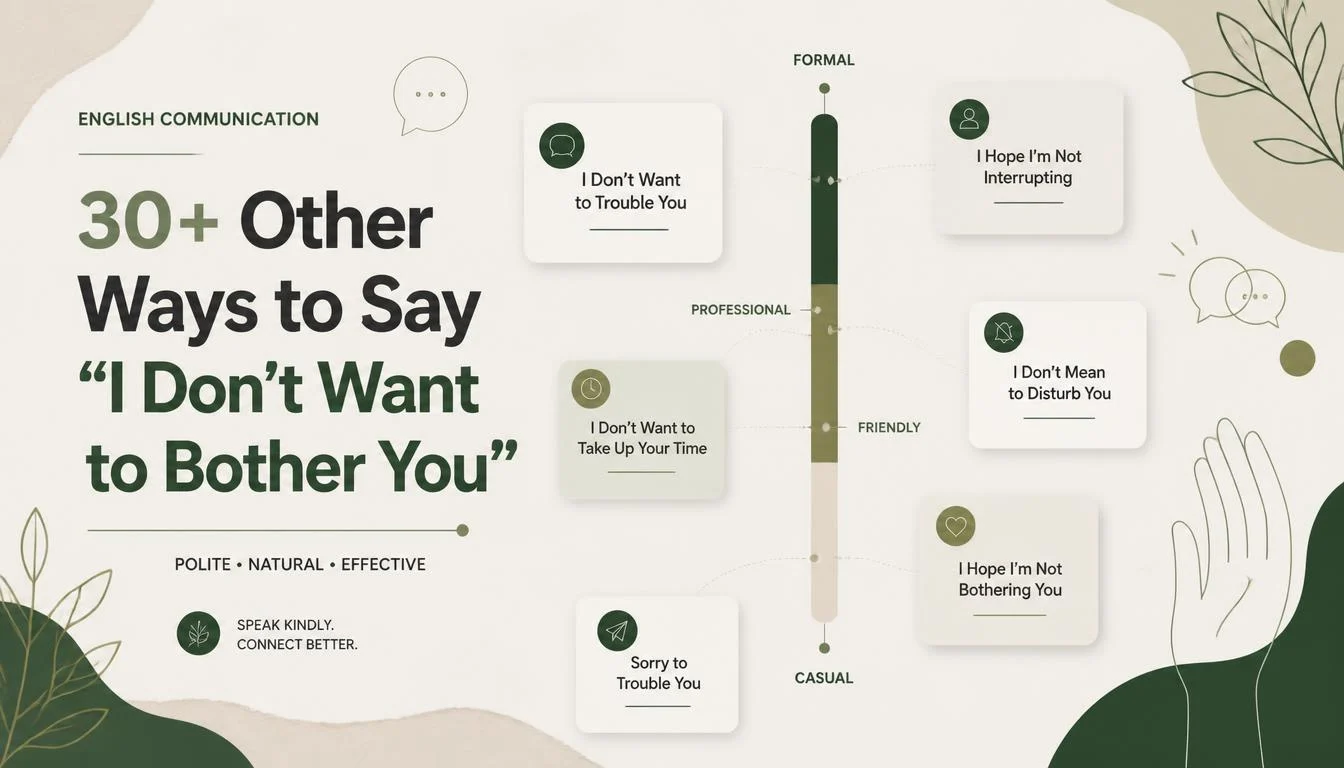
Not every version of “I don’t want to bother you” sounds the same. Some are stiff and formal, others are light and casual. Understanding where a phrase sits on this ladder helps you pick the right one instantly.
At the very formal end, you have phrases suited for senior executives, clients, or people you don’t know well. These sound respectful and a little distant, in a good way. Moving down, formal phrases are still professional but slightly warmer, ideal for coworkers or acquaintances.
Neutral phrases are the safest middle ground. They work in almost any setting without sounding too stiff or too relaxed. Casual phrases bring in more personality and are best for friends or comfortable coworkers. Informal phrases are the most relaxed, often used with close friends or family, and they can sound too loose in a professional setting.
For spoken English, neutral and casual phrases tend to sound more natural, since speech is usually less rigid than writing. For written English, especially emails, formal and neutral phrases usually work best, unless you’re texting someone you know well.
Tone Classification Table
| Phrase | Tone Level | Formality | Best Situation |
|---|---|---|---|
| I don’t wish to impose | Very Formal | High | Emails to executives or clients |
| I apologize for the intrusion | Very Formal | High | Formal written requests |
| I don’t want to be a burden | Formal | Medium-High | Workplace emails |
| Sorry to interrupt | Formal | Medium | Meetings, office settings |
| If you have a moment | Neutral | Medium | Emails, casual work chats |
| No pressure, but | Neutral | Medium-Low | Friendly work requests |
| Whenever you get a chance | Neutral | Medium-Low | Texts, casual emails |
| Not trying to be annoying, but | Casual | Low | Friends, relaxed coworkers |
| Quick question if you’re free | Casual | Low | Texts, group chats |
| Hate to bug you, but | Informal | Very Low | Close friends, family |
Quick Selection Guide
If you’re in a job interview, go with something like “I don’t want to overstep, but I had a quick question.” It signals respect without sounding needy.
For a professional email, “If you have a moment, I’d appreciate your input” strikes the right balance between polite and direct.
At a networking event, try “I know you’re probably busy, but I’d love to connect for a minute.” It’s warm without sounding intrusive.
In casual conversation with friends, something like “Hey, quick thing, no rush” works perfectly and feels natural rather than overly formal.
Real-Life Conversation Transformations
Job Interview Scenario
Before: “I don’t want to bother you, but can I ask about the next steps?”
After: “I don’t want to take up too much of your time, but could you share what the next steps look like?”
The updated version sounds more confident and shows awareness of the interviewer’s schedule without sounding unsure of yourself.
Networking Event Scenario
Before: “Sorry, I don’t want to bother you, but I loved your talk.”
After: “I know you’re probably swamped with people right now, but I really enjoyed your talk and wanted to say so.”
This version acknowledges the situation naturally instead of apologizing for simply talking to someone.
Email Scenario
Before: “I don’t want to bother you, but could you review this document?”
After: “Whenever you get a chance, could you take a look at this document? No rush at all.”
This softens the request while keeping it clear and actionable, which reads better in professional inboxes.
Casual Conversation Scenario
Before: “I don’t want to bother you, but can you help me move this weekend?”
After: “Hey, no pressure at all, but would you be able to help me move this weekend?”
This keeps the friendly tone while sounding more relaxed and natural between friends.
30+ Other Ways to Say “I Don’t Want to Bother You”
Below is a full breakdown of alternative phrases. Each phrase includes its meaning, an example, tone, best use, and worst use.
1. I Don’t Want to Be a Burden
Meaning: You don’t want to create extra work or stress for someone.
Example: “I don’t want to be a burden, but could you help me with this form?”
Tone: Formal
Best use: Workplace requests
Worst use: Very casual texts, where it can sound overly serious
2. Sorry to Interrupt
Meaning: Acknowledging you’re breaking into someone’s time or focus.
Example: “Sorry to interrupt, do you have a second?”
Tone: Formal to Neutral
Best use: Meetings, offices
Worst use: Text messages, where it can feel stiff
3. If You Have a Moment
Meaning: A polite way to ask for someone’s time without demanding it.
Example: “If you have a moment, could you check my email?”
Tone: Neutral
Best use: Emails, professional chats
Worst use: Urgent situations, since it sounds low priority
4. No Pressure, But
Meaning: Signals that the request isn’t urgent or forced.
Example: “No pressure, but could you send that file today?”
Tone: Neutral to Casual
Best use: Friendly work requests
Worst use: Formal client emails
5. Whenever You Get a Chance
Meaning: Leaves timing flexible and low pressure.
Example: “Whenever you get a chance, let me know your thoughts.”
Tone: Neutral
Best use: Texts, informal emails
Worst use: Time sensitive requests
6. I Know You’re Busy, But
Meaning: Recognizes the other person’s schedule before making a request.
Example: “I know you’re busy, but could I ask a quick question?”
Tone: Neutral
Best use: Networking, professional settings
Worst use: Overuse can sound repetitive
7. Quick Question If You’re Free
Meaning: Signals a short, simple ask.
Example: “Quick question if you’re free later today.”
Tone: Casual
Best use: Texts, group chats
Worst use: Formal emails to senior staff
8. I Don’t Want to Overstep, But
Meaning: Shows respect for boundaries before making a suggestion or request.
Example: “I don’t want to overstep, but I think we should revisit this plan.”
Tone: Formal
Best use: Workplace discussions
Worst use: Everyday casual talk
9. Not Trying to Be Annoying, But
Meaning: A lighthearted way to soften a repeated request.
Example: “Not trying to be annoying, but did you see my last message?”
Tone: Casual
Best use: Friends, relaxed coworkers
Worst use: First time professional contact
10. Hate to Bug You, But
Meaning: A casual, friendly way to ask for a favor.
Example: “Hate to bug you, but can you send that link again?”
Tone: Informal
Best use: Close friends, family
Worst use: Client communication
11. I Apologize for the Intrusion
Meaning: A very formal way to acknowledge interrupting someone.
Example: “I apologize for the intrusion, but this matter needed immediate attention.”
Tone: Very Formal
Best use: Formal written communication
Worst use: Casual conversation, where it feels excessive
12. I Don’t Wish to Impose
Meaning: Politely signals you don’t want to inconvenience someone.
Example: “I don’t wish to impose, but could you review my proposal?”
Tone: Very Formal
Best use: Emails to executives
Worst use: Texting friends
13. Just a Small Thing, If You Don’t Mind
Meaning: Frames the request as minor and easy.
Example: “Just a small thing, if you don’t mind, could you check this number?”
Tone: Casual
Best use: Everyday requests
Worst use: Larger or urgent asks
14. I Promise This Will Only Take a Second
Meaning: Reassures the listener that the interruption will be brief.
Example: “I promise this will only take a second, just need your signature.”
Tone: Neutral
Best use: In person quick requests
Worst use: Emails, where “a second” can sound vague
15. Feel Free to Ignore This If You’re Busy
Meaning: Gives the other person full permission to delay or skip responding.
Example: “Feel free to ignore this if you’re busy, just following up.”
Tone: Neutral to Casual
Best use: Follow up emails
Worst use: Time sensitive requests
16. Only If It’s Convenient for You
Meaning: Puts the decision fully in the other person’s hands.
Example: “Only if it’s convenient for you, could we reschedule?”
Tone: Formal
Best use: Professional scheduling requests
Worst use: Casual daily conversation
17. I’ll Keep This Brief
Meaning: Signals respect for someone’s time by promising a short interaction.
Example: “I’ll keep this brief, just wanted to check on the report.”
Tone: Neutral
Best use: Meetings, quick calls
Worst use: When the message actually turns out to be long
18. Totally Understand If Now Isn’t a Good Time
Meaning: Acknowledges the person might be unavailable.
Example: “Totally understand if now isn’t a good time, we can talk later.”
Tone: Neutral to Casual
Best use: Personal and professional check ins
Worst use: Urgent matters needing an immediate response
19. I Don’t Mean to Add to Your Plate, But
Meaning: Recognizes someone already has a lot going on.
Example: “I don’t mean to add to your plate, but could you review this by Friday?
Tone: Formal
Best use: Workplace requests during busy periods
Worst use: Very short or simple asks
20. Sorry to Add Another Thing to Your List
Meaning: A lighter way to acknowledge someone’s workload.
Example: “Sorry to add another thing to your list, but this needs your approval.”
Tone: Neutral
Best use: Team emails
Worst use: First interactions with new contacts
21. Not Urgent, But Wanted to Check
Meaning: Clarifies that the message isn’t time sensitive.
Example: “Not urgent, but wanted to check if you saw my earlier note.”
Tone: Neutral
Best use: Follow ups
Worst use: Genuinely urgent situations
22. Whenever Suits You Best
Meaning: Leaves full flexibility in timing.
Example: “Whenever suits you best, could we set up a call?”
Tone: Formal to Neutral
Best use: Scheduling emails
Worst use: Immediate requests
23. I Hope This Isn’t a Bad Time
Meaning: Checks in before making a request or starting a conversation.
Example: “I hope this isn’t a bad time, do you have a minute?”
Tone: Neutral
Best use: Phone calls, in person chats
Worst use: Written messages, where it can feel uncertain
24. Just Circling Back, No Rush
Meaning: A common professional way to follow up without pressure.
Example: “Just circling back, no rush, whenever you’re free.”
Tone: Neutral
Best use: Work emails
Worst use: Personal or casual messages
25. Sorry to Keep Pestering You
Meaning: Acknowledges repeated follow ups in a self aware way.
Example: “Sorry to keep pestering you, just wanted an update.”
Tone: Casual
Best use: Friends, informal coworkers
Worst use: First time professional requests
26. I Know This Might Not Be the Best Time, But
Meaning: Softens a request by recognizing possible bad timing.
Example: “I know this might not be the best time, but could we talk briefly?”
Tone: Formal
Best use: Sensitive conversations
Worst use: Quick, simple requests
27. Take Your Time, No Rush at All
Meaning: Removes pressure entirely from a request.
Example: “Take your time, no rush at all, whenever works.”
Tone: Casual
Best use: Friends, relaxed teams
Worst use: Deadlines that actually matter
28. Just a Heads Up, Not Urgent
Meaning: Frames a message as informational rather than demanding.
Example: “Just a heads up, not urgent, but wanted to flag this.”
Tone: Neutral
Best use: Team updates
Worst use: When action is actually needed soon
29. I Don’t Want to Take Up Too Much of Your Time
Meaning: Shows awareness of someone’s limited availability.
Example: “I don’t want to take up too much of your time, just one quick thing.”
Tone: Formal to Neutral
Best use: Meetings, interviews
Worst use: Very casual chats
30. Would Love Your Thoughts When You Can
Meaning: A friendly, low pressure way to request feedback.
Example: “Would love your thoughts when you can, no deadline.”
Tone: Neutral to Casual
Best use: Creative or collaborative work
Worst use: Formal approval requests
Usage Comparison Table
| Phrase | Spoken Use | Written Use | Context |
|---|---|---|---|
| I don’t want to be a burden | Occasional | Common | Workplace requests |
| Sorry to interrupt | Common | Occasional | Meetings, offices |
| If you have a moment | Common | Common | Emails, chats |
| No pressure, but | Common | Common | Friendly requests |
| Quick question if you’re free | Common | Occasional | Texts, group chats |
| I apologize for the intrusion | Rare | Common | Formal letters |
| Not urgent, but wanted to check | Occasional | Common | Follow-up emails |
| Hate to bug you, but | Common | Occasional | Casual texts |
Email and LinkedIn Ready Expressions
For professional emails, greetings like “I hope you’re doing well” or “I hope this message finds you at a good time” set a considerate tone before your request.
For professional introductions, try “I’m reaching out because I wanted to ask a quick question, if you have a moment.” It’s polite without being overly cautious.
On LinkedIn, connection messages work best when they’re short and specific, such as “I really enjoyed your recent post and would love to connect, no pressure to respond right away.”
For follow-up lines, “Just following up, whenever you get a chance” or “No rush at all, just wanted to check in” both keep the tone light while still moving the conversation forward.
Native Speaker Insight
Native English speakers rarely say the full phrase “I don’t want to bother you” in casual speech. Instead, they shorten it naturally to things like “quick thing,” “no rush,” or “whenever you’re free.” These short versions sound more natural and less rehearsed.
What tends to sound unnatural is over-explaining the apology, such as saying “I really don’t want to be a bother to you at all, but.” Native speakers usually keep it short and trust the tone of their voice or the phrasing to carry the politeness.
In professional settings, natives often prefer phrases like “when you get a chance” or “no urgency on this” over more dramatic apologies, since these sound confident rather than uncertain.
Common Mistakes and What Not to Say
One common mistake is overusing apologetic phrases in every single message, which can make you sound unsure of yourself rather than considerate.
Tone mismatch is another issue. Using a very formal phrase like “I apologize for the intrusion” in a text to a friend can come across as cold or sarcastic.
Grammar mistakes, like saying “I don’t want to bother of you,” are also common among non-native speakers and should be avoided by keeping the phrase simple and direct.
Over-formal or awkward usage happens when people try too hard to sound polite, ending up with clunky phrases instead of natural ones. Simpler alternatives almost always sound better.
Related Expressions Worth Knowing
Greeting variations like “Hope you’re having a good day” or “Hope things are going smoothly” pair well before a request.
Introduction phrases such as “I wanted to reach out about” or “I’m following up on” help frame a message clearly.
Polite communication alternatives include “Would it be possible to” or “Could I ask a quick favor.”
Conversational English upgrades like “Mind if I ask something quick” or “Got a sec” work well in relaxed settings and sound far more natural than translated formal phrases.
Decision-Making Table
| Situation | Best Phrase | Why It Works |
|---|---|---|
| Job interview | I don’t want to take up too much of your time | Sounds respectful and confident |
| Professional email | If you have a moment | Polite and flexible |
| Networking event | I know you’re probably busy, but | Acknowledges their time naturally |
| Casual conversation | No pressure, but | Friendly and low-key |
| Client communication | I don’t wish to impose | Formal and respectful |
| Text to a friend | Quick thing, no rush | Short and natural |
Quick Fast List
Here are ten of the best alternatives at a glance:
- If you have a moment
- No pressure, but
- Whenever you get a chance
- I don’t want to overstep, but
- Quick question if you’re free
- I know you’re busy, but
- Not urgent, but wanted to check
- I’ll keep this brief
- Sorry to interrupt
- Would love your thoughts when you can
Mini Quiz
1. Which Phrase Is Best for a Formal Email to a Client?
A) Hate to bug you, but
B) I don’t wish to impose
C) Quick thing, no rush
Answer: B – It fits formal written communication and sounds respectful.
2. Which Phrase Works Best in a Casual Text to a Friend?
A) I apologize for the intrusion
B) Sorry to interrupt
C) No pressure, but
Answer: C – It matches a casual and natural spoken tone.
3. What’s a Natural Way Native Speakers Shorten These Phrases?
A) Adding more apologies
B) Saying “quick thing” or “no rush”
C) Using very formal vocabulary
Answer: B – Native speakers often favor shorter and more natural phrasing.
4. Which Phrase Fits Best in a Networking Conversation?
A) I know you’re probably busy, but
B) Hate to bug you, but
C) I don’t wish to impose
Answer: A – It balances warmth and professionalism while keeping the conversation natural.
5. What’s a Common Mistake to Avoid?
A) Keeping requests short
B) Over explaining the apology
C) Matching tone to context
Answer: B – Over explaining can make your message sound unsure or awkward.
FAQs
Is It Polite to Say “I Don’t Want to Bother You”?
Yes, it is polite, but using it too often can make your communication sound repetitive or uncertain. Using different alternatives can help your messages feel more natural.
What Is More Professional Than “I Don’t Want to Bother You”?
Phrases such as “If you have a moment” or “I don’t wish to impose” sound more polished in professional emails. They show consideration without making the request sound overly apologetic.
Can I Use Casual Alternatives in a Work Email?
It depends on your relationship with the recipient. Casual phrases can work well with close coworkers, but formal alternatives are usually safer when communicating with clients, managers, or senior staff.
What Do Native Speakers Say Instead of This Phrase?
Native speakers often use shorter expressions such as “quick thing,” “no rush,” or “whenever you’re free.” These phrases can sound more natural in everyday conversations.
What Is the Best Alternative for a Job Interview Setting?
“I don’t want to take up too much of your time” works well in a job interview. It shows respect for the interviewer’s time without sounding overly apologetic.
Conclusion
Learning different ways to say “I don’t want to bother you” helps you communicate with more confidence and flexibility. Instead of relying on the same phrase in every situation, choosing the right tone for interviews, emails, networking events, or casual chats makes your communication feel more natural and intentional.
With practice, picking the right version becomes second nature. Paying attention to tone, context, and the relationship you have with the other person will help you sound thoughtful without ever coming across as unsure of yourself.
Read More Related Articles:
- 35+ Other Ways to Say Happy Thursday | Make Your Greetings More Engaging In 2026
- 35+ Other Ways to Say “Nice to Meet You” | Formal to Casual In 2026
- 35+ Other Ways to Say “Did You Sleep Well” | For Better Communication In 2026

Zoe Chambers works as a content writer at synoseek.com, contributing thoughtful pieces on everyday subjects and ideas. She writes in a simple, grounded way, often drawing from real-world experiences. Her focus is on keeping content natural, clear and easy for readers to connect with.
6 thoughts on “30+ Other Ways to Say “I Don’t Want to Bother You” | Polite Conversations In 2026”