Quick Answer
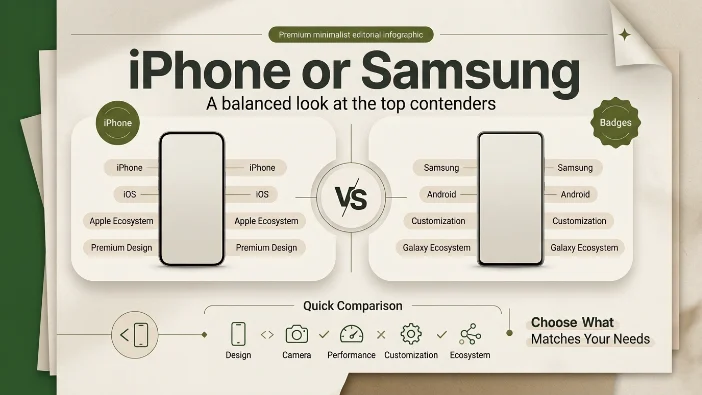
Choosing between iPhone or Samsung comes down to your priorities regarding operating system preference, ecosystem investment, and budget. iPhone offers iOS’s seamless integration with Apple devices and consistent user experience, while Samsung provides Android’s customization, greater hardware variety, and more flexible price points.
You have probably found yourself staring at two smartphones in a store or scrolling through endless reviews online, trying to decide between an iPhone and a Samsung Galaxy. It is one of the most common dilemmas in consumer tech, and the decision can feel overwhelming because both brands are excellent in different ways.
The real challenge isn’t about which phone is objectively better. Neither brand holds that title universally. Instead, the decision depends on your personal needs, your existing devices, and how you actually use your smartphone day to day. This guide will walk you through every major difference between iPhone and Samsung, from operating systems and ecosystems to price points and camera capabilities, so you can make an informed choice.
What Is the Difference Between iPhone and Samsung?
At its core, the difference between iPhone and Samsung is the difference between Apple’s iOS and Samsung’s Android-based smartphones. iPhones run Apple’s proprietary iOS, a closed ecosystem that offers a curated, consistent user experience across all Apple devices. Samsung Galaxy phones run the Android operating system, customized with Samsung’s One UI skin, which provides greater flexibility and customization options.
Core Differences at a Glance
The biggest deciding factor for many users is ecosystem lock-in. If you already own a Mac, iPad, and Apple Watch, an iPhone will integrate effortlessly with your other devices. If you use Windows computers and Google services extensively, a Samsung Galaxy may better fit your digital life.
Is iPhone or Samsung Better: Which Should You Choose?
Price and Value
One of the most significant differences between iPhone and Samsung is pricing. Samsung offers a much wider range of price points, with budget-friendly A-series phones starting at just £199. This makes Samsung more accessible if you are shopping on a tight budget.
Apple’s entry-level iPhone 17e starts at £599, and their premium models quickly climb to over £1,000. While Apple does offer older or refurbished models at lower prices, they don’t compete with Samsung’s extensive budget lineup.
Here is the current pricing landscape for new models:
iPhone Pricing:
- iPhone 17e: £599 (256GB)
- iPhone 17: £799 (256GB)
- iPhone 17 Pro: £1,099 (256GB)
- iPhone 17 Pro Max: £1,199 (256GB)
Samsung Pricing:
Takeaway: Samsung wins on price flexibility and budget options. iPhones are excellent but consistently premium priced.
Operating System and User Experience
The operating system difference represents the most fundamental distinction between iPhone and Samsung devices.
iOS on iPhone is known for its simplicity, consistency, and security. Apple controls both the hardware and software, which creates a smooth, predictable experience. Updates are released simultaneously to all compatible devices, and privacy features are deeply integrated.
Android on Samsung Galaxy offers more customization freedom. You can rearrange widgets, set default apps, sideload applications, and personalize nearly every aspect of your phone. Samsung’s One UI adds useful features like Secure Folder, Edge Panels, and enhanced multitasking capabilities.
Key difference: iOS restricts but protects; Android liberates but requires more user awareness. There is no wrong choice, only different preferences.
Individual Brand Features and Strengths
iPhone Strengths
Ecosystem Integration
If you own a Mac, iPad, Apple Watch, or AirPods, an iPhone creates a seamless experience. Features like Handoff, AirDrop, and Universal Clipboard allow smooth transitions between devices. iMessage and FaceTime integrate perfectly with Apple’s communication tools.
Consistent Software Updates
Apple provides timely updates to all compatible iPhones simultaneously. This means you get new features and security patches as soon as they are released, without waiting for carrier or manufacturer approval.
Privacy and Security
Apple emphasizes privacy as a core feature, with App Tracking Transparency, on-device processing for AI features, and strong encryption by default. If privacy concerns influence your technology choices, iPhone offers clear advantages.
Simpler Interface
iOS uses a straightforward, uniform interface that many users find intuitive. If you prefer simplicity and do not want to tinker with settings, iPhone requires less maintenance.
Samsung Galaxy Strengths
Hardware Variety
Samsung offers phones for every budget and preference: budget A-series, mid-range, premium S-series, and innovative foldable Z-series phones. This variety means you can find a Samsung phone that fits your specific needs and price point.
Camera Versatility
Samsung’s flagship phones feature up to 200MP main cameras and impressive zoom capabilities like 50x Space Zoom. Pro mode gives photographers manual control over ISO, shutter speed, and focus, making Samsung phones feel like professional cameras.
Display Technology
Samsung manufactures its own displays, and it shows. Galaxy phones consistently offer some of the best screens on the market, with vibrant colors, deep blacks, and high refresh rates.
Customization Freedom
Android allows extensive customization: change default apps, use custom launchers, install apps from outside the Google Play Store, and organize your home screen exactly how you want.
When to Choose Each Brand
Choose iPhone If:
- You are already invested in the Apple ecosystem (Mac, iPad, Apple Watch)
- You value iMessage and FaceTime for communicating with other Apple users
- You prefer a simple, consistent user interface without complex customization
- Strong privacy and security protections are important to you
- You want timely software updates without carrier delays
Choose Samsung If:
- Budget flexibility matters you can get a good phone at almost any price point
- You prefer Android’s customization options and freedom
- You want cutting-edge features like foldable displays or S Pen support
- Camera zoom capabilities and manual controls interest you
- You use Windows computers and Google services regularly
Common Misunderstandings
Misunderstanding: “iPhones are always more expensive than Samsung phones.”
Reality: While iPhones are premium-priced, Samsung also sells flagship phones that cost £1,449 or more. The difference is that Samsung offers budget options Apple does not.
Misunderstanding: “Samsung cameras are always better because of higher megapixels.”
Reality: Samsung’s 200MP cameras capture more detail, but iPhone’s 48MP cameras with computational photography produce excellent results for typical users. “Better” depends on your photography style.
Misunderstanding: “iPhones can’t work with non-Apple products.”
Reality: iPhones work perfectly with Google services, Windows computers, and most third-party accessories. They just integrate especially well with other Apple products.
Misunderstanding: “Samsung phones are difficult to use.”
Reality: Samsung phones are user-friendly for beginners while offering advanced features for power users. The learning curve is manageable for anyone comfortable with smartphones.
Decision Checklist
Choose iPhone if you:
- ✓ Value seamless ecosystem integration
- ✓ Prefer simplicity over customization
- ✓ Prioritize privacy and security
- ✓ Use other Apple devices
- ✓ Want consistent, timely updates
Choose Samsung if you:
- ✓ Want more budget-friendly options
- ✓ Prefer customization and flexibility
- ✓ Need advanced camera features
- ✓ Use Google services and Windows
- ✓ Want cutting-edge hardware variety
Quick Memory Tip: “iPhone for integration, Samsung for customization.”
FAQs
Is iPhone or Samsung better for beginners?
The iPhone’s iOS is generally more straightforward for beginners due to its consistent interface and Apple’s curated approach to apps and settings. Samsung’s Android offers more features and customization, which can be overwhelming for some new users but rewarding for those who enjoy exploring.
Which brand has better cameras?
Both brands produce excellent cameras but with different strengths. iPhone cameras excel at consistent quality, color accuracy, and video recording. Samsung cameras offer higher megapixel counts, more zoom capability, and manual controls for photography enthusiasts.
Which phone holds better resale value?
According to recent data, Samsung phones lose approximately 25-30% of their value after 12 months, while iPhones lose around 46%. However, resale values vary significantly between models and conditions.
Can I switch easily between iPhone and Samsung?
Switching between operating systems is more challenging than staying within one ecosystem. While tools exist to transfer contacts and photos, you will need to repurchase apps, reconfigure settings, and adjust to different interfaces. Consider this before switching.
Does iPhone or Samsung get better software updates?
Apple provides simultaneous updates to all supported iPhones. Samsung offers seven years of updates for flagship models but may have slight delays depending on carrier and region. iPhones generally receive updates more consistently.
Which is better for gaming?
Both flagship models handle gaming smoothly. iPhones excel at graphically demanding tasks due to Apple’s optimized hardware-software integration. Samsung phones are excellent for multitasking and can handle intensive games with their powerful processors.
Conclusion
Choosing between iPhone and Samsung is not about finding an objectively better phone. Both brands produce exceptional devices that satisfy different needs and preferences. The best choice depends on your budget, existing devices, comfort with technology, and what you value most in a smartphone.
If you want seamless integration with Apple products, a simple user experience, and strong privacy protections, choose iPhone. If you prefer customization options, flexible pricing, and want access to the widest range of hardware features, choose Samsung.
The smartphone market’s two titans both offer excellent experiences. Rather than chasing perfection, choose the phone that fits your life today.
Read More Related Articles:
- Excel vs. Accel | Don’t Let This Spelling Mix-Up Fool You In 2026
- Miner vs Minor | Simple Guide to Getting These Words Right In 2026
- Addition vs Edition | Key Difference You Need to Know In 2026

Lucas Mitchell is a content writer at synoseek.com. He writes simple, thoughtful pieces that focus on everyday ideas, observations and general knowledge topics. His work is shaped by a calm, realistic tone that keeps the reader engaged without overstatement.