Quick Answer:
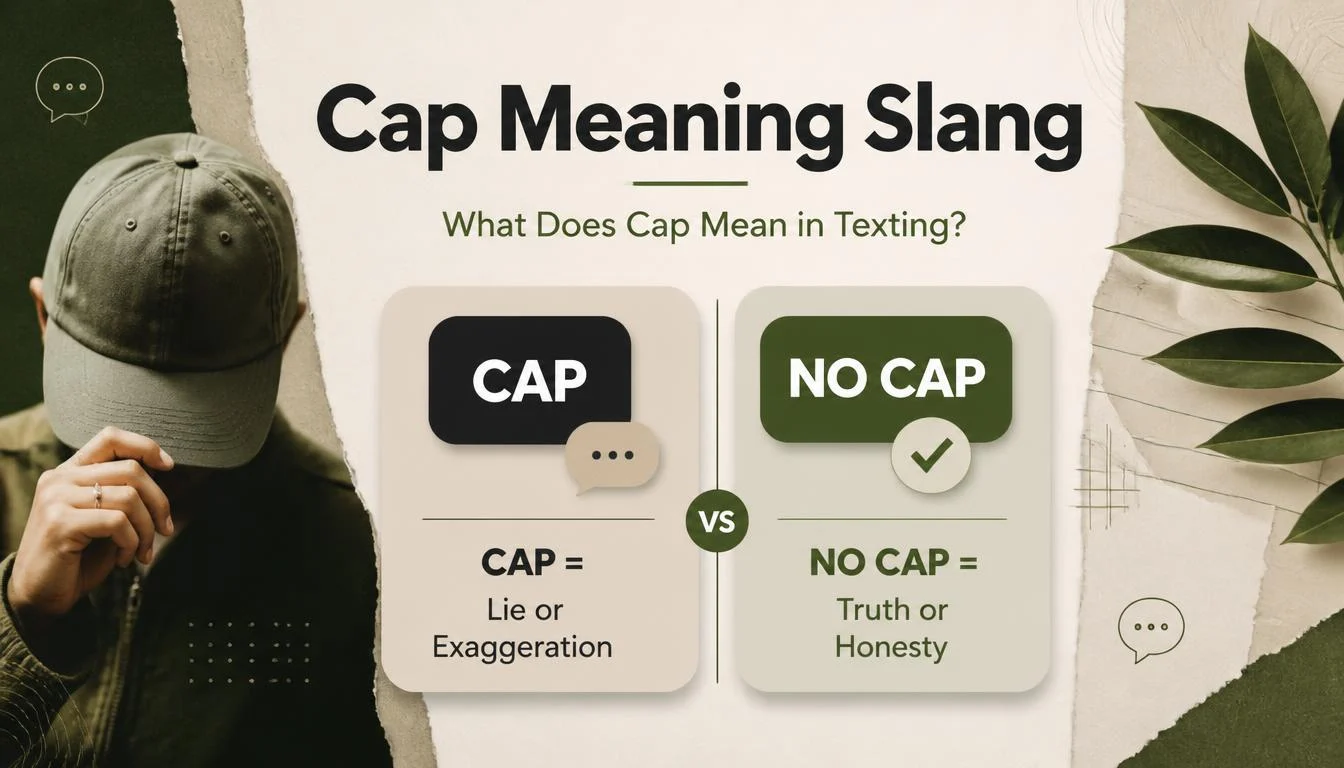
In slang, cap means a lie or something that is not true. When someone says “that is cap”, they mean that they do not believe what another person said. “No cap” means that someone is being honest or telling the truth.
Wondering about the cap meaning slang users often see in texts, social media, and online conversations? In modern slang, “cap” usually means a lie, exaggeration, or false claim. It is often used to call out someone when they are not being truthful.
The expression can also appear in phrases like “that’s cap” and “no cap.” While “that’s cap” suggests that something is untrue, “no cap” means the speaker is being serious or honest. The meaning usually depends on the context.
What Does Cap Mean in Slang?
The cap meaning slang has become very common in online conversations. If someone says “You are capping” they usually mean that you are lying or exaggerating something.
The word is often used in texts, comments and casual conversations. It can also appear on platforms such as TikTok, Instagram and Snapchat.
For example, imagine that your friend says they finished a difficult project in only ten minutes. You might reply, “That is cap.”
Here, you are saying that you do not believe the claim.
The word is informal and should mainly be used in casual communication. It would not normally fit a formal email or professional report.
Cap Slang Meaning Explained
The simple cap slang meaning is a lie, false statement or exaggeration.
When someone says something that seems untrue, another person may respond with “cap.”
For example:
“Bro said he can run 20 miles without stopping. Cap.”
The speaker thinks the claim is probably false.
Cap can also describe exaggeration. A person does not always have to be completely lying for someone to call their statement cap.
Someone might say:
“I got a hundred messages from famous people today.”
If that sounds heavily exaggerated, someone could respond:
“That is cap.”
The meaning depends on the context. In most cases, however, it suggests that the speaker does not believe something.
What Does Cap Mean in Texting?
If you see cap meaning in text, it usually has the same meaning as lying or not telling the truth.
People often use it as a quick response in messages.
For example:
Person 1: “I studied for six hours last night.”
Person 2: “Cap.”
The second person is saying they do not believe the claim.
You may also see longer expressions such as “You are capping” or “Stop capping.”
These expressions are common in casual conversations between friends.
Because texting is usually informal, slang words like cap can make messages shorter and more expressive.
What Does No Cap Mean?
No cap means that someone is being completely honest.
It is often used when a person wants to emphasize that they are telling the truth.
For example:
“I really enjoyed that movie. No cap.”
This means:
“I genuinely enjoyed that movie. I am not exaggerating.”
Another example is:
“No cap, this is the best pizza I have ever had.”
The speaker wants to make it clear that the statement is sincere.
This is why cap and no cap meaning are closely connected. Cap suggests dishonesty or exaggeration while no cap suggests honesty.
No Cap Meaning in Texting
The no cap meaning in texting is simply “I am telling the truth.”
It can appear at the beginning or end of a sentence.
For example:
“No cap, you did a great job.”
This means the person genuinely believes you did a great job.
Another example is:
“That was the funniest video I have seen all week, no cap.”
The phrase adds emphasis to the statement.
It tells the reader that the speaker is not joking or exaggerating.
Cap Meaning Gen Z Uses
The cap meaning Gen Z uses is generally connected to lying, exaggerating or making a false claim.
You will often find the word in casual online conversations. It can appear in comments, texts, memes and short videos.
For example:
“Your story makes no sense. Cap.”
Or:
“Stop capping. We both know what happened.”
The expression can sometimes sound playful. Friends may call each other out without seriously accusing each other of lying.
That is why context matters when understanding slang.
What Does Cap Mean on TikTok?
The cap meaning on TikTok is usually a claim that something is false or exaggerated.
You might see someone comment “cap” under a video when they do not believe the creator’s statement.
For example, a creator might say:
“I learned this entire skill in one day.”
Someone may comment:
“Cap.”
They are suggesting that the creator is exaggerating.
You may also see “no cap” in TikTok captions and comments. It is often used to emphasize a genuine opinion.
For example:
“No cap, this trick actually works.”
The person is saying they are being honest about their experience.
Cap Meaning on Social Media
The cap meaning on social media is not very different from its meaning in texting.
People use cap when they think another person is lying or exaggerating.
It can also be used as a short reaction.
For example:
“That is cap.”
“You are capping.”
“Stop the cap.”
“Straight cap.”
All of these expressions suggest that the speaker does not believe something.
On social media, the word is especially useful because it communicates a reaction quickly.
What Does No Cap Mean on Social Media?
No cap is widely used to show sincerity.
Someone might write:
“No cap, this is the best advice I have received.”
They are emphasizing that the opinion is genuine.
Another person might say:
“No cap, I was nervous before the interview.”
This means they are honestly admitting how they felt.
The phrase can make a statement sound more personal and direct.
What Does You Are Capping Mean?
You are capping means that someone believes you are lying or exaggerating.
For example:
“You said you never liked that song. You are capping.”
The speaker thinks the other person is not being truthful.
It can be serious in some situations. However, friends often use it in a playful way.
For example:
“I never eat sweets.”
“You are capping. I saw you eating chocolate yesterday.”
Here, the phrase is more teasing than aggressive.
What Does Stop Capping Mean?
Stop capping means “stop lying” or “stop exaggerating.”
For example:
“Stop capping. You did not finish all of that food.”
The speaker does not believe the other person’s statement.
It can also be used when someone is bragging.
For example:
“You think you can beat everyone at the game?”
“Stop capping.”
The exact tone depends on the relationship between the speakers.
What Does That Is Cap Mean?
That is cap means “that is a lie” or “I do not believe that.”
It is usually a quick reaction.
For example:
“I have never been late to work.”
“That is cap.”
The second speaker is directly challenging the claim.
A similar expression is:
“That is straight cap.”
This makes the reaction stronger.
What Does Straight Cap Mean?
Straight cap is another way to strongly say that something is false.
For example:
“You said you completed the entire assignment in five minutes. Straight cap.”
The speaker clearly does not believe the statement.
This expression is highly informal. It is more suitable for casual conversations and social media than professional communication.
Why Does Cap Mean Lying?
The use of cap to mean lying comes from modern slang culture and has roots in African American English.
The exact history of the expression is more complex than simply saying that cap suddenly became popular online.
Over time, cap and no cap became widely used in music and internet culture. Social media then helped spread the expressions to a much wider audience.
Today, many people recognize cap as a common slang term for something false or exaggerated.
The meaning can still change slightly depending on the community and context.
Cap vs No Cap
Understanding cap vs no cap is easy once you remember the basic difference.
| Expression | Meaning | Example |
|---|---|---|
| Cap | A lie or exaggeration | “That is cap.” |
| No cap | Truth or honesty | “No cap, I love this song.” |
| You are capping | You are lying | “You are capping right now.” |
| Stop capping | Stop lying or exaggerating | “Stop capping about your score.” |
| That is cap | I do not believe you | “That is cap.” |
| Straight cap | Definitely false | “That is straight cap.” |
The easiest way to remember it is simple.
Cap means false.
No cap means true.
How to Use Cap in a Sentence
Learning the meaning is useful but knowing how to use the word naturally is even more important.
Here are some examples of cap in a sentence:
“Bro, that is cap.”
“You are capping right now.”
“Stop capping about your grades.”
“No cap, that was amazing.”
“That story sounds like cap.”
“She said she finished the whole book in one hour. No way. Cap.”
“I am not capping. I actually met him yesterday.”
These examples show how flexible the word can be in casual communication.
Cap Slang Examples in Everyday Conversations
Here are a few natural cap slang examples:
Example 1
Alex: “I can finish this game without losing once.”
Sam: “Cap.”
Sam does not believe Alex’s claim.
Example 2
Alex: “I have not eaten anything all day.”
Sam: “Stop capping. You had lunch with me.”
Here, Sam is playfully calling Alex out.
Example 3
Alex: “This restaurant is the best in town. No cap.”
Alex is strongly expressing a genuine opinion.
Example 4
Alex: “I finished the entire project in thirty minutes.”
Sam: “That is cap.”
Sam thinks the claim is unrealistic.
Is Cap Always About Lying?
Not necessarily.
The word can also suggest exaggeration or disbelief.
For example, someone may tell a story that is technically possible but sounds exaggerated.
A listener might still say “cap.”
The expression is often based on how believable the statement sounds.
That is why the word can be used casually between friends. It does not always mean that someone is deliberately trying to deceive another person.
When Should You Use Cap?
Cap is best for informal situations.
You can use it when texting friends or chatting online. It can also work in casual comments and conversations.
It is especially common when discussing someone’s claim or story.
However, you should avoid it in formal writing.
For example, writing “That is cap” in a professional email would sound inappropriate.
Instead, you could say:
“I do not believe that information is accurate.”
Formal communication needs clearer language.
Is Cap Appropriate in Professional Communication?
Usually, no.
Cap is slang. It is designed for casual communication rather than professional writing.
You would not normally use it in a business email, academic essay or official document.
For example, instead of writing:
“That is cap.”
You could write:
“That information does not appear to be accurate.”
This sounds clearer and more professional.
Understanding slang also means knowing when not to use it.
Is Cap Still Used as Slang?
Yes. Cap remains recognizable as internet and conversational slang.
Its popularity can vary between different communities and platforms. Slang also changes quickly so expressions may become more or less common over time.
Even when people use it less frequently, the basic meaning is usually easy to understand.
If someone says “no cap,” they are generally emphasizing that they are being honest.
If someone says “cap,” they are usually questioning the truth of a statement.
Cap Meaning Online
The cap meaning online is generally connected to dishonesty, exaggeration or disbelief.
It is especially useful as a short reaction.
Instead of writing a long response such as “I think you are exaggerating and I do not believe what you just said,” someone can simply write:
“Cap.”
That is one reason internet slang spreads so quickly.
Short expressions are easy to type and easy to understand.
FAQs
What does cap mean in slang?
Cap is slang for a lie, false statement or exaggeration. If someone says “that is cap,” they usually mean that they do not believe what another person has said.
What does no cap mean?
No cap means that someone is being honest or telling the truth. It is often used to emphasize that a statement is genuine.
What does cap mean in texting?
In texting, cap usually means that someone is lying or exaggerating. A person may simply reply “cap” when they do not believe another person’s claim.
What does you are capping mean?
“You are capping” means “you are lying” or “you are exaggerating.” Friends may use it seriously or as a playful way to challenge someone’s statement.
What does stop capping mean?
“Stop capping” means “stop lying” or “stop exaggerating.” It is an informal expression commonly used in casual conversations.
Is cap a formal word?
No. Cap is informal slang. It is suitable for casual conversations, texts and social media but it is generally not appropriate for formal emails or professional documents.
Conclusion
The cap meaning slang is simple once you know the basic idea. Cap usually means a lie, false statement or exaggeration. The opposite expression is no cap. It means that someone is being honest or telling the truth. You may see cap in texting, comments and casual conversations. It is especially common in online slang.
Remember the easiest rule:
- Cap means I do not believe you.
- No cap means I am telling the truth.
Once you understand this difference, expressions such as “stop capping,” “you are capping” and “that is cap” become much easier to understand.
Read More Related Articles:
- OP Meaning Slang | Decode This Popular Internet Term In 2026
- CFS Meaning Slang | Real Meaning Behind the Acronym In 2026
- Torta Meaning Slang | Real Meaning Behind This Spanish Word In 2026

Zoe Chambers works as a content writer at synoseek.com, contributing thoughtful pieces on everyday subjects and ideas. She writes in a simple, grounded way, often drawing from real-world experiences. Her focus is on keeping content natural, clear and easy for readers to connect with.
3 thoughts on “Cap Meaning Slang | Decode This Popular Internet Phrase In 2026”