Quick Answer:
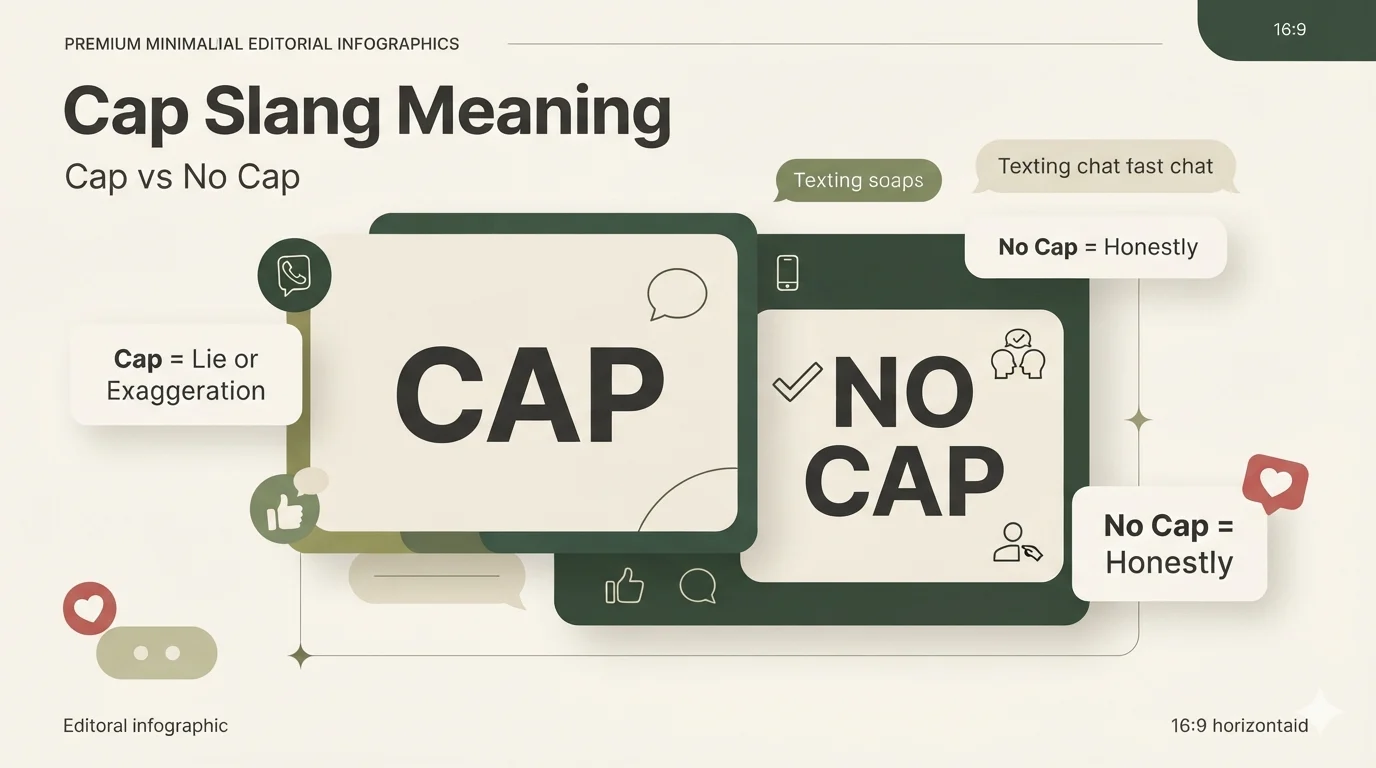
Cap slang meaning refers to a lie, false statement or exaggeration. When someone says “That’s cap” they usually mean “That is not true.” No cap means someone is being honest or serious. The word is common in texting, social media and casual conversations.
If you have seen someone say “No cap” or “That’s cap” online, you may wonder what they actually mean. The phrase is common in texting, social media, and casual conversations.
In this guide, we will explain the Cap Slang Meaning in simple terms. You will learn what cap means, where it comes from, how people use it, and what phrases like “no cap” mean.
What Does Cap Mean in Slang?
The word cap meaning in slang is usually connected with lying or saying something that is not true. If someone makes a claim that sounds false you might hear another person say “That’s cap.”
In simple terms cap can mean a lie. It can also describe an exaggerated statement. The exact meaning depends on the conversation and the tone.
For example someone might say they finished a difficult task in five minutes. If you do not believe them you could respond with “That’s cap.”
This does not always mean the person is deliberately lying. Sometimes they may simply be exaggerating to make a story sound more impressive.
What Does Cap Mean in Slang?
If you are wondering what does cap mean in slang, think of it as a casual way to call something untrue.
It is mostly used in informal communication. You may see it in text messages, comments, memes and social media posts.
For example:
“He said he never uses social media. That’s cap.”
Here the speaker believes the other person’s statement is false.
Another example is:
“I can run ten miles without getting tired.”
Someone might reply:
“Cap!”
The response means they do not believe the claim.
What Does No Cap Mean?
No cap meaning is almost the opposite of cap. When someone says “no cap” they are saying that they are telling the truth.
It can be similar to phrases such as “honestly” or “I am not lying.”
For example:
“No cap, that was the best movie I have seen this year.”
The speaker wants to emphasize that the statement is genuine.
You may also see what does no cap mean searches because the phrase is extremely common in online conversations.
It can appear at the beginning or end of a sentence.
“No cap, I was really nervous.”
“That restaurant is amazing, no cap.”
In both examples the speaker is emphasizing honesty.
What Does Cap Mean in Texting?
Cap meaning in texting is usually the same as its general slang meaning. It refers to something that is false, exaggerated or unbelievable.
Because texting is informal, slang words can make conversations shorter and more expressive.
For example:
Person A: “I got a perfect score without studying.”
Person B: “Cap.”
Here Person B is saying that they do not believe Person A.
Another example is:
Person A: “I have never watched a single episode of that show.”
Person B: “No cap?”
In this context the second person is asking whether the statement is genuinely true.
What Does Cap Mean on TikTok?
You may often see cap meaning on TikTok discussed in comments and captions. On TikTok the word generally carries the same meaning.
Someone may comment “cap” when they think a video or claim is misleading or exaggerated.
You might also see “no cap” used to emphasize an honest opinion.
For example:
“No cap, this is the best study tip I have tried.”
The phrase tells viewers that the person is presenting their genuine opinion.
TikTok slang can spread quickly. A word that starts in one online community can become common across several social platforms.
What Does Cap Mean on Snapchat?
The cap meaning on Snapchat is also based on the idea of lying or exaggerating.
Friends may use “cap” when they do not believe something said in a message.
For example:
“You said you were going to bed two hours ago.”
“I was!”
“Cap 😂”
The final message suggests that the speaker thinks their friend is lying.
The word is casual. It would not normally be suitable for formal emails or professional communication.
What Does Cap Mean on Social Media?
Across social media platforms cap is commonly used to question whether a statement is true.
You can find it in comments, captions, replies and private messages.
Someone might post:
“I learned this entire song in one day.”
Another person may reply:
“That’s cap.”
The reply suggests disbelief.
People also use the word humorously. A person may say “cap” even when they know the other person is joking.
This is why context matters when interpreting slang.
What Does Capping Mean in Slang?
Capping meaning in slang is closely related to cap. If someone is capping they are lying or exaggerating.
The word works as a verb in casual speech.
For example:
“Stop capping.”
This means “Stop lying” or “Stop exaggerating.”
Another example is:
“Are you capping right now?”
This means “Are you lying right now?”
You may also hear:
“He keeps capping about his achievements.”
Here the speaker believes that the person is making exaggerated claims.
What Does “You’re Capping” Mean?
You’re capping meaning is fairly simple. It usually means “You are lying” or “You are not telling the truth.”
The phrase can be serious or playful depending on the situation.
For example:
“You’re capping. There is no way you finished all of that in ten minutes.”
It can also be used between friends as a joke.
“You’re capping if you say you do not like pizza.”
The meaning depends heavily on the relationship between the speakers.
What Does “That’s Cap” Mean?
That’s cap meaning is a direct way to say that something is not true.
It can also mean that a statement sounds unrealistic.
For example:
“He said he bought a new car with his first paycheck.”
“That’s cap.”
The speaker does not believe the claim.
A shorter version is simply:
“Cap.”
This one word can communicate disbelief in a casual conversation.
What Does “Stop Capping” Mean?
Stop capping meaning is “stop lying” or “stop exaggerating.”
It is often used when someone believes another person is making an unrealistic claim.
For example:
“Stop capping. You definitely knew about the surprise party.”
The phrase can sound confrontational in some situations.
Among friends it can also be playful.
That is why tone and context are important when using slang.
Cap vs No Cap
The difference between cap vs no cap is easy to understand.
| Expression | Meaning |
|---|---|
| Cap | A lie or exaggerated statement |
| No cap | Honestly or without lying |
| That’s cap | That is not true |
| You’re capping | You are lying or exaggerating |
| Stop capping | Stop lying or exaggerating |
| No cap, seriously | I am being completely honest |
Think of cap as a way to question the truth.
Think of no cap as a way to emphasize the truth.
Is Cap Always a Lie?
Not necessarily.
The word cap often suggests a lie but it can also refer to exaggeration or an unbelievable statement.
For example someone could say:
“I waited for you for a thousand years.”
They are obviously exaggerating. A friend might respond with “Cap.”
The person may not be trying to deceive anyone. They could simply be using dramatic language.
This is why cap slang examples can have different levels of seriousness.
How to Use Cap in a Sentence
Learning how to use cap in a sentence is easier when you look at everyday examples.
Example 1
“You said you were busy but you were watching movies all day. Cap.”
Meaning: The speaker thinks the claim is false.
Example 2
“No cap, this is the best burger I have ever had.”
Meaning: The speaker is being completely honest.
Example 3
“Stop capping about your test score.”
Meaning: Stop lying or exaggerating about your score.
Example 4
“Are you serious or is that cap?”
Meaning: Is that true or are you making it up?
Example 5
“That’s cap and you know it.”
Meaning: That statement is clearly untrue.
Cap Slang Examples in Texting
Here are some natural cap slang examples you might see in messages.
Friend: “I finished the whole project in thirty minutes.”
Reply: “Cap 😂”
Another example:
Friend: “No cap, I really enjoyed that class.”
The speaker is emphasizing that their opinion is genuine.
You might also see:
“Bro is capping.”
This means the speaker thinks someone is lying or exaggerating.
Another common expression is:
“No cap though.”
This usually means the person wants to stress that they are being serious.
Where Did the Slang Word Cap Come From?
The slang use of cap is associated with African American English and later became widely popular through music, online culture and social media.
The expression no cap became especially visible in modern internet language.
The exact history of the term is more complicated than simply saying that it appeared on one specific platform.
Its modern popularity has been influenced by hip hop culture and internet communities.
Today the word is widely recognized beyond those original communities.
Why Do People Say No Cap?
People say no cap because it adds emphasis to a statement.
Someone may already be telling the truth. Adding “no cap” simply makes their sincerity clear.
For example:
“No cap, you did a great job.”
This can sound more emphatic than:
“You did a great job.”
The phrase can also make casual speech feel more natural among people who regularly use internet slang.
Is Cap Appropriate in Formal English?
Usually no.
Cap is informal slang. It works well in casual conversations with friends and in online communication.
It is not normally appropriate for professional emails, academic writing or formal reports.
Instead of writing:
“That claim is cap.”
You could write:
“That claim is inaccurate.”
Or:
“That statement does not appear to be true.”
The best choice depends on the situation and audience.
Cap Meaning in Gen Z Slang
Cap meaning in Gen Z slang generally refers to lying, exaggerating or making a false claim.
The expression has become part of wider internet vocabulary.
You may see it alongside other slang terms in comments and messages.
However slang changes quickly. The meaning and popularity of a word can shift over time.
A phrase that feels common today may become less popular later.
Cap Synonyms in Casual Language
There are several informal expressions that can communicate a similar idea.
Some common alternatives include:
- lie
- lying
- fake
- false
- exaggeration
- making things up
- not telling the truth
- talking nonsense
- making an unbelievable claim
These are not perfect replacements in every situation.
Cap has a particular casual and internet based tone.
FAQs
Does cap mean lie?
Yes. In slang cap commonly means a lie or an exaggerated statement. It can also be used when someone does not believe a claim.
What does no cap mean?
No cap means “I am telling the truth” or “I am being honest.” It is often used to emphasize that a statement is genuine.
What does capping mean?
Capping means lying or exaggerating. If someone says “You are capping” they usually mean “You are not telling the truth.”
What does that’s cap mean?
“That’s cap” means “That is not true.” It can also mean that someone thinks a statement is exaggerated or unbelievable.
What does stop capping mean?
“Stop capping” means “Stop lying” or “Stop exaggerating.” It can be serious or playful depending on the context.
Is cap formal English?
No. Cap is informal slang. It is more suitable for casual conversations, texting and social media than professional or academic writing.
Conclusion
The cap slang meaning is usually connected with lying, exaggerating or making an unbelievable claim. When someone says “That’s cap” they are questioning whether something is true. When someone says “No cap” they are emphasizing honesty. Understanding both expressions makes modern texting and social media conversations much easier to follow.
4 thoughts on “Cap Slang Meaning | Is It a Lie or Something Else In 2026”