Quick Answer
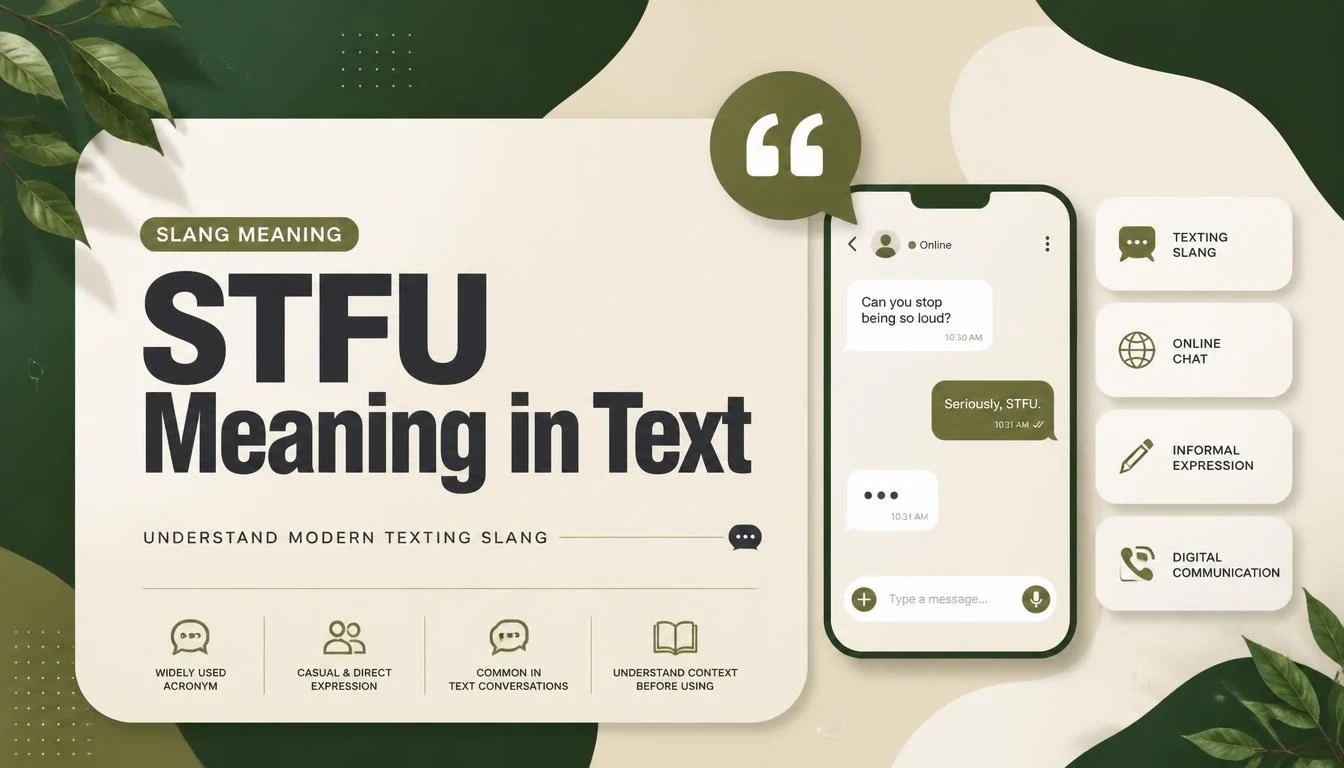
STFU stands for “Shut the F* Up.”** People use it in texting and online conversations to tell someone to stop talking or be quiet. Depending on the context, it can sound rude, angry, playful, or joking between close friends.
The STFU meaning in text is a common question among people who come across this abbreviation in messages, social media comments, or online chats. STFU is an informal internet slang term that stands for “Shut the F*** Up.” It’s often used when someone feels annoyed, wants another person to stop talking, or reacts strongly to something they’ve heard.
However, STFU doesn’t always express anger or disrespect. Friends sometimes use it jokingly to show surprise, excitement, or disbelief, especially when someone shares unexpected news. The meaning largely depends on the conversation, relationship, and tone behind the message.
What Does STFU Mean in Text?
Have you received a message containing “STFU” and wondered whether the sender was joking or genuinely upset? This abbreviation appears frequently in text messages, social media comments, and online conversations. Although it’s short, its tone can carry quite a punch.
The STFU meaning in text is “Shut the Fuck Up.” People use this expression when they want someone to stop talking, become quiet, or end a conversation. It’s an informal texting abbreviation that includes profanity, making it considerably stronger than simply saying “be quiet.”
However, not every message containing STFU signals genuine anger. Close friends sometimes use it to tease each other or react to something unbelievable. For example, someone might text “STFU, you actually won?” to express excitement rather than hostility.
The surrounding conversation matters. A laughing emoji or playful exchange might soften the expression, while an argument can make it sound insulting or aggressive.
What Does STFU Stand For?
STFU is an initialism formed from the first letters of four words. Its full form is “Shut the Fuck Up.”
Here’s how the abbreviation breaks down:
| Letter | Full word |
|---|---|
| S | Shut |
| T | The |
| F | Fuck |
| U | Up |
People often type STFU instead of the complete expression because it’s quicker and fits naturally into informal digital conversations. You might see it in private messages, gaming chats, comment sections, and group conversations.
Although people usually recognize its meaning, the abbreviation doesn’t make the original expression less vulgar. It still carries the same underlying message and can offend someone depending on how you use it.
What Does STFU Mean in Different Contexts?
One interesting thing about internet slang is that the same abbreviation can communicate different emotions. STFU is a good example because its meaning can shift with the conversation.
1. STFU as an Angry or Rude Response
When someone uses STFU during an argument, they’re usually expressing irritation or hostility. They might feel frustrated with another person’s comments or simply want the discussion to stop.
For example:
“STFU! I’m tired of hearing your excuses.”
This message sounds aggressive because the sender directly dismisses the other person’s words. It doesn’t invite a calm discussion. Instead, it communicates anger and impatience.
2. STFU as a Joke Between Friends
Among close friends, STFU can sometimes sound playful rather than offensive. People may use it when they’re teasing each other or reacting to an unexpected statement.
For example:
“STFU 😂 You actually got tickets to the concert?”
Here, the sender probably isn’t asking their friend to become silent. They’re expressing excitement and disbelief. The laughing emoji helps communicate the playful tone.
Still, don’t assume everyone enjoys this kind of humor. Some people dislike profanity even when friends use it casually.
3. STFU as a Sarcastic Reaction
Sometimes people use STFU when they hear something surprising or difficult to believe. In these situations, the abbreviation works more like an emotional reaction than a serious command.
For example:
“STFU! Your favorite actor replied to your comment?”
The sender probably means something like “No way!” or “I can’t believe that happened!” The phrase adds dramatic emphasis to their reaction.
4. STFU to End an Argument
People may also use STFU when they want another person to stop arguing. This usually happens during heated conversations where neither person wants to back down.
For example:
“Just STFU and listen for once.”
This message sounds dismissive and confrontational. It suggests that the sender doesn’t want to hear another opinion at that moment.
However, using STFU rarely helps resolve disagreements. It can make the other person feel disrespected and turn a small disagreement into a bigger conflict.
What Does STFU Mean From a Girl or a Guy?
When someone sends you STFU, you might wonder whether their message carries a hidden meaning. Does it suggest frustration, playful teasing, or something more serious? The answer depends on your relationship and what happened before the message.
The abbreviation itself doesn’t change based on gender. However, the sender’s personality and communication style can help you understand the intention.
STFU Meaning From a Girl
When a girl texts STFU, she might be expressing annoyance or reacting playfully to something you said. The surrounding conversation usually provides the best clues.
Here are a few possible interpretations:
- Annoyance: She might feel irritated by your comments or want you to stop discussing something.
- Playful teasing: She may use it jokingly if you’re close friends.
- Disbelief: She might be surprised by something you shared.
- Setting a boundary: She could be telling you that a particular comment or conversation has gone too far.
For example, if she texts “STFU 😂 you’re actually so funny” after a joke, she’s probably teasing you. However, a message like “STFU, I’m serious” sounds much more confrontational.
STFU Meaning From a Guy
When a guy sends STFU, it can also communicate several different emotions. He might be joking with a friend or expressing genuine frustration.
Consider these possibilities:
- Anger: He wants you to stop talking during an argument.
- Friendly teasing: He uses the abbreviation as part of your usual banter.
- Surprise: He’s reacting to unexpected news.
- Impatience: He doesn’t want to continue a particular discussion.
For instance, “STFU bro, you met him?” usually expresses disbelief or excitement. On the other hand, “Just STFU already” can sound dismissive or disrespectful.
A useful tip: Don’t judge the entire message by the abbreviation alone. Consider the sender’s usual behavior, the conversation’s subject, and any emojis accompanying the text.
How Is STFU Used on Social Media and Messaging Apps?
STFU appears across several digital platforms. People use it in private messages, public comments, gaming conversations, and group chats.
Its basic meaning stays the same. However, the setting can influence how other people interpret it.
STFU Meaning on Snapchat
On Snapchat, people commonly use STFU in private chats and casual conversations with friends. It can express surprise, annoyance, or playful disbelief.
For example:
“STFU 😭 You really posted that picture?”
Depending on the friendship, this could be a teasing reaction rather than a serious insult.
STFU Meaning on Instagram
On Instagram, STFU can appear in direct messages, story replies, and comment sections. People sometimes use it when reacting to controversial opinions or surprising posts.
For example:
“STFU, I wasn’t expecting that ending!”
Here, the sender expresses surprise rather than asking someone to stop speaking.
However, using the abbreviation in a public comment can come across as disrespectful. Other users may interpret it as an aggressive response.
STFU Meaning on TikTok
TikTok users sometimes include STFU in video comments and discussions. It can appear in reaction videos, arguments, or conversations about trending topics.
For example:
“STFU, this is literally the funniest thing I’ve seen today.”
This is an exaggerated reaction that communicates amusement or disbelief.
In more serious discussions, however, STFU can be used to dismiss another person’s opinion. The tone depends on the surrounding comments.
STFU Meaning on WhatsApp and Group Chats
WhatsApp conversations often involve friends, family members, and coworkers. People may use STFU in informal group chats when joking around or expressing frustration.
For example:
“STFU guys, I’m trying to watch the match.”
Among friends, this might sound like casual teasing. In a family or work group, the same message could seem unnecessarily rude.
STFU Meaning in Online Gaming
Online gaming is another place where this abbreviation frequently appears. Players sometimes use it in multiplayer chats when teammates argue, criticize their performance, or distract others.
For example:
“STFU and focus on the game.”
This message expresses irritation and tells another player to stop talking. Gaming conversations can move quickly, but that doesn’t make offensive language harmless.
Real Life Examples of STFU in Text Messages
Understanding an abbreviation becomes easier when you see how people actually use it. The following examples show different situations where STFU might appear.
| Text message example | Meaning or intended tone |
|---|---|
| “Bro, STFU 😂” | Playful teasing |
| “STFU, you’re embarrassing me.” | Annoyance |
| “OMG, STFU! Is that true?” | Surprise |
| “Just STFU and listen.” | Anger |
| “STFU, that’s hilarious.” | Playful reaction |
| “Can you STFU for a minute?” | Impatience |
| “STFU, no way you met him!” | Excitement |
| “I told him to STFU during the argument.” | Describing a confrontation |
| “STFU, I can’t stop laughing.” | Amusement |
| “Please just STFU already.” | Frustration |
STFU in a Sentence
STFU works as an informal expression in different types of sentences. People often place it at the beginning to emphasize their reaction or use it within a longer message.
Here are a few examples:
- “STFU, I can’t believe you remembered my birthday!”
- “He told everyone to STFU during the movie.”
- “Why don’t you STFU and let her finish?”
- “STFU, that story sounds completely unbelievable.”
- “She jokingly told her brother to STFU.”
Notice how the meaning changes with each situation. Some examples sound playful while others communicate genuine irritation.
Is STFU Rude or Offensive?
Yes, STFU is generally considered rude and offensive. Its full form contains a strong swear word, which gives the expression a harsh tone.
Although people sometimes use it casually with friends, you shouldn’t assume everyone will find it funny. Someone unfamiliar with your humor might interpret it as an insult.
There are three important things to understand about its tone:
- Profanity: The full expression includes an offensive word.
- Directness: It tells someone to stop talking rather than politely requesting silence.
- Context: A playful conversation can soften its tone, but an argument can make it sound hostile.
Is STFU Considered a Swear Word?
Yes. STFU is an abbreviation of a phrase that contains profanity. Writing the initials instead of the complete words doesn’t change their meaning.
Some people use the abbreviation to avoid typing the full expression. Others use it because it’s widely recognized in internet slang.
However, it remains vulgar language. You should be careful when using it around people who might find profanity offensive.
Is STFU Appropriate for Professional Conversations?
No. STFU generally isn’t appropriate for professional communication.
Using it in workplace emails, business messages, or formal discussions can make you sound disrespectful. It may also damage professional relationships.
Instead of writing “STFU” to someone who keeps interrupting, try a more respectful expression:
- “Please let me finish.”
- “Could we stay focused on the topic?”
- “I’d appreciate a chance to explain my point.”
- “Let’s keep the discussion respectful.”
These alternatives communicate your message without unnecessary hostility.
How to Respond When Someone Says STFU
Receiving STFU from someone can feel confusing or insulting. Before responding, consider whether the sender is joking or genuinely trying to disrespect you.
You don’t always need to match their tone. Sometimes a calm response works much better.
Funny Responses to STFU
If a close friend sends STFU jokingly, you can respond with something equally playful.
Here are some lighthearted replies:
- “Make me 😂”
- “Someone woke up grumpy!”
- “Only if you say please.”
- “You first!”
- “Why so dramatic?”
- “I wasn’t finished!”
- “Not until I finish my story.”
Use these responses when you know the other person is joking. They might not work well during a serious argument.
Calm Responses to STFU
If someone seems annoyed, a calm response can prevent the conversation from becoming more heated.
Try these messages:
- “There’s no need to be rude.”
- “I’m just trying to explain my point.”
- “Let’s talk respectfully.”
- “If you need a break, just say so.”
- “We can discuss this when you’re ready.”
These replies establish a respectful tone without adding more negativity.
Responses When Someone Is Being Disrespectful
Sometimes STFU isn’t a joke. If someone repeatedly uses offensive language toward you, it’s reasonable to establish a clear boundary.
You can respond with:
- “Don’t talk to me that way.”
- “I won’t continue this conversation if you’re being disrespectful.”
- “We can talk when you’re ready to be respectful.”
- “I’m not interested in arguing.”
- “Let’s end this conversation here.”
You don’t have to keep responding to someone who refuses to communicate respectfully. Walking away can be the better choice.
Polite Alternatives to STFU
Not every situation calls for strong language. Sometimes you want someone to stop talking without sounding angry or disrespectful.
Fortunately, several expressions communicate a similar message without using profanity. The best choice depends on how direct or polite you want to sound.
Casual Alternatives to STFU
These expressions work better in relaxed conversations with friends or people you know well.
| Alternative | Meaning |
|---|---|
| Zip it | Stop talking |
| Pipe down | Become quieter |
| Give it a rest | Stop repeating something |
| Knock it off | Stop doing something annoying |
| Enough already | Stop what you’re saying |
| Cut it out | Stop a particular behavior |
Keep in mind that these expressions aren’t always polite. For example, “Pipe down” can sound just as dismissive in an argument.
Polite Alternatives to STFU
If you want to communicate respectfully, consider these options:
| Alternative | Best situation |
|---|---|
| Please be quiet. | Asking for silence |
| Could you stop talking for a moment? | Requesting a pause |
| Let’s change the subject. | Moving away from an uncomfortable topic |
| Please let me finish. | Handling interruptions |
| Can we pause this conversation? | Avoiding an argument |
| I’d rather not discuss this. | Setting a boundary |
| That’s enough for now. | Ending an uncomfortable discussion |
| Let’s agree to disagree. | Ending a disagreement peacefully |
These alternatives help you express frustration or request silence without making the other person feel attacked.
STFU vs. Other Common Texting Abbreviations
Internet slang includes many abbreviations that contain profanity or express strong emotions. Although some might seem similar to STFU, their meanings aren’t interchangeable.
Here’s how STFU compares with other popular texting abbreviations.
| Abbreviation | Full form | Meaning |
|---|---|---|
| STFU | Shut the Fuck Up | Tells someone to stop talking |
| GTFO | Get the Fuck Out | Tells someone to leave or expresses disbelief |
| WTF | What the Fuck | Expresses surprise, confusion, or frustration |
| TF | The Fuck | Adds emphasis to a statement |
| SMH | Shaking My Head | Expresses disappointment |
| IDGAF | I Don’t Give a Fuck | Shows a lack of concern |
| LMAO | Laughing My Ass Off | Expresses strong amusement |
| LMFAO | Laughing My Fucking Ass Off | Expresses intense amusement |
STFU vs. GTFO
STFU and GTFO both contain profanity, but they communicate different messages.
STFU means “Shut the Fuck Up.” It tells someone to stop talking or remain silent.
GTFO means “Get the Fuck Out.” It usually tells someone to leave. People also use it to express disbelief when something sounds unbelievable.
Example of STFU:
“STFU and let me explain.”
Example of GTFO:
“GTFO! You actually won the lottery?”
The first expression demands silence. The second expresses disbelief or tells someone to leave.
STFU vs. STF
STF isn’t a widely standardized abbreviation with one universally accepted meaning. In some conversations, people may use it as an incomplete version of STFU.
However, you shouldn’t automatically assume they mean the same thing. Check the surrounding message before interpreting an unfamiliar abbreviation.
When Should You Use STFU in Texting?
Although STFU is common in internet slang, that doesn’t mean it’s suitable for every conversation. Knowing when to use it can help you avoid unnecessary misunderstandings.
Here are a few situations worth considering:
1. With close friends: If your friends regularly use profanity and understand your humor, STFU might work as playful teasing.
2. During casual conversations: Some people use it as an exaggerated reaction to surprising news or unbelievable stories.
3. During serious disagreements: It’s better to avoid STFU when emotions are already running high. The expression can make an argument more personal.
4. With unfamiliar people: Avoid using it with someone whose communication style you don’t understand. They might interpret it as a genuine insult.
5. In professional settings: Don’t use STFU in workplace conversations, formal messages, or business emails. Choose respectful alternatives instead.
The simplest rule is to consider your audience before sending the message. If you aren’t sure someone will understand your intention, choose different wording.
FAQs
1. What does STFU mean in a text message?
STFU stands for “Shut the Fuck Up.” It’s a vulgar texting abbreviation used to tell someone to stop talking. People also use it to express frustration, surprise, or playful disbelief.
2. Does STFU simply mean shut up?
Yes, both expressions communicate a similar message. However, STFU includes an additional swear word that makes it stronger and more offensive than simply saying “shut up.”
3. Is STFU always meant to be insulting?
No. Close friends sometimes use STFU jokingly when teasing each other or reacting to surprising news. However, it can sound insulting during arguments or serious conversations.
4. What does STFU mean when someone sends it with laughing emojis?
When someone sends STFU with laughing emojis, they might be joking or expressing disbelief. For example, “STFU 😂” could mean they’re surprised by something you said. The conversation helps reveal their actual intention.
5. Can STFU be used between close friends?
Yes. Some friends use STFU as part of their everyday banter. However, it depends on their friendship and comfort with profanity. What sounds funny to one person might offend another.
6. Is STFU appropriate for professional messages?
No. STFU contains profanity and can sound disrespectful in professional communication. Use alternatives such as “Please let me finish” or “Could we change the subject?” instead.
7. What is a nicer way to say STFU?
You can say “Please be quiet,” “Could you stop talking?” or “Let’s change the subject.” These expressions communicate your request without using offensive language.
8. What does STFU mean in online gaming?
In online gaming, STFU usually means “Shut the Fuck Up.” Players use it to tell teammates or opponents to stop talking. It can express frustration during competitive matches or appear as joking banter between friends.
Conclusion
STFU means “Shut the Fuck Up” and is a common abbreviation in texting, social media, and online conversations. Depending on the situation, it can express anger, frustration, sarcasm, or playful disbelief.
Although friends sometimes use it jokingly, remember that STFU contains profanity and can easily offend someone. Before using it, consider your relationship with the recipient and the tone of your conversation. When in doubt, a polite alternative is usually the better choice.