Quick Answer
Warm can mean many things: a pleasant temperature, a kind personality, or an inviting atmosphere. Depending on context, natural alternatives include cozy, toasty, mild, balmy, welcoming, friendly, and affectionate. The best choice depends on whether you’re describing weather, a person, a feeling, or a place.
Looking for other ways to say “warm”? The word can describe temperature, personality, emotions, colors, relationships, or a welcoming atmosphere. Choosing the right alternative depends on the context and the feeling you want to express.
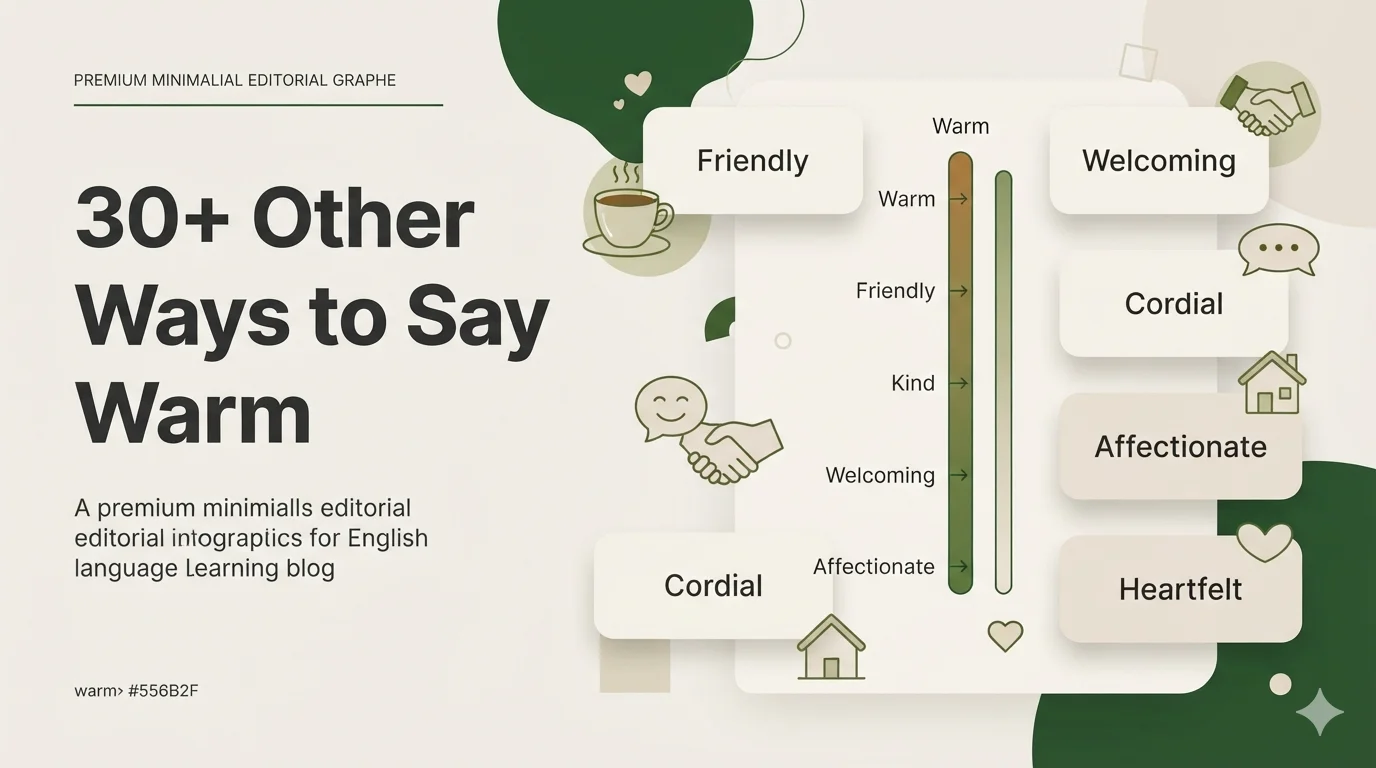
In this guide, you’ll discover 30+ natural alternatives to “warm” with clear meanings and examples. Whether you need a synonym for a friendly person, a heartfelt message, or a cozy atmosphere, these options can help you choose the right word.
Why People Search for Other Ways to Say Warm
People look for alternatives to “warm” for several reasons. Sometimes the word feels repeated too often in a piece of writing. Sometimes a writer wants a more precise term, since “warm” can describe temperature, emotion, color, or hospitality, and each of these deserves its own vocabulary. Other times, someone is preparing for an interview, writing a personal essay, or crafting a description of a home for a real estate listing, and they want language that sounds richer and more specific than a single overused adjective.
There’s also a real difference between spoken and written usage. In conversation, people often reach for simple words like “cozy” or “nice and warm.” In writing, especially in professional English phrases used in essays, marketing copy, or formal correspondence, more varied and descriptive words tend to work better. Knowing when to use informal expressions in English versus more polished vocabulary can make a real difference in how your communication lands.
This guide breaks the word down by tone, meaning, and use case, so you always know which alternative to warm fits the moment.
Tone Ladder
Not every synonym for warm carries the same weight. Some are best for formal writing, others for casual chats among friends.
Very formal options include temperate and clement, which are common in scientific or academic descriptions of climate.
Formal options include mild, balmy, and comfortable, all of which work well in professional or descriptive writing.
Neutral options include warm-hearted, pleasant, and inviting, which sit comfortably in almost any context.
Casual options include cozy, toasty, and snug, which feel natural in everyday conversation.
Informal or playful options include nice and warm, super warm, or warm as toast, which are best reserved for relaxed, spoken English.
Generally, the more formal the setting, the more you should lean toward words like temperate or mild. For spoken English, cozy and toasty sound far more natural than clement or temperate, which can come across as stiff outside of academic writing.
Tone Classification Table
| Phrase | Tone Level | Formality | Best Situation |
|---|---|---|---|
| Temperate | Very Formal | High | Scientific or climate writing |
| Clement | Very Formal | High | Weather reports, academic text |
| Mild | Formal | Medium High | Descriptions of weather or seasons |
| Balmy | Formal | Medium High | Travel writing, evening descriptions |
| Comfortable | Formal | Medium | Real estate listings, hospitality |
| Warm hearted | Neutral | Medium | Describing personality |
| Inviting | Neutral | Medium | Home or atmosphere descriptions |
| Cozy | Casual | Low | Everyday conversation, home decor |
| Toasty | Casual | Low | Talking about heating or blankets |
| Snug | Casual | Low | Describing small warm spaces |
| Nice and warm | Informal | Very Low | Spoken conversation only |
Quick Selection Guide
- For an interview, when describing a warm and welcoming workplace culture, the best choice is usually warm and collegial or a genuinely welcoming environment.
- For an email, especially when closing a message, warm regards or with warm wishes strikes the right professional and friendly balance.
- For networking, describing someone as warm and approachable signals both confidence and likability without sounding overly casual.
- For casual conversation, cozy or nice and warm feels natural and relaxed, whether you’re talking about the weather or a blanket by the fire.
Real-Life Transformations
Job Interview Scenario
Before: “Our office has a warm vibe.”
After: “Our office has a genuinely welcoming, collegial atmosphere where people support one another.”
Networking Event Scenario
Before: “She’s a really warm person.”
After: “She comes across as approachable and warm hearted, the kind of person people naturally gravitate toward.”
Email Scenario
Before: “Warm greetings, hope you’re doing well.”
After: “With warm regards, I hope this message finds you well.”
Casual Conversation Scenario
Before: “It’s pretty warm outside today.”
After: “It’s actually really balmy out there today, perfect evening weather.”
30+ Other Ways to Say Warm
Group One
Cozy
Meaning: Comfortable and snug, often related to warmth and comfort together.
Explanation: Used for physical spaces, clothing, or emotional comfort.
Example: “The cabin felt cozy with the fireplace crackling.”
Tone: Casual.
Best use: Describing homes, cafes, or blankets.
Worst use: Formal business writing.
Context variability: Works for both temperature and emotional comfort.
Toasty
Meaning: Pleasantly warm, often used for temperature.
Explanation: Informal and vivid, evoking a physical sensation of heat.
Example: “My hands finally feel toasty after that hot coffee.”
Tone: Casual.
Best use: Everyday talk about temperature.
Worst use: Academic or formal writing.
Context variability: Mostly limited to physical warmth.
Mild
Meaning: Not extreme, gentle in temperature.
Explanation: Commonly used in weather forecasts and seasonal descriptions.
Example: “We had a mild winter this year.”
Tone: Formal.
Best use: Weather reports and seasonal writing.
Worst use: Describing personality.
Context variability: Mostly used for temperature and climate.
Balmy
Meaning: Pleasantly warm and soft, often describing air or evenings.
Explanation: Evokes a gentle and comfortable warmth, often used poetically.
Example: “It was a balmy summer night.”
Tone: Formal to neutral.
Best use: Travel writing and descriptive prose.
Worst use: Casual texting.
Context variability: Limited to weather and atmosphere.
Temperate
Meaning: Moderate and not extreme in temperature.
Explanation: Often used in scientific or geographic contexts.
Example: “The region has a temperate climate.”
Tone: Very formal.
Best use: Academic or scientific writing.
Worst use: Casual conversation.
Context variability: Strictly climate related.
Group Two
Comfortable
Meaning: Pleasant and free from extremes, often used for temperature or spaces.
Explanation: A versatile word that fits both physical and emotional warmth.
Example: “The room stayed comfortable all winter.”
Tone: Neutral to formal.
Best use: Real estate and hospitality writing.
Worst use: Describing intense personality traits.
Context variability: Broad and works in many contexts.
Snug
Meaning: Cozy and closely fitted, creating a sense of warmth in a small space.
Explanation: Often used for smaller rooms or clothing.
Example: “The cottage was snug and warm despite the storm outside.”
Tone: Casual.
Best use: Describing small and intimate spaces.
Worst use: Formal reports.
Context variability: Mostly used for physical spaces.
Heated
Meaning: Made warm, often through a device or heating system.
Explanation: Practical and literal, usually referring to temperature control.
Example: “The pool is heated year round.”
Tone: Neutral.
Best use: Describing amenities or heating systems.
Worst use: Describing emotions.
Context variability: Mostly technical or literal warmth.
Sultry
Meaning: Hot and humid, sometimes used to describe weather or mood.
Explanation: Carries a slightly dramatic or sensual connotation.
Example: “The sultry afternoon made everyone move slowly.”
Tone: Formal to literary.
Best use: Descriptive or creative writing.
Worst use: Professional emails.
Context variability: Used for weather and atmosphere and occasionally mood.
Welcoming
Meaning: Friendly and inviting, especially toward guests.
Explanation: Shifts the focus from temperature to hospitality and social warmth.
Example: “The staff created a welcoming atmosphere for new clients.”
Tone: Neutral to formal.
Best use: Hospitality and workplace culture.
Worst use: Describing literal temperature.
Context variability: Strictly emotional or social warmth.
Group Three
Warm Hearted
Meaning: Kind, caring, and generous in nature.
Explanation: Describes personality rather than temperature.
Example: “She’s known for being warm hearted and generous with her time.”
Tone: Neutral.
Best use: Character descriptions and recommendations.
Worst use: Weather related writing.
Context variability: Strictly emotional or personality based.
Affectionate
Meaning: Showing warmth and fondness toward others.
Explanation: Often used in personal or relational contexts.
Example: “He gave an affectionate smile before leaving.”
Tone: Neutral to formal.
Best use: Describing relationships.
Worst use: Describing temperature or weather.
Context variability: Strictly emotional.
Friendly
Meaning: Kind and approachable in manner.
Explanation: A simple and versatile substitute for emotional warmth.
Example: “The team has a friendly, warm culture.”
Tone: Neutral.
Best use: Workplace and community descriptions.
Worst use: Literary or poetic writing.
Context variability: Broad and works in most social contexts.
Inviting
Meaning: Attractive and appealing, encouraging closeness.
Explanation: Often used for spaces, meals, or atmospheres.
Example: “The lobby had an inviting, warm glow.”
Tone: Neutral to formal.
Best use: Interior design and hospitality copy.
Worst use: Describing personality traits directly.
Context variability: Mostly used for physical spaces and atmosphere.
Genial
Meaning: Friendly and cheerful, pleasant in manner.
Explanation: A slightly more formal way to describe a warm personality.
Example: “Our host was genial and easy to talk to.”
Tone: Formal.
Best use: Describing hosts, professionals, or public figures.
Worst use: Casual texting.
Context variability: Strictly personality based.
Group Four
Cordial
Meaning: Warm and friendly, often in a polite or professional sense.
Explanation: Fits business and diplomatic contexts well.
Example: “The two companies maintained a cordial relationship.”
Tone: Formal.
Best use: Business writing and professional emails.
Worst use: Describing physical temperature.
Context variability: Strictly professional or social tone.
Toasted
Meaning: Warmed thoroughly, often used casually when talking about feeling heat.
Explanation: Informal and vivid, similar to “toasty.”
Example: “I feel completely toasted after sitting by the fire.”
Tone: Casual.
Best use: Relaxed conversation.
Worst use: Formal writing.
Context variability: Physical warmth only.
Sunny
Meaning: Bright and warm, often describing weather or mood.
Explanation: Has a dual purpose and can describe both climate and personality.
Example: “She has a sunny, warm disposition.”
Tone: Neutral.
Best use: Describing mood or weather together.
Worst use: Technical or scientific writing.
Context variability: Flexible between weather and personality.
Hospitable
Meaning: Generous and warm toward guests.
Explanation: Emphasizes generosity and openness rather than temperature.
Example: “The family was incredibly hospitable during our stay.”
Tone: Formal.
Best use: Travel writing and hospitality reviews.
Worst use: Weather descriptions.
Context variability: Strictly social warmth.
Sympathetic
Meaning: Showing understanding and warmth toward someone’s feelings.
Explanation: Highlights emotional support rather than personality overall.
Example: “Her sympathetic tone made the conversation easier.”
Tone: Formal.
Best use: Describing emotional support or care.
Worst use: Describing weather or temperature.
Context variability: Strictly emotional.
Group Five
Radiant
Meaning: Giving off warmth or light, often describing glowing warmth.
Explanation: Works well for both literal heat and figurative warmth of personality.
Example: “Her radiant warmth put everyone at ease.”
Tone: Formal to literary.
Best use: Descriptive or creative writing.
Worst use: Casual conversation.
Context variability: Flexible and can describe physical or emotional warmth.
Steamy
Meaning: Hot and humid, sometimes describing intense heat.
Explanation: More intense than “warm” and useful for stronger descriptions.
Example: “The kitchen was steamy from all the cooking.”
Tone: Casual.
Best use: Describing intense heat or humidity.
Worst use: Formal business writing.
Context variability: Mostly used for literal temperature.
Lukewarm
Meaning: Only slightly warm, sometimes with a negative connotation.
Explanation: Useful when warmth is mild or when a reaction is unenthusiastic.
Example: “The soup arrived lukewarm instead of hot.”
Tone: Neutral.
Best use: Describing food or unenthusiastic reactions.
Worst use: Describing strong warmth or affection.
Context variability: Can be literal or figurative and often carries a negative meaning.
Usage Comparison Table
| Phrase | Spoken Use | Written Use | Context |
|---|---|---|---|
| Cozy | Very common | Common | Home, comfort |
| Toasty | Very common | Rare | Temperature |
| Mild | Common | Very common | Weather reports |
| Balmy | Rare | Common | Descriptive writing |
| Warm hearted | Rare | Common | Personality |
| Welcoming | Common | Very common | Hospitality, workplace |
| Cordial | Rare | Very common | Business communication |
| Hospitable | Rare | Common | Travel and hospitality |
Email and LinkedIn Ready Expressions
- For email greetings, try opening with “I hope this note finds you well” to set a warm but professional tone.
- For professional introductions, “It’s a pleasure to connect with someone as warm and dedicated to this field as you” works well on LinkedIn.
- For follow up lines, “Thank you again for the warm welcome during our call” adds a personal touch without sounding overly casual.
- For closings, “Warm regards” or “With warm wishes” remain two of the safest, most professional sign offs in English business writing.
Native Speaker Insight
Native English speakers rarely say “very warm” in casual conversation. Instead, they reach for cozy, toasty, or nice and warm. In professional writing, however, mild, welcoming, and cordial appear far more often than warm itself, since these words carry more precision.
Phrases that can sound slightly unnatural include “extremely warm hearted,” which most speakers shorten to simply “warm hearted” or “kind.” Similarly, “very warm weather” often gets replaced in natural speech with “it’s really warm out” or simply “it’s hot.”
Common Mistakes and What Not to Say
One common mistake is using “clement” or “temperate” in casual conversation, where these words sound overly academic and out of place.
Another mistake is applying “sultry” to describe personality in a professional context, since it carries a sensual connotation better suited to literary writing.
A third mistake is overusing “warm” repeatedly within the same paragraph, which is exactly the pattern this guide helps you avoid.
Expansion Phrases
Related greeting variations include “a warm welcome,” “greetings of goodwill,” and “a friendly hello.”
Related introduction phrases include “delighted to connect,” “glad to be in touch,” and “pleased to meet you.”
Polite communication alternatives include “with kind regards,” “thank you for your time,” and “looking forward to connecting.”
Conversational English upgrades include swapping “warm” for “cozy,” “welcoming,” or “inviting,” depending on whether you’re describing a feeling, a place, or a person.
Decision Making Table
| Situation | Best Phrase | Why It Works |
|---|---|---|
| Describing weather | Mild or balmy | Precise and natural in written English |
| Describing a person | Warm hearted | Clearly conveys kindness and personality |
| Closing an email | Warm regards | Professional yet friendly |
| Describing a home | Cozy or inviting | Evokes comfort and atmosphere |
| Business relationship | Cordial | Professional and appropriate |
Quick Fast List
Cozy, toasty, mild, balmy, welcoming, warm hearted, cordial, hospitable, inviting, sunny.
Mini Quiz
Which Word Fits Best in a Weather Report About a Pleasant Autumn Day?
The answer is mild.
Which Word Fits Best When Closing a Professional Email?
The answer is warm regards.
Which Word Fits Best When Describing a Small, Comfortable Cabin?
The answer is snug or cozy.
Which Word Fits Best When Describing a Business Relationship Between Two Companies?
The answer is cordial.
Which Word Fits Best When Describing Someone Known for Kindness and Generosity?
The answer is warm hearted.
FAQs
Is It Polite to Say “Warm Regards” in an Email?
Yes. It is one of the most widely accepted professional closings in English.
What Is More Professional Than “Warm” When Describing Weather?
Mild, temperate, and balmy all work well in formal writing.
Can I Use “Cozy” in a Business Email?
It is better suited to casual writing, so cordial or welcoming would fit a professional email more naturally.
What Do Native Speakers Say Instead of “Very Warm”?
They often say toasty, cozy, or simply really warm in casual speech.
What Is the Best Alternative for “Warm” When Describing Someone’s Personality?
Warm hearted or affectionate are both strong choices.
Conclusion
Warm is a useful word, but English offers a rich range of alternatives that let you say exactly what you mean, whether you’re describing the weather, a person, or a space. Choosing the right word depends on tone, context, and whether you’re speaking or writing.
With this list of alternatives, tone breakdowns, and real-life examples, you now have the vocabulary to replace warm with something more precise and natural in almost any situation. The more you practice noticing which word fits which context, the more naturally these alternatives will come to you in everyday conversation and writing.