Quick Answer
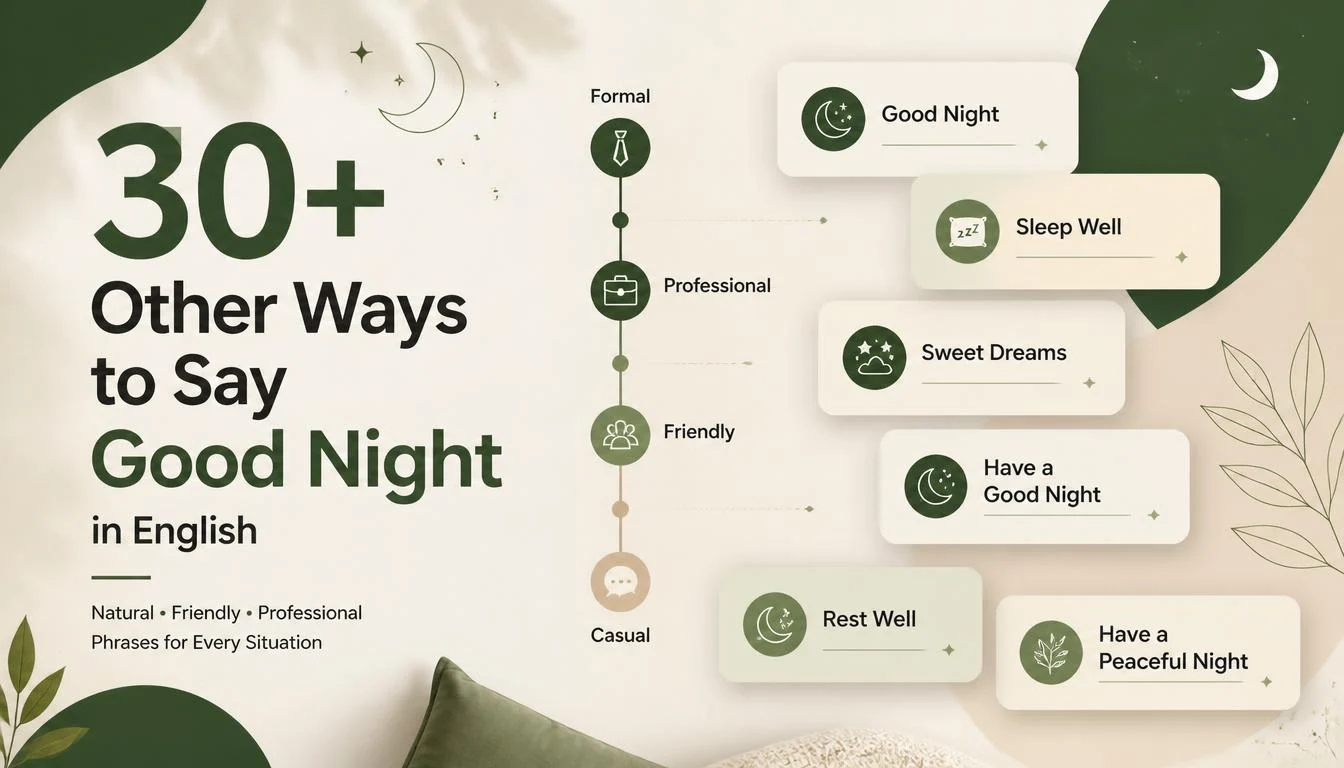
“Good night” is the standard phrase used to wish someone well before sleep or when parting ways at the end of the day. While it works in almost any situation, English speakers use dozens of alternatives depending on tone and closeness. The five best alternatives are: sleep well, sweet dreams, rest well, night night, and catch you tomorrow.
Looking for natural ways to say Good Night in English? While “Good night” is simple and familiar, you can use many other expressions to make your farewell warmer, sweeter, funnier, or more casual.
In this guide, you’ll discover 30+ ways to say Good Night in English for different situations. From friendly messages and romantic goodbyes to casual texts and polite expressions, these alternatives can help you choose the right words for every conversation.
Why People Search for Other Ways to Say Good Night in English
Looking for Variety and the Right Tone
Most people searching for alternatives to “good night” are not confused about the meaning of the phrase. They already know it and use it daily. What they are really looking for is variety, warmth, or the right tone for a specific relationship or situation.
A message to a partner needs a different feel than a text to a coworker. Similarly, a formal email sign off needs a different tone from a casual voice note to a friend.
Common Search Intent Behind These Alternatives
This search intent usually falls into a few common categories. Some people want romantic or affectionate phrases for a partner or someone they are interested in. Others want something short and casual for friends or group chats.
A smaller group is looking for formal or professional alternatives to close a late work email without sounding cold or abrupt. Others simply want to avoid repeating the same two words every night and make their language feel more natural and varied.
Spoken Versus Written Usage
There is also an important difference between spoken and written English. In spoken English, especially face to face or over a call, shorter and more casual expressions often feel natural. Phrases such as “night night” or “catch you tomorrow” can work well in relaxed conversations.
In written English, particularly texts and emails, people often choose slightly longer or more expressive phrases such as “sleep well” or “sweet dreams.” Since written messages do not have tone of voice, a little extra warmth can make the message feel more personal.
Why Context Matters
Understanding context is important when choosing an alternative to “good night.” Using the right expression for the right situation can make your English sound more natural rather than like a list of phrases taken from a textbook.
The goal of this guide is to cover informal expressions, formal options for work, and everything in between. This way, you can choose the right words for friends, coworkers, partners, clients, and other situations.
Tone Ladder
Not every phrase for good night carries the same weight. Some sound formal enough for a professional email, while others only work between close friends or partners. Thinking about these phrases on a ladder, from very formal to very informal, makes it much easier to pick the right one on the spot.
At the very formal end sit phrases used in business writing or communication with people you do not know well, such as wishing someone a pleasant evening or a restful night ahead. One step down, formal but still warm phrases work well with colleagues, acquaintances, or older relatives, such as have a good night or rest well.
Neutral phrases are the safest middle ground. They work with almost anyone and rarely sound out of place, phrases like sleep well or take care and good night fall here. Moving into casual territory, phrases loosen up and start to sound more like everyday conversation among friends, such as catch you tomorrow or talk soon.
At the most informal end are phrases reserved for very close friends, partners, or family, things like night night or sweet dreams, love. These sound natural in texting or intimate conversation but would feel oddly casual in a work setting.
Spoken English tends to favor the casual and informal ends of this ladder, since tone of voice already carries warmth and context. Written English, especially anything formal, benefits from sitting closer to the neutral or formal end unless the relationship clearly allows for more warmth.
Tone Classification Table
| Phrase | Tone Level | Formality | Best Situation |
|---|---|---|---|
| Have a pleasant evening | Very Formal | High | Business email, client communication |
| Wishing you a restful night | Very Formal | High | Formal letters, professional closings |
| Have a good night | Formal | Medium High | Coworkers, acquaintances |
| Rest well | Formal | Medium High | Older relatives, polite conversation |
| Sleep well | Neutral | Medium | Almost any relationship |
| Take care, good night | Neutral | Medium | Friends, coworkers, neighbors |
| Catch you tomorrow | Casual | Medium Low | Friends, casual coworkers |
| Talk soon | Casual | Medium Low | Friends, group chats |
| Night night | Informal | Low | Close friends, partners, family |
| Sweet dreams | Informal | Low | Partners, children, close friends |
Quick Selection Guide
If you only have a few seconds to choose the right phrase, use this shortcut based on the situation you are in.
- For a job interview or professional meeting that runs late, use have a pleasant evening or wishing you a restful night, since these sound polished without being stiff.
- For a work email sent after hours, have a good night or rest well strikes the right balance between friendly and professional.
- For networking events or messages to new professional contacts, a safe and warm choice is take care and have a good night, since it closes the interaction politely without assuming too much familiarity.
- For casual conversation with friends or family, night night, sweet dreams, or catch you tomorrow all work naturally depending on how close you are.
Real Life Conversation Transformations
Seeing these phrases inside real conversations makes the difference between memorizing a list and actually using the language naturally.
Job Interview Scenario
Before: Okay, good night, thanks for the interview. After: Thank you again for your time today, I hope you have a pleasant evening.
The after version sounds more composed and professional, which matters in a first impression setting like an interview.
Networking Event Scenario
Before: Alright good night, nice meeting you. After: It was great connecting with you tonight, take care and have a good night.
This version acknowledges the connection made and leaves a warmer, more memorable impression than a flat goodbye.
Email Scenario
Before: Good night, will follow up tomorrow. After: I will follow up first thing tomorrow morning, wishing you a restful night in the meantime.
This closes the email on a considerate note rather than an abrupt one, which reads better in professional inboxes.
Casual Conversation Scenario
Before: Ok good night. After: Alright, I am heading to bed, night night, talk tomorrow.
The after version feels more like natural spoken English between friends, rather than a stiff, robotic sign off.
30+ Other Ways to Say Good Night in English
Below is a detailed breakdown of alternatives to good night, each with its meaning, an example sentence, tone, and where it fits best.
Sleep Well
Meaning: A simple wish for restful sleep. Explanation: Works in almost any relationship and any medium, spoken or written. Example: Sleep well, see you at the meeting tomorrow. Tone: Neutral. Best use: Coworkers, friends, general texting. Worst use: Very formal legal or business documents. Context variability: Extremely flexible across settings.
Sweet Dreams
Meaning: A wish for pleasant dreams, often affectionate. Explanation: Common between partners, close friends, and with children. Example: Sweet dreams, talk to you in the morning. Tone: Informal, affectionate. Best use: Partners, close friends, family. Worst use: Professional emails or new acquaintances. Context variability: Low, mostly personal relationships.
Rest Well
Meaning: A polite wish for a restful night. Explanation: Slightly more formal than sleep well, often used with older relatives or in polite conversation. Example: Rest well, we will talk more tomorrow. Tone: Formal, warm. Best use: Older relatives, respectful conversations. Worst use: Very casual friend group chats. Context variability: Medium.
Night Night
Meaning: A playful, shortened version of good night. Explanation: Very casual and often used with partners, children, or close friends. Example: Night night, see you bright and early. Tone: Very informal. Best use: Close friends, partners, children. Worst use: Professional or formal settings. Context variability: Low.
Catch You Tomorrow
Meaning: An informal way of saying you will see or speak to someone the next day. Explanation: Common in spoken English among friends and casual coworkers. Example: Alright, catch you tomorrow. Tone: Casual. Best use: Friends, casual work environments. Worst use: Formal emails. Context variability: Medium.
Talk Soon
Meaning: Suggests upcoming contact rather than focusing on sleep. Explanation: Popular in texting when ending a conversation for the night. Example: I am exhausted, talk soon. Tone: Casual. Best use: Friends, group chats, texting. Worst use: In person formal goodbyes. Context variability: Medium.
Have a Good Night
Meaning: A polite, widely accepted way to end an interaction at night. Explanation: Works across almost every relationship type. Example: It was great catching up, have a good night. Tone: Neutral to formal. Best use: Coworkers, acquaintances, customer service. Worst use: Extremely close, playful relationships where it may feel stiff. Context variability: High.
Have a Pleasant Evening
Meaning: A polished, formal way to wish someone well for the rest of the night. Explanation: Common in professional or customer facing communication. Example: Thank you for calling, have a pleasant evening. Tone: Very formal. Best use: Business calls, client emails. Worst use: Texting close friends. Context variability: Low.
Wishing You a Restful Night
Meaning: A formal, slightly elevated way of saying good night. Explanation: Often used in written communication such as emails or formal messages. Example: Wishing you a restful night, we will reconvene tomorrow. Tone: Very formal. Best use: Professional emails, formal letters. Worst use: Everyday spoken conversation. Context variability: Low.
Take Care, Good Night
Meaning: Combines a caring send off with the standard phrase. Explanation: Adds warmth without becoming overly informal. Example: Take care, good night, see you soon. Tone: Neutral, warm. Best use: Friends, coworkers, neighbors. Worst use: Very formal business writing. Context variability: High.
Time to Turn In
Meaning: An idiomatic way of saying it is time to go to sleep. Explanation: Slightly old fashioned but still used, especially by older speakers. Example: It is getting late, time to turn in. Tone: Casual, slightly dated. Best use: Family conversations, casual chats. Worst use: Professional writing. Context variability: Low.
Off to Bed
Meaning: A direct statement that someone is going to sleep, often used before saying goodbye. Explanation: Common in spoken English as a lead in before a farewell. Example: I am off to bed, talk tomorrow. Tone: Casual. Best use: Friends, family, texting. Worst use: Formal communication. Context variability: Medium.
Sleep Tight
Meaning: A warm, slightly old fashioned wish for good sleep. Explanation: Often paired with sweet dreams, common with children and partners. Example: Sleep tight, see you in the morning. Tone: Informal, affectionate. Best use: Partners, children, close friends. Worst use: Professional settings. Context variability: Low.
See You in the Morning
Meaning: Focuses on the next meeting rather than the act of sleeping. Explanation: Useful when you know you will interact again soon. Example: Heading to bed now, see you in the morning. Tone: Neutral to casual. Best use: Roommates, family, coworkers on a project. Worst use: One time formal interactions. Context variability: Medium.
Until Tomorrow
Meaning: A slightly more elegant way of parting ways for the night. Explanation: Works well in both written and spoken English, sounds slightly more thoughtful than average. Example: Until tomorrow, rest well tonight. Tone: Neutral to formal. Best use: Professional or semi formal contexts. Worst use: Very casual quick texts. Context variability: Medium.
Good Night, Sleep Tight, Do Not Let the Bed Bugs Bite
Meaning: A playful, traditional rhyme used mostly with children. Explanation: Almost never used in adult professional or casual conversation outside of a joking context. Example: Good night, sleep tight, do not let the bed bugs bite. Tone: Very informal, playful. Best use: Children, playful banter. Worst use: Any professional or formal context. Context variability: Very low.
Nighty Night
Meaning: A cute, informal variation of night night. Explanation: Often used between partners or with children. Example: Nighty night, see you tomorrow. Tone: Very informal. Best use: Close relationships, playful contexts. Worst use: Professional communication. Context variability: Very low.
Have a Good Rest
Meaning: A polite alternative focusing on rest rather than sleep specifically. Explanation: Slightly more formal sounding, useful in mixed settings. Example: Have a good rest, we will pick this up tomorrow. Tone: Neutral to formal. Best use: Coworkers, semi formal relationships. Worst use: Very casual texting. Context variability: Medium.
I Am Signing Off for the Night
Meaning: A phrase indicating someone is ending their availability for the day. Explanation: Common in group chats, work messages, or online communities. Example: I am signing off for the night, talk tomorrow. Tone: Neutral. Best use: Work group chats, online communities. Worst use: Close, intimate conversations. Context variability: Medium.
Heading to Bed, Talk Later
Meaning: A direct, casual way to end a conversation for the night. Explanation: Common in texting when someone wants to be clear but brief. Example: Heading to bed, talk later. Tone: Casual. Best use: Friends, texting. Worst use: Formal writing. Context variability: Medium.
Rest Up
Meaning: A short, caring way to wish someone well before sleep. Explanation: Often used when someone is tired or has had a long day. Example: You worked hard today, rest up. Tone: Casual, caring. Best use: Friends, coworkers after a tough day. Worst use: Very formal writing. Context variability: Medium.
Enjoy Your Evening
Meaning: A polite phrase used earlier in the night before someone goes to sleep. Explanation: Common in customer service or professional settings. Example: Thank you for your patience, enjoy your evening. Tone: Formal. Best use: Customer service, professional emails. Worst use: Close personal texting. Context variability: Low.
I Will Let You Get Some Sleep
Meaning: A considerate way of ending a call or conversation at night. Explanation: Shows awareness of the other person’s need for rest. Example: It is late, I will let you get some sleep. Tone: Neutral, considerate. Best use: Phone calls, video calls. Worst use: Quick casual texts. Context variability: Medium.
Dream Well
Meaning: A softer, slightly poetic variation of sweet dreams. Explanation: Less common but adds a gentle, warm tone. Example: Dream well, see you tomorrow. Tone: Informal, affectionate. Best use: Partners, close friends. Worst use: Professional settings. Context variability: Low.
Get Some Rest
Meaning: A caring instruction style phrase, often used when someone seems tired. Explanation: Shows concern for the other person’s wellbeing. Example: You sound exhausted, get some rest. Tone: Casual, caring. Best use: Friends, family. Worst use: Formal business writing. Context variability: Medium.
Usage Comparison Table
| Phrase | Spoken Use | Written Use | Context |
|---|---|---|---|
| Sleep well | Common | Common | General, flexible |
| Sweet dreams | Common | Common | Personal, affectionate |
| Rest well | Common | Common | Polite, semi formal |
| Night night | Very common | Common in texting | Close relationships |
| Catch you tomorrow | Very common | Common in texting | Friends, casual |
| Have a pleasant evening | Less common in casual speech | Common in professional writing | Formal, business |
| Wishing you a restful night | Rare in speech | Common in formal writing | Formal emails, letters |
| Off to bed | Common | Common in texting | Casual, everyday |
| Sleep tight | Common | Common | Affectionate, casual |
| Signing off for the night | Less common in speech | Common in group chats | Neutral, digital communication |
Email and LinkedIn Ready Expressions
Ending professional messages at night requires a slightly different set of phrases than personal texting. For email greetings and closings, useful lines include wishing you a pleasant evening ahead, thank you for your time today, have a good night, and looking forward to continuing this tomorrow, rest well tonight.
For LinkedIn connection messages sent later in the day, professional introductions can end with lines such as thank you for connecting, have a great evening, or it was a pleasure learning about your work, wishing you a restful night. Good follow up lines for the next morning include following up on my message from last night, hope you had a restful evening, or circling back to our conversation from yesterday evening.
These phrases keep professional communication warm without slipping into overly casual territory, which matters especially with new contacts or clients.
Native Speaker Insight
Native English speakers rarely stick to a single fixed phrase every night. In real conversation, especially texting, expressions get shortened even further, such as reducing catch you tomorrow to just catch ya, or night night to simply night. These shortened forms sound completely natural between friends and family but would feel too casual in professional writing.
One thing that often sounds unnatural to native ears is over explaining a good night wish, such as saying I hope that you have an extremely good and restful night of sleep tonight. Native speakers tend to keep these phrases short and natural rather than stacking multiple descriptive words together. Preferred professional alternatives lean toward simplicity, phrases like have a good night or rest well communicate warmth without sounding forced.
Common Mistakes and What Not to Say
A frequent mistake is using very informal phrases like night night or sweet dreams in professional emails, which can come across as inappropriate or overly familiar with clients or new coworkers. On the other end, using extremely formal phrasing like wishing you a most restful and pleasant slumber this evening in casual texting sounds stiff and unnatural, almost as if translated too literally from another language.
Grammar mistakes also show up when learners try to combine phrases incorrectly, such as saying good night have a nice sleep, which duplicates meaning awkwardly. It is better to choose one clear phrase rather than stacking multiple good night expressions together in a single sentence, since native speakers usually pick one and let it stand on its own.
Expansion Phrases and Related Expressions
Beyond direct alternatives to good night, several related expressions help round out evening conversations naturally. Greeting variations for later in the day include good evening and hope your evening is going well. Introduction phrases before ending a conversation might include it was great talking to you tonight or thanks for chatting this evening.
Polite communication alternatives that soften a goodbye include I should probably let you go or I will let you rest now. Conversational English upgrades that sound more natural than a flat good night include alright, I am calling it a night or that is it for me tonight, talk soon.
Decision Making Table
| Situation | Best Phrase | Why It Works |
|---|---|---|
| Job interview | Wishing you a restful night | Sounds polished and professional |
| Networking event | Take care and have a good night | Warm but appropriately professional |
| Work email | Have a good night | Polite without being cold |
| Client communication | Have a pleasant evening | Formal and courteous |
| Close friend texting | Night night | Natural, warm, informal |
| Partner or spouse | Sweet dreams | Affectionate and personal |
| Family group chat | Sleep well, talk tomorrow | Friendly and casual |
| Online community | Signing off for the night | Neutral and clear |
Quick Fast List
Sleep well, sweet dreams, rest well, night night, catch you tomorrow, have a good night, have a pleasant evening, talk soon, sleep tight, and take care are ten useful alternatives to keep ready for different situations.
Mini Quiz
1. Which Phrase Fits Best in a Formal Work Email Late at Night?
You are ending a formal work email late at night. Which phrase fits best?
A) Night night.
B) Wishing you a restful night.
Answer: B – Formal writing calls for more polished phrasing.
2. Which Phrase Sounds Most Natural When Texting a Close Friend?
You are texting a close friend before bed. Which phrase feels most natural?
A) Wishing you a most restful evening.
B) Night night, talk tomorrow.
Answer: B – Informal texting favors short and casual language.
3. Which Closing Line Works Best at a Networking Event?
You just finished a networking conversation at an evening event. Which closing line works best?
A) Catch ya.
B) Take care and have a good night.
Answer: B – It balances warmth with professionalism.
4. Which Phrase Fits Best When Messaging Your Partner?
You are messaging your partner before falling asleep. Which phrase fits the relationship?
A) Sweet dreams.
B) Have a pleasant evening.
Answer: A – It carries the right affectionate tone.
5. Which Phrase Is Most Appropriate for a Customer Service Call?
You are wrapping up a customer service call in the evening. Which phrase is most appropriate?
A) Night night.
B) Have a pleasant evening.
Answer: B – Professional contexts call for more formal phrasing.
FAQs
Is It Polite to Say “Sleep Well” Instead of “Good Night”?
Yes, “sleep well” is considered polite and works well across almost every type of relationship. You can use it with close friends, family members, coworkers, and other people depending on the context.
What Is More Professional Than Saying “Good Night” in an Email?
Phrases like “have a good night,” “have a pleasant evening,” or “wishing you a restful night” can sound more polished in professional email communication.
Can I Use “Night Night” in a Work Email?
It is best to avoid “night night” in professional writing. It sounds very casual and is more suitable for texting close friends or family members.
What Do Native Speakers Say Instead of “Good Night”?
Native speakers commonly use phrases such as “sleep well,” “catch you tomorrow,” “night night,” or “sweet dreams.” The best
Conclusion
Learning different ways to say good night does more than add variety to your vocabulary, it helps you match your tone to the exact relationship and situation you are in, whether that is a formal email, a networking event, or a quick text to a close friend. Moving beyond the same two words every night makes conversations feel more natural and shows a stronger command of everyday English.
The best way to build this skill is through practice, paying attention to how tone shifts between spoken and written English, and noticing which phrases native speakers actually use in real conversations. Over time, choosing the right good night phrase will start to feel automatic rather than something you need to think about.