Quick Answer:
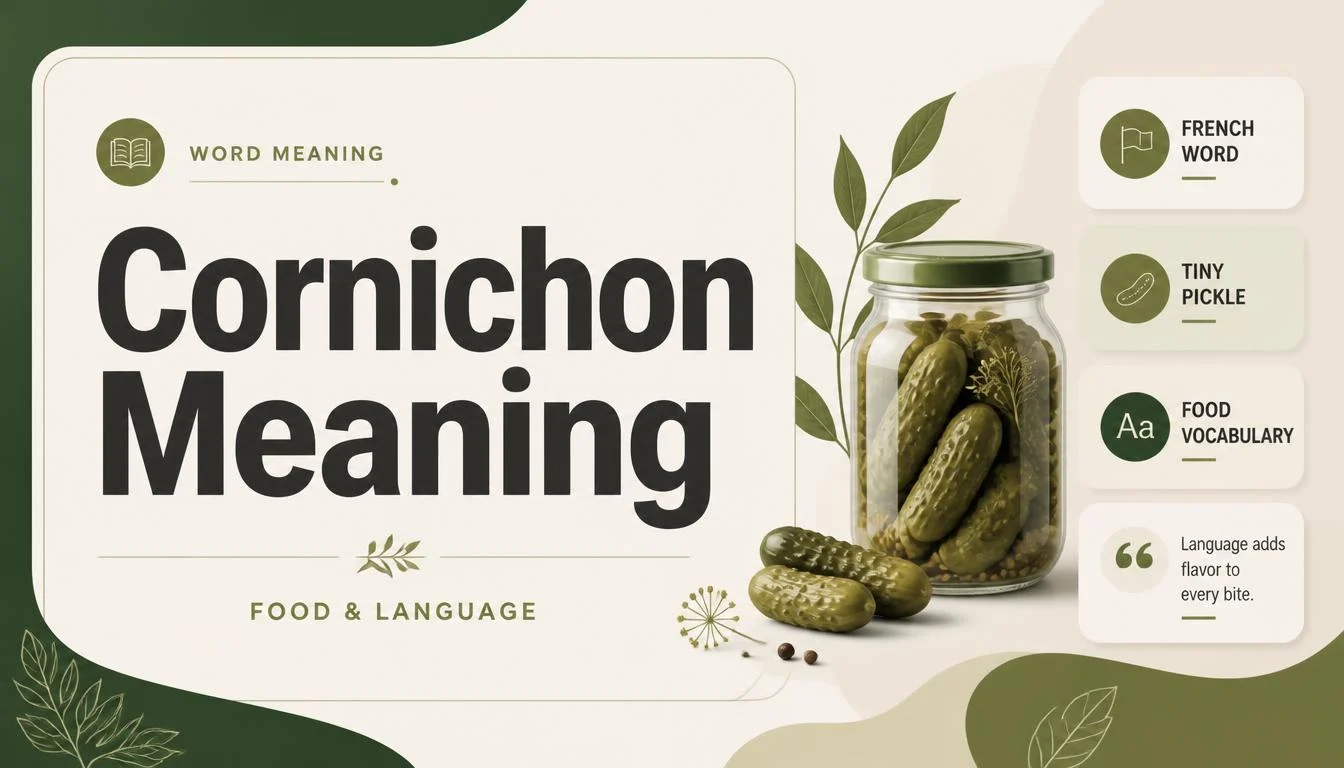
Cornichon means a small, tart pickle made from tiny cucumbers, commonly preserved in vinegar and spices. These French-style pickles have a crunchy texture and a sharp, tangy flavor. Cornichons are often served with cheese, charcuterie boards, sandwiches and other savory dishes.
The word cornichon refers to a small cucumber pickle known for its crisp texture and tangy, slightly sour taste. Originally associated with French cuisine, cornichons are typically pickled in vinegar with ingredients such as mustard seeds, peppercorns and herbs. Their small size and bold flavor make them a popular addition to many dishes.
You may come across cornichons on restaurant menus, charcuterie boards or in recipes for sauces and sandwiches. Unlike many sweet pickles, these little pickles usually have a sharp, savory flavor that balances rich foods. Understanding the cornichon meaning can help you recognize this French culinary favorite and discover easy ways to enjoy it in your meals.
What Does Cornichon Mean?
The word cornichon has two common meanings. Its culinary meaning refers to a small cucumber preserved through pickling. Its informal French meaning describes a silly or foolish person.
In English, the word usually appears in food related contexts. You might see cornichons served beside cured meats, pâté, sandwiches or a selection of cheeses. Their sharp flavor balances the richness of these foods.
In French conversation, however, the meaning can change. Someone might call another person a cornichon after a silly mistake or an awkward decision. Depending on the speaker’s tone, the expression can sound teasing, affectionate or insulting.
Cornichon Definition
The simplest cornichon definition is a small, tart pickled cucumber, especially one prepared in the French style.
As a noun, the word can refer to the pickle itself or, informally, to a foolish person in French. The surrounding sentence usually makes the intended meaning clear.
Examples:
- Food meaning: She served cornichons with the cheese platter.
- Informal French meaning: He called himself a cornichon after making a silly mistake.
The distinction matters because the same word can describe a familiar food or a person’s behavior.
Cornichon Meaning in English
The cornichon meaning in English is usually a small pickled cucumber. Depending on the context, you may see it translated as gherkin or simply pickle.
However, these translations aren’t always exact. The English word pickle covers a broad range of preserved foods. A cornichon describes a more specific style of cucumber pickle associated with French cooking.
For example, a large dill pickle served with an American burger is a pickle. A small, sharply sour cucumber served alongside pâté is more likely to be called a cornichon on a French inspired menu.
The figurative meaning requires a little more care. When translating informal French conversation, cornichon may mean “fool” or “silly person.” The best translation depends on the tone and situation.
Cornichon Meaning in French
In French, cornichon primarily refers to a small pickled cucumber. It also has an informal figurative meaning used to describe someone who behaves foolishly.
French speakers may use the word in lighthearted conversation. For instance, a person might call themselves a cornichon after forgetting something obvious. In that situation, the word can express mild embarrassment rather than serious anger.
Consider the French expression Quel cornichon ! It can be translated as “What a fool!” or “What a silly person!” The exact tone depends on the relationship between the speakers and the circumstances.
This figurative usage doesn’t mean the food and the insult are interchangeable in every sentence. Context tells you which meaning fits.
Cornichon Pronunciation
The French word cornichon is pronounced approximately kor-nee-SHON, although this English spelling only offers a rough guide.
Its International Phonetic Alphabet transcription is /kɔʁ.ni.ʃɔ̃/. The final vowel is nasal, which means the sound resonates partly through the nose rather than ending with an ordinary English “on” sound.
The French letter combination ch sounds like the “sh” in ship. The final n helps create the nasal vowel rather than producing a separate English-style N sound.
If you’re learning French, listen to a native pronunciation and pay attention to the final syllable. That small detail makes the word sound much more natural.
What Is a Cornichon Pickle?
A cornichon pickle is a small cucumber preserved in a seasoned pickling liquid. French style cornichons are particularly known for their firm texture and sharp, sour flavor.
Producers generally harvest suitable small cucumbers while they’re still young. They then preserve them using a recipe that may include vinegar, salt, water, herbs and spices.
Traditional recipes often emphasize acidity instead of sweetness. Mustard seeds, peppercorns, tarragon and other seasonings may contribute additional flavor. The exact ingredients depend on the producer and regional tradition.
Cornichons aren’t simply ordinary cucumbers served at a smaller size. Their preparation gives them the distinctive taste and texture that make them useful alongside rich foods.
Are Cornichons Cucumbers?
Yes. Cornichons are made from small cucumbers that have been pickled.
The word can refer to the prepared pickle rather than the fresh vegetable. Once the cucumbers undergo pickling, their flavor and texture change as the liquid and seasonings work on them.
Although cornichons and fresh cucumbers share the same basic vegetable origin, they serve different purposes in cooking. Fresh cucumbers offer a mild, refreshing taste, while cornichons provide a sharper, more acidic flavor.
What Do Cornichons Taste Like?
Cornichons typically taste tart, sour, salty and tangy. Their flavor is sharper than that of many sweet pickles, making them a useful contrast to rich or fatty foods.
Texture is another defining feature. A well made cornichon is usually firm and crunchy rather than soft or mushy. Its small size also makes it convenient to serve whole.
Are cornichons sweet or sour? Traditional French style varieties tend to be sour, although some commercial products use sugar or other ingredients to create a sweeter balance.
Their taste depends on the pickling liquid, seasoning and preparation method. Two jars can therefore offer noticeably different flavor profiles even when both products are labeled cornichons.
What Are Cornichons Made Of?
Cornichons contain small cucumbers and a pickling mixture that preserves them while adding flavor. The exact recipe varies, so the ingredient label is the best way to identify what’s in a particular jar.
Common ingredients include:
- Small cucumbers: The main ingredient, usually harvested young.
- Vinegar: Adds acidity and the characteristic sharp taste found in many traditional versions.
- Salt: Enhances flavor and plays a role in preservation.
- Water: Often forms part of the pickling liquid.
- Mustard seeds and peppercorns: Add spice and depth.
- Tarragon, dill or other herbs: Provide additional aroma and flavor.
Some varieties contain sugar, garlic or other seasonings. Others rely on a simpler combination of vinegar, salt and spices.
It’s also worth distinguishing vinegar pickling from fermentation. Vinegar pickles gain acidity from the added vinegar. Fermented cucumbers develop acidity through the activity of beneficial microorganisms. Both methods preserve food, but they aren’t the same process.
Cornichon vs. Pickle vs. Gherkin
Cornichons, pickles and gherkins are closely related terms. However, their meanings can vary depending on the country and the way a product is prepared.
| Term | Meaning | Typical characteristics |
|---|---|---|
| Cornichon | A small pickled cucumber associated with French cuisine | Usually crisp, small and tart |
| Pickle | A food preserved through pickling | Can include cucumbers and many other vegetables |
| Gherkin | A small cucumber or a small pickled cucumber | Often used for small cucumber pickles, depending on regional usage |
| Dill pickle | A cucumber pickle flavored with dill | Commonly savory, tangy and herbaceous |
| Sweet pickle | A cucumber pickle prepared with sugar | Sweeter flavor with varying levels of acidity |
Cornichon vs. Pickle
A cornichon is a type of pickle, but the word pickle has a broader meaning.
In the United States, pickles often refer to cucumber slices, spears or whole cucumbers preserved in a seasoned brine or vinegar solution. Some are sweet, while others are sour or strongly flavored with dill.
Cornichons are generally smaller and associated with a sharper French style. They’re often served as an accompaniment rather than used as the main feature of a sandwich.
Cornichon vs. Gherkin
The difference between cornichons and gherkins isn’t always clear cut. Both terms can describe small pickled cucumbers, and their meanings overlap in everyday use.
Cornichon is the French term commonly used for the small, tart pickles associated with French cuisine. Gherkin is an English term that can refer to a small cucumber or its pickled form.
Preparation matters more than the name alone. Check the product’s ingredients and flavor profile if you need a particular type for a recipe.
Cornichon vs. Dill Pickle
Cornichons and dill pickles can both taste sour and savory. Their main differences often involve cucumber size, seasoning and culinary tradition.
Dill pickles typically emphasize dill and may include garlic or other spices. Traditional cornichons often have a sharper, more delicate flavor and may include mustard seeds or tarragon.
You can substitute one for the other in many dishes. However, the change in flavor may be noticeable when a recipe specifically calls for cornichons.
How Are Cornichons Used in Cooking?
Cornichons add acidity, crunch and a concentrated savory flavor to many dishes. Their strongest role is often to balance foods that taste rich, creamy or fatty.
Charcuterie and Cheese Boards
Cornichons are a familiar accompaniment to charcuterie, which commonly includes cured meats and other prepared foods. Their acidity provides a refreshing contrast to the saltiness and richness of meats such as salami.
They also pair well with many cheeses. A small bite of cornichon can cut through the creamy texture of a rich cheese and refresh your palate between bites.
Sandwiches and Burgers
You can serve cornichons whole on the side or slice them into smaller pieces. Their tangy flavor works especially well with ham, cheese, roast meat and other savory fillings.
Chopped cornichons can also add texture to sandwich spreads. If you’re replacing larger pickles with cornichons, adjust the quantity to suit your taste.
Sauces and Dressings
Finely chopped cornichons appear in several savory sauces. Tartar sauce often includes chopped pickles, while French sauce gribiche commonly uses cornichons alongside ingredients such as hard cooked eggs, herbs and capers.
They can also contribute a tangy bite to remoulade and similar sauces. The amount you use depends on the desired acidity and texture.
Salads and Appetizers
Cornichons can add sharpness to potato salads, egg salads and other savory preparations. They’re particularly useful when a dish needs acidity without a large amount of liquid.
You can chop them finely or slice them into thin rounds. Start with a small amount and taste the dish before adding more, especially if other ingredients are already salty.
What Is the Origin of the Word Cornichon?
The word cornichon comes from French. Its history is connected with corne, the French word for “horn,” and the term has a historical association with the idea of a little horn.
Today, the word is widely recognized as the name of a small pickled cucumber. Its use in French also extends to the informal description of a foolish or silly person.
When researching word origins, it’s useful to separate a word’s historical development from its current meaning. A dictionary can establish recognized definitions and etymological details, while the context of a sentence helps explain how speakers use the word today.
For a reliable starting point, consult the Académie française dictionary or Larousse’s French dictionary.
Cornichon Plural and Grammar
The singular form is cornichon. The plural form is cornichons.
In French, the final s in the plural is generally silent. As a result, the singular and plural forms usually sound the same when spoken in isolation.
Here are a few examples:
- One cornichon was left in the jar.
- The restaurant served cornichons with its appetizer platter.
- She chopped three cornichons for the sauce.
In English writing, use cornichon for one pickle and cornichons for more than one. The word functions as a countable noun when referring to individual pickles.
Cornichon in a Sentence
Seeing the word in context makes its meaning easier to remember. These examples show how to use it naturally.
- Food: The chef served cornichons with the pâté and crusty bread.
- Cooking: Add finely chopped cornichons to the sauce for a tangy finish.
- Shopping: I bought a jar of French cornichons for the cheese board.
- French conversation: Quel cornichon ! can mean “What a fool!” in an informal context.
Notice how the surrounding words establish the meaning. Food related sentences refer to pickles, while the French expression refers to a person’s behavior.
Can You Substitute Regular Pickles for Cornichons?
Yes. Regular pickles can replace cornichons in many recipes, although the result may taste different.
Small sour gherkins are often the closest substitute. Their size, acidity and texture can resemble those of cornichons, especially when the recipe calls for chopped pickles.
Dill pickles are another practical option. If they’re larger, chop them into small pieces to match the texture of the original ingredient.
Sweet pickles require more care. Their added sweetness can change the balance of a savory sauce or salad. If you only have sweet pickles available, use a smaller amount and adjust the other ingredients to taste.
The best substitute depends on the dish. For a charcuterie board, choose a small, crisp, tart pickle. For a sauce, focus on flavor and texture rather than the exact shape.
FAQs
What does cornichon mean in English?
Cornichon usually means a small, tart pickled cucumber associated with French cuisine. In informal French, it can also mean a silly or foolish person.
Is a cornichon a pickle?
Yes. A cornichon is a type of pickled cucumber. The word pickle is broader and can refer to many pickled foods.
Are cornichons and gherkins the same?
The terms overlap. Both can refer to small pickled cucumbers, although regional usage and preparation may differ.
Are cornichons sweet or sour?
Traditional cornichons are generally tart, sour and savory. Some commercial varieties contain sugar and taste sweeter.
What does cornichon mean as an insult in French?
In informal French, cornichon can describe someone who seems foolish or silly. It may sound playful or insulting depending on the context.
How do you pronounce cornichon?
The French pronunciation is approximately kor-nee-SHON, with a nasal vowel at the end. Its IPA transcription is /kɔʁ.ni.ʃɔ̃/.
What are cornichons made of?
They’re made from small cucumbers preserved in a pickling liquid. Common ingredients include vinegar, salt, water and optional herbs or spices.
What can I use instead of cornichons?
Small sour gherkins are often a good substitute. Tart dill pickles can also work, especially when chopped to the required size.
Conclusion
The cornichon meaning depends on context. In food, it refers to a small, tart pickled cucumber associated with French cuisine. In informal French conversation, it can describe a silly or foolish person.
Once you understand both meanings, the word becomes easy to recognize. Whether you encounter it on a menu or in a French sentence, the surrounding context will usually tell you exactly what it means.