Quick Answer:
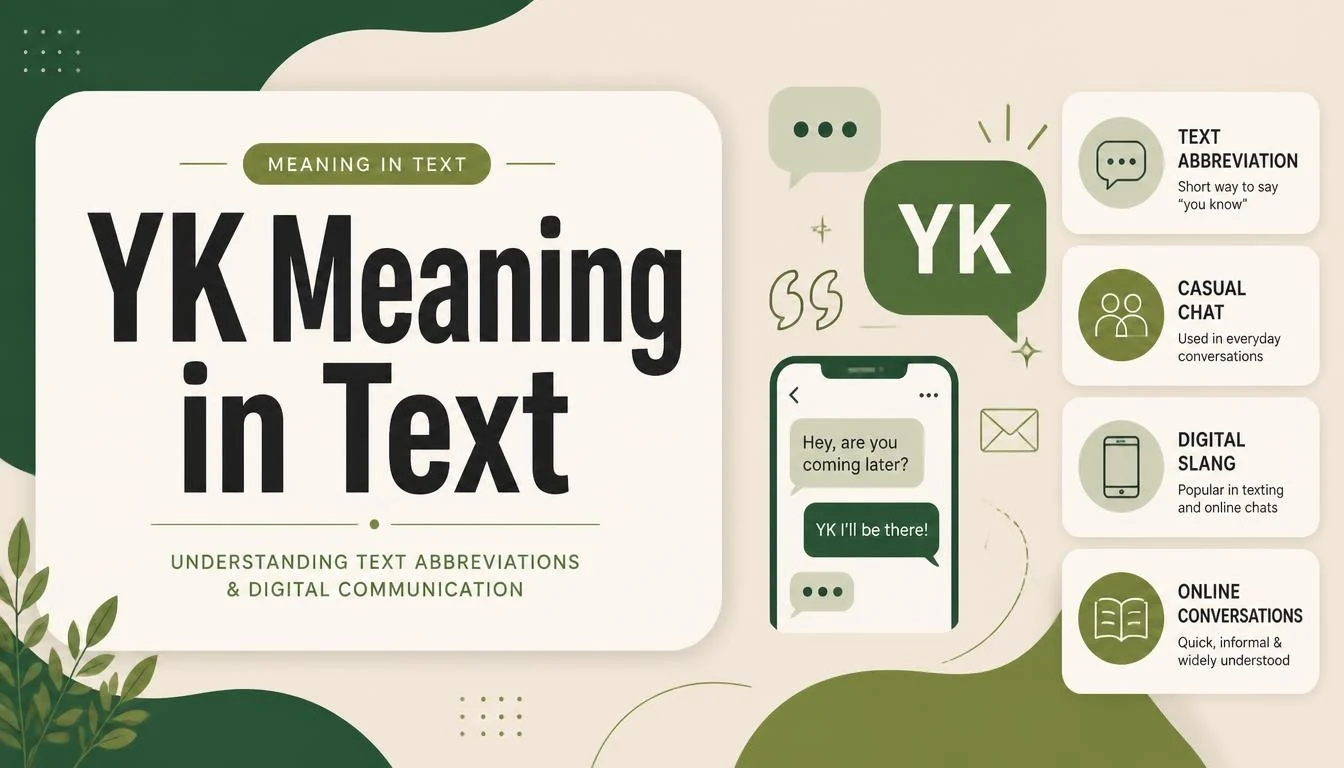
YK most commonly stands for “You Know” in text messages and online chats. People use it to make conversations shorter, emphasize a point, or check whether someone understands what they’re saying. For example, “It’s been a long day, YK?” means “It’s been a long day, you know?”
If you’ve come across YK meaning in text, it usually stands for “you know.” It’s a casual abbreviation people use in text messages, social media comments, and online conversations. Instead of typing the full phrase, they use YK to keep messages short and make their conversations feel more relaxed.
The meaning of YK can depend on the conversation and how someone uses it. Sometimes, it adds emphasis to a statement, while other times, it checks whether the other person understands or relates to what you’re saying. Knowing its meaning can help you understand texting conversations and respond naturally.
What Does YK Mean in Text?
YK stands for “you know” in texting and online conversations. It’s an informal abbreviation that people use to shorten the expression when communicating with friends, family, or other people they know.
The phrase “you know” has several conversational purposes. Someone might use it to check whether another person understands an idea. They might also add it to a sentence to emphasize an opinion or express a feeling.
For example:
“I really miss those summer days, yk?”
In this message, the sender isn’t necessarily asking a direct question. They’re expressing nostalgia and suggesting that the other person understands the feeling.
Another example:
“That movie was better than I expected, yk?”
Here, YK makes the statement sound relaxed and conversational. It can also invite the other person to agree or share their opinion.
The abbreviation works because people already understand the expression in everyday speech. Instead of typing both words, they use their first letters.
Quick Meaning of YK
| Detail | Explanation |
|---|---|
| Abbreviation | YK |
| Full form | You Know |
| Category | Texting abbreviation and internet slang |
| Main purpose | Expressing familiarity, emphasis, or shared understanding |
| Tone | Usually casual and informal |
| Common platforms | Text messages, Snapchat, Instagram, TikTok, and WhatsApp |
| Formal usage | Generally unsuitable for professional writing |
The important thing to remember: YK doesn’t have one special emotional meaning. Its interpretation depends on the complete message and the relationship between the people communicating.
What Does YK Stand For?
The most widely understood expansion of YK is “you know.” However, people sometimes interpret the expression differently depending on how they use it.
Understanding these variations can help you recognize the sender’s intended meaning.
YK as “You Know”
“You know” is the standard meaning of YK in everyday texting. People use this expression when they believe someone understands what they’re talking about.
For example:
- “You remember that place, yk?”
- “I just want everything to work out, yk?”
- “She’s honestly one of the nicest people, yk?”
- “It wasn’t supposed to happen like that, yk?”
In these examples, YK connects the sender’s thoughts with the other person’s understanding.
It can also soften a statement. Instead of sounding overly serious or demanding, the sender makes the message feel more conversational.
YK as “Ya Know”
You might also see people write “ya know” instead of “you know.” Both expressions communicate essentially the same idea in casual conversation.
“Ya know” reflects informal pronunciation. It’s common in relaxed speech and sometimes appears in texting when people want their messages to sound more natural.
For example:
- “It’s been a weird week, ya know?”
- “Sometimes you just need a break, ya know.”
- “I thought you’d understand, ya know?”
The abbreviation YK can represent this casual expression too. However, its standard expansion remains “you know.”
Does YK Mean “You Already Know”?
Sometimes people interpret YK as suggesting “you already know.” This interpretation usually comes from the surrounding conversation rather than a separate standard definition.
For example:
Person A: “Who’s going to win the competition?”
Person B: “Our team, yk!”
The sender may be expressing confidence that the other person already knows the answer.
However, YK doesn’t automatically mean “you already know.” You need to consider the complete sentence before deciding what the sender intends.
Is YK an Acronym or an Initialism?
YK is more accurately described as an initialism because people typically read its individual letters rather than pronounce them as a separate word.
An acronym forms a pronounceable word from its initial letters. An initialism uses individual letter names.
For example:
- YK: You Know
- IDK: I Don’t Know
- BTW: By the Way
- FYI: For Your Information
People often call all these expressions acronyms in everyday conversation. However, the technical distinction is useful when discussing texting language.
How Is YK Used in Texting and Online Conversations?
The meaning of YK becomes clearer when you examine its position in a sentence. People don’t always use it to ask whether someone knows something. Sometimes it works as a filler, an expression of familiarity, or a subtle way to emphasize a thought.
Here are the most common ways people use YK in everyday messages.
1. To Check Whether Someone Understands
One common use of YK is checking whether another person follows the sender’s thoughts. It works similarly to saying, “Do you understand what I’m trying to explain?”
For example:
“I don’t want to make the same mistake again, yk?”
The sender may want the other person to understand why they’re being careful. They’re not necessarily asking for a detailed response. They simply want to make sure their point comes across.
You might see this usage when someone discusses:
- A personal problem.
- A complicated situation.
- A disagreement with someone.
- A difficult decision.
- Something both people have experienced.
Another example:
“I tried explaining everything, but nobody listened, yk?”
Here, YK invites the receiver to understand the sender’s frustration.
2. To Emphasize an Opinion
People sometimes add YK when they want their opinions to sound more personal or convincing. It can reinforce a statement without making the sender sound overly forceful.
For example:
“That restaurant has the best burgers, yk?”
The sender is expressing a strong preference while keeping the conversation friendly.
Consider these additional examples:
- “She’s genuinely talented, yk?”
- “That song deserves more attention, yk?”
- “This neighborhood is so peaceful, yk?”
- “I think everyone needs a break sometimes, yk?”
In each case, the abbreviation adds conversational emphasis. It doesn’t introduce a separate idea or change the main statement.
3. To Express Feelings or Frustration
YK also appears in emotional messages. People often struggle to explain complicated feelings through short text messages. Adding “you know” can make those thoughts sound more personal.
For example:
“I just wanted things to be different, yk?”
This message expresses disappointment without explaining every detail. The sender may believe the receiver already understands the situation.
You might encounter YK in messages about:
- Missing someone.
- Feeling disappointed.
- Remembering old experiences.
- Dealing with friendship problems.
- Feeling misunderstood.
- Talking about personal struggles.
Example:
“I miss how everything used to be, yk?”
The sender is expressing nostalgia. They may expect the other person to understand the memories or experiences behind that feeling.
However, YK doesn’t automatically indicate sadness. The surrounding words determine the emotional tone.
4. To Make a Message Sound More Casual
Sometimes people add YK simply because it resembles the way they speak. In everyday conversation, “you know” often appears naturally between thoughts.
The abbreviation carries that same relaxed feeling into written messages.
Compare these two statements:
- “I think we should go somewhere else.”
- “I think we should go somewhere else, yk?”
The first sounds like a straightforward suggestion. The second may feel more conversational and invite the other person’s opinion.
Here are a few more examples:
- “We should plan something this weekend, yk?”
- “It’s been a pretty long day, yk.”
- “I don’t really feel like going out, yk?”
- “Sometimes staying home is the best option, yk?”
The difference is subtle. Still, small expressions can influence how a message feels.
5. To Refer to Shared Experiences
Another common use involves situations that both people understand. Instead of explaining something familiar, the sender uses YK to refer to that shared knowledge.
For example:
“Remember those late-night drives we used to take, yk?”
The sender assumes the receiver remembers those experiences. YK helps connect the current message with a shared memory.
Other examples include:
- “You remember our old school days, yk?”
- “Those family gatherings were something else, yk?”
- “We always used to laugh about that, yk?”
- “You know how our weekends usually go, yk?”
This usage often appears between close friends, siblings, couples, and people with shared experiences.
6. To Soften a Statement
A direct statement can sometimes sound harsh, especially when someone discusses a sensitive subject. Adding YK may make the message feel less abrupt.
For example:
Without YK: “I don’t think this friendship is working.”
With YK: “I just don’t think things are working between us, yk?”
The second version can sound more reflective and less blunt. However, YK doesn’t guarantee that a message will sound gentle. The actual words still matter.
This is why you should interpret the entire message rather than judging its tone from two letters.
YK Meaning on Different Social Media Platforms
YK generally means “you know” across social media platforms. Its basic definition doesn’t change just because someone uses it on a particular app.
However, the communication style can vary. A private Snapchat message may feel different from a public TikTok comment or an Instagram caption.
The following examples illustrate ordinary conversational usage, not separate platform-specific definitions.
YK Meaning on Snapchat
How to See Who Someone Is Snapping on Snapchat – 5 Ways
On Snapchat, YK commonly appears in private messages, group chats, and casual conversations. People use it when sharing thoughts, discussing plans, or talking about personal experiences.
Snapchat conversations often involve quick exchanges. Short abbreviations fit naturally into this style of communication.
Examples:
- “That party was actually fun, yk?”
- “I haven’t seen you in forever, yk.”
- “You should’ve come with us, yk?”
- “It’s been a wild week, yk?”
What does YK mean on Snapchat?
It usually means “you know.” The sender may be checking whether you understand their point or simply making their message sound more relaxed.
Don’t assume that YK carries a hidden Snapchat-specific meaning. The surrounding conversation provides the best clue.
YK Meaning on Instagram
On Instagram, people use YK in direct messages, comments, replies, and sometimes captions. It helps create a casual tone without requiring the sender to type the complete expression.
For example:
- “That outfit looks amazing, yk?”
- “This place is worth visiting, yk.”
- “You understand the assignment, yk?”
- “I really enjoyed that day, yk?”
In a direct message, YK might help someone explain a feeling or opinion. In a public comment, it may emphasize a reaction or invite agreement.
For example, someone might comment:
“That performance was incredible, yk!”
The abbreviation adds emphasis while keeping the comment informal.
YK Meaning on TikTok
5 Ways Brands Use TikTok Comments to Drive Stronger Engagement
TikTok users communicate through comments, direct messages, captions, and video descriptions. YK can appear in any of these places when someone wants to express a thought casually.
Examples:
- “This trend is getting out of hand, yk?”
- “That transition was perfect, yk.”
- “Some memories never leave you, yk?”
- “You just had to be there, yk.”
In TikTok comments, the abbreviation can help a statement sound more conversational. It may also suggest that the viewer expects others to relate to the experience.
Remember that YK and IYKYK are different expressions. TikTok users often use the longer abbreviation IYKYK when referring to inside jokes or experiences that only certain people understand.
YK Meaning on WhatsApp and Regular Text Messages
YK also appears in ordinary SMS messages and WhatsApp conversations. Its meaning remains “you know,” just as it does on other messaging platforms.
Friends may use it while discussing everyday plans, sharing personal updates, or asking for advice.
Examples:
- “I’ll call you later, yk?”
- “We should visit that place again, yk.”
- “I wasn’t expecting that to happen, yk?”
- “You know how things get sometimes, yk.”
The abbreviation works best when both people understand casual texting language. If the receiver isn’t familiar with it, writing the complete phrase can prevent confusion.
What Does YK Mean From a Girl or a Guy?
People sometimes search for the YK meaning from a girl or a guy because they want to understand the sender’s intentions. However, the abbreviation doesn’t have a different definition based on gender.
A girl and a guy can both use YK to mean “you know.” What changes is the surrounding conversation, the relationship, and the way the message is written.
YK Meaning When a Girl Texts You
When a girl sends you YK, she most likely means “you know.” She might use it to explain something, express an opinion, or make a conversation feel more comfortable.
Consider these examples:
Example 1: Casual conversation
“Today was exhausting, yk?”
She may simply be telling you about her day and expecting you to understand.
Example 2: Sharing feelings
“I just wish things were easier sometimes, yk?”
Here, YK adds an emotional and conversational touch. She might be expressing frustration or looking for understanding.
Example 3: Friendly conversation
“We should definitely go shopping together sometime, yk?”
The abbreviation makes the suggestion sound relaxed and friendly.
Example 4: Playful conversation
“You’re actually pretty funny, yk?”
Depending on your existing relationship, this could be friendly teasing or light flirting.
The key is to look at the complete conversation. One abbreviation isn’t enough to establish whether someone likes you romantically.
YK Meaning When a Guy Texts You
When a guy uses YK, it generally carries the same meaning. He may be expressing an opinion, explaining something, or checking whether you’re following his point.
Here are a few examples:
Example 1: Sharing an opinion
“That game was intense, yk?”
He’s emphasizing his reaction to the experience.
Example 2: Expressing frustration
“I’ve been dealing with so much lately, yk?”
He may be trying to explain how he feels without going into every detail.
Example 3: Friendly conversation
“We should hang out again sometime, yk?”
He’s suggesting another meeting in a casual way.
Example 4: Playful conversation
“You’re trouble, yk?”
Depending on the relationship and previous messages, this could be playful teasing or flirtatious banter.
Again, YK doesn’t reveal someone’s romantic intentions by itself. Look at the complete message, the conversation history, and how the person normally communicates.
Does YK Have a Flirty Meaning?
YK isn’t inherently flirty. It’s a general texting abbreviation that people use in friendly, casual, emotional, and sometimes romantic conversations.
Its tone can become flirtatious when the surrounding words suggest attraction or playful interest.
Compare these examples:
| Text message | Possible interpretation |
|---|---|
| “That was a fun day, yk?” | Friendly or nostalgic |
| “I like talking to you, yk?” | Warm or potentially romantic |
| “You’re really cute, yk?” | Flirtatious compliment |
| “We should hang out again, yk?” | Casual invitation or romantic interest |
| “I miss you, yk?” | Affectionate or emotional |
These interpretations aren’t fixed rules. The same message can mean different things depending on the relationship.
If you’re trying to understand someone’s intentions, pay attention to their overall behavior rather than focusing on one abbreviation.
How to Use YK in a Text Message
Using YK is easy once you understand how people use “you know” in everyday speech. You can place it at the beginning, middle, or end of a sentence.
However, its position can slightly change the way the message sounds.
Use YK at the Beginning of a Sentence
Starting a message with YK can introduce something familiar or refer to information the receiver already knows.
Examples:
- “YK that new restaurant downtown? We should try it.”
- “YK how difficult this week has been?”
- “YK what happened yesterday?”
- “YK that song we used to listen to?”
In these examples, YK introduces a subject that the sender expects the receiver to recognize.
It can also make a question sound more conversational.
Use YK in the Middle of a Message
When YK appears in the middle of a sentence, it often works like a spoken filler. It creates a natural pause between thoughts.
Examples:
- “I was just, yk, trying to figure things out.”
- “She’s really talented and, yk, deserves more recognition.”
- “It’s difficult sometimes, yk, when nobody listens.”
- “I wanted to help because, yk, we’ve known each other for years.”
This placement can make written messages resemble everyday speech.
However, avoid inserting YK into every sentence. Repeating it too often can make your messages feel awkward or distracting.
Use YK at the End of a Sentence
Ending a sentence with YK is one of the easiest ways to use the abbreviation naturally.
It can invite agreement, emphasize an opinion, or suggest that the receiver understands the situation.
Examples:
- “I really enjoyed that trip, yk?”
- “Some days are just difficult, yk.”
- “We should spend more time together, yk?”
- “That was probably the best decision, yk?”
Adding a question mark can make the expression feel like a soft request for agreement. Without one, it may sound more like a casual statement.
When Should You Avoid Using YK?
Although YK works well in informal conversations, it isn’t suitable for every situation.
Because it’s a texting abbreviation, readers may consider it unprofessional in formal communication.
Avoid using YK in:
- Job applications: Use complete sentences and standard language.
- Business emails: Keep your writing clear and professional.
- Academic assignments: Avoid informal texting shortcuts.
- Official documents: Use standard written English.
- Professional presentations: Choose language appropriate for your audience.
- Formal requests: Write the complete expression when clarity matters.
For example:
Casual message
“I think we should change the plan, yk?”
Professional alternative
“I think we should consider changing the plan.”
The second version communicates the idea more directly and suits a professional setting.
YK Meaning in Text: Examples of Realistic Conversations
Sometimes the easiest way to understand an abbreviation is to see it in action. The following conversations show how YK works in different situations.
Each example includes a short explanation so you can understand the sender’s possible intention.
Example 1: Casual Conversation
Alex: “Have you watched that new series?”
Jordan: “Yeah, it’s actually pretty good, yk?”
Meaning: Jordan is sharing an opinion and casually emphasizing that the series is enjoyable.
Example 2: Talking About Feelings
Emma: “I still think about those old days.”
Sophie: “Same. Everything felt so different back then, yk?”
Meaning: Sophie is expressing nostalgia and suggesting that Emma understands the feeling.
Example 3: Sharing an Opinion
Ryan: “I don’t understand why everyone likes that restaurant.”
Chris: “The food is amazing, yk? You should give it another try.”
Meaning: Chris is emphasizing his opinion and encouraging Ryan to reconsider.
Example 4: Expressing Frustration
Mia: “I’ve explained the same thing so many times.”
Olivia: “I get it. It’s frustrating when nobody listens, yk?”
Meaning: Olivia is showing understanding and acknowledging Mia’s frustration.
Example 5: Friendly or Playful Chat
Noah: “We should do something fun this weekend.”
Liam: “Definitely. We need another adventure, yk?”
Meaning: Liam agrees and keeps the conversation relaxed.
Example 6: Asking About Something Familiar
Ava: “YK that coffee shop near our old school?”
Lily: “Yes! The one with the amazing chocolate cake?”
Meaning: Ava uses YK to introduce a place they both recognize.
Example 7: Romantic Conversation
Daniel: “I really enjoy spending time with you, yk?”
Maya: “That’s sweet. I enjoy it too.”
Meaning: Daniel expresses affection in a casual way. Depending on their relationship, the message could suggest romantic interest.
Example 8: Discussing a Difficult Situation
Ella: “I don’t know what to do about everything happening right now.”
Grace: “Take your time. Things can get overwhelming, yk?”
Meaning: Grace acknowledges Ella’s situation and offers reassurance.
Example 9: Talking About Plans
Ben: “Are you coming to the concert tomorrow?”
Jake: “Of course. I’ve been waiting for this, yk?”
Meaning: Jake emphasizes his excitement about the event.
Example 10: Sharing a Memory
Lena: “Remember our school trip?”
Zoe: “How could I forget? Those were the best days, yk?”
Meaning: Zoe refers to their shared memories and expresses nostalgia.
Quick Reference: YK in Different Situations
| Situation | Example | Possible meaning |
|---|---|---|
| Friendship | “We should meet again, yk?” | Casual suggestion |
| Romance | “I miss talking to you, yk?” | Affection or interest |
| Frustration | “Nobody understands, yk?” | Seeking understanding |
| Agreement | “That was amazing, yk?” | Emphasizing an opinion |
| Nostalgia | “Those days were special, yk?” | Shared memories |
| Planning | “We need to leave early, yk?” | Reinforcing a point |
| Humor | “That was hilarious, yk?” | Emphasizing amusement |
| Advice | “You should give it a chance, yk?” | Friendly encouragement |
These examples demonstrate an important point: YK doesn’t create the entire meaning of a message. It adds a conversational layer to the words around it.
How Do You Respond When Someone Says YK?
You don’t need a special response whenever someone uses YK. Since it usually means “you know,” your reply should address the actual statement.
For example, if someone says, “That movie was amazing, yk?” you can agree, disagree, or share your own opinion.
Here are some natural responses for different situations.
Casual Responses to YK
When someone uses YK during an everyday conversation, keep your response simple.
You can say:
- “Yeah, I know!”
- “Exactly!”
- “I get you.”
- “For sure!”
- “Right?”
- “Totally.”
- “I agree.”
Example:
Friend: “This weather is perfect for a road trip, yk?”
You: “Absolutely! We should plan one.”
A short reply keeps the conversation moving naturally.
Friendly Responses to YK
If someone uses YK while sharing an experience or opinion, respond in a way that shows you’re listening.
Try these:
- “I know what you mean.”
- “That’s so true.”
- “I completely understand.”
- “You have a point.”
- “Haha, definitely!”
- “I was thinking the same thing.”
Example:
Friend: “Those childhood memories were something special, yk?”
You: “I know what you mean. I wish we could go back sometimes.”
Supportive Responses to YK
Sometimes YK appears in emotional conversations. In these situations, a thoughtful response works better than a quick agreement.
You can reply with:
- “I understand how you feel.”
- “That sounds really difficult.”
- “I’m here if you want to talk.”
- “You’re not alone.”
- “I get what you’re saying.”
- “Take your time. Everything doesn’t need to be figured out today.”
Example:
Friend: “I’ve been feeling overwhelmed lately, yk?”
You: “I understand. If you want to talk about it, I’m here.”
This response acknowledges the person’s feelings instead of focusing on the abbreviation.
Playful Responses to YK
If the conversation is lighthearted, you can respond with humor or friendly teasing.
Examples include:
- “Haha, obviously!”
- “You already know!”
- “Don’t even get me started.”
- “Exactly what I was thinking.”
- “Couldn’t agree more!”
- “Say less!”
Example:
Friend: “Pizza is always the right choice, yk?”
You: “You already know! 🍕”
What If You Don’t Understand YK?
If someone sends YK and you can’t understand the intended meaning, asking for clarification is perfectly fine.
You can say:
- “What do you mean?”
- “Can you explain?”
- “I’m not sure I follow.”
- “Are you saying I already know?”
- “Do you mean ‘you know’?”
You don’t need to pretend you understand every texting abbreviation. A simple clarification can prevent unnecessary confusion.
Difference Between YK and Other Similar Texting Abbreviations
YK belongs to a much larger collection of internet slang and messaging shortcuts. Some abbreviations look similar but communicate completely different ideas.
Understanding these differences helps you interpret messages accurately.
Common Texting Abbreviations Similar to YK
| Abbreviation | Full form | Meaning or purpose |
|---|---|---|
| YK | You Know | Refers to shared understanding |
| YKW | You Know What | Introduces an unfinished or implied thought |
| YKWIM | You Know What I Mean | Checks whether someone understands the intended meaning |
| YKYK | You Know, You Know | Context-dependent informal variation; not as standardized |
| IYKYK | If You Know, You Know | Refers to an inside joke or shared experience |
| IK | I Know | Shows that someone already knows something |
| IDK | I Don’t Know | Expresses uncertainty |
| IKR | I Know, Right? | Expresses agreement |
| IMO | In My Opinion | Introduces a personal viewpoint |
| TBH | To Be Honest | Introduces an honest opinion |
| NGL | Not Gonna Lie | Emphasizes sincerity |
| FR | For Real | Shows agreement or sincerity |
| BTW | By the Way | Introduces additional information |
| FYI | For Your Information | Shares useful information |
| WYD | What You Doing? | Asks what someone is doing |
| WYM | What You Mean? | Requests clarification |
| WDYM | What Do You Mean? | Asks someone to explain |
| WBU | What About You? | Returns a question to someone |
| LMK | Let Me Know | Requests information or an update |
| TTYL | Talk To You Later | Ends a conversation casually |
YK vs. YKWIM
YK means “you know,” while YKWIM means “you know what I mean.”
Although the expressions are related, they aren’t interchangeable in every sentence.
YK example:
“That was a difficult decision, yk?”
The sender assumes the receiver understands the situation.
YKWIM example:
“I wanted to help, but I had my own problems too, ykwim?”
The sender is specifically checking whether the receiver understands the point they’re trying to make.
The difference: YK is a shorter conversational expression. YKWIM directly refers to understanding the sender’s intended meaning.
YK vs. YKW
These two abbreviations are easy to confuse because they share the same first two letters.
However, their expansions are different.
- YK: You Know
- YKW: You Know What
For example:
“YK how much I love coffee?”
This means “You know how much I love coffee?”
Now consider:
“YKW? Let’s order pizza tonight.”
Here, YKW introduces a thought or decision. The sender is essentially saying, “You know what? Let’s order pizza tonight.”
The surrounding sentence makes the difference clear.
YK vs. IK
YK means “you know,” while IK means “I know.”
These expressions represent different perspectives in a conversation.
Consider this exchange:
Person A: “YK how difficult this project is?”
Person B: “IK! It’s taking forever.”
Person A assumes Person B understands the situation. Person B confirms that they already know about it.
A simple way to remember them:
- YK refers to what the other person knows or understands.
- IK refers to what the sender knows.
YK vs. IDK
These abbreviations have almost opposite meanings.
YK stands for “you know.”
IDK stands for “I don’t know.”
For example:
Person A: “YK where the meeting is happening?”
Person B: “IDK. Nobody sent me the address.”
The first person assumes the receiver might have the information. The second person explains that they don’t know.
YK vs. IYKYK
This distinction is particularly important because both expressions contain the letters YK.
However, IYKYK stands for “If You Know, You Know.”
People use it when referring to an inside joke, a special memory, or an experience that certain people understand without explanation.
For example:
“That little restaurant makes the best desserts. IYKYK.”
The sender suggests that people familiar with the restaurant already understand its appeal.
Compare the two:
| YK | IYKYK |
|---|---|
| You Know | If You Know, You Know |
| Used in ordinary conversations | Used for shared references |
| Often appears within a sentence | Often appears as a standalone expression |
| Can check understanding | Suggests insider knowledge |
Don’t confuse the two when reading social media posts. Their meanings and conversational purposes are different.
Is YK Rude, Friendly, or Informal?
YK is generally informal and friendly, but its tone depends on context. The abbreviation itself isn’t rude or offensive.
People commonly use it when talking to friends, relatives, partners, and other people they know.
However, the same expression can sound different depending on the sentence, punctuation, and relationship.
When YK Sounds Friendly
YK often sounds friendly when someone shares an opinion or talks about something familiar.
For example:
“That was such a great day, yk?”
The sender may simply be remembering a positive experience and inviting the other person to share the feeling.
Other friendly examples include:
- “We should do this again, yk?”
- “You’re always fun to hang out with, yk?”
- “I really enjoyed our conversation, yk.”
When YK Sounds Emotional
When someone discusses personal feelings, YK can make their message sound reflective or vulnerable.
For example:
“I didn’t want things to end this way, yk?”
The sender may be trying to communicate disappointment or sadness.
Another example:
“Sometimes I just need someone to understand, yk?”
Here, the expression adds emotional weight to the message.
When YK Sounds Dismissive
Although YK is not inherently rude, it can sound dismissive in certain situations.
For example:
“I already explained everything, yk?”
Depending on the conversation, this could suggest frustration or impatience.
Another example:
“You should know that already, yk?”
This might sound condescending if the sender uses it during an argument.
The important distinction is that the surrounding words create the negative tone. YK simply adds conversational emphasis.
Can YK Sound Sarcastic?
Yes. Like many ordinary expressions, YK can appear in sarcastic messages.
For example:
“Yeah, because that was such a brilliant idea, yk?”
The sender may be mocking someone’s decision rather than genuinely praising it.
However, sarcasm usually becomes clear through the sentence, previous conversation, or relationship between the people involved.
Does Capitalization Change the Meaning of YK?
People write the abbreviation in different ways:
| Version | Typical impression |
|---|---|
| yk | Casual and relaxed |
| YK | Standard uppercase abbreviation |
| Yk | Mixed capitalization |
| yk? | Often invites agreement or understanding |
| YK! | Adds emphasis |
The meaning generally stays the same. Capitalization and punctuation may affect the impression, but they don’t create a different standard definition.
Is YK Still Commonly Used in Texting?
YK remains recognizable as an informal texting abbreviation. People use it because it shortens a familiar expression and fits naturally into casual digital conversations.
It belongs to the broader language of texting shortcuts, where people regularly shorten words and phrases to communicate quickly.
Consider some familiar examples:
- IDK instead of “I don’t know.”
- BTW instead of “by the way.”
- TBH instead of “to be honest.”
- LMK instead of “let me know.”
- FR instead of “for real.”
- YK instead of “you know.”
These expressions help people write messages that resemble everyday speech.
Why Do People Use YK?
There are several practical reasons behind its use.
1. Faster typing: Two letters take less time to enter than the complete expression.
2. Casual communication: YK helps messages sound less formal.
3. Shared understanding: It can suggest that the receiver already knows the situation.
4. Conversational flow: It makes written messages resemble natural speech.
5. Emotional expression: It can add a reflective or familiar tone to personal messages.
6. Brevity: It keeps messages short without necessarily removing their intended meaning.
Is YK More Common Among Younger People?
Texting abbreviations are often associated with younger internet users because social media and messaging apps encourage informal communication.
However, YK isn’t exclusive to teenagers or Gen Z. People of different ages can use it depending on their texting habits and social circles.
Some people prefer complete sentences. Others regularly use abbreviations such as YK, IDK, IKR, and BTW.
Neither style is automatically better. The best choice depends on the audience and the situation.
Should You Use YK in Every Conversation?
No. Although YK is easy to understand, it doesn’t fit every message.
Use it when:
- You’re chatting with friends.
- You’re having an informal conversation.
- You’re sharing a familiar experience.
- You’re expressing an opinion casually.
- The other person understands texting abbreviations.
Avoid it when:
- You’re writing formal messages.
- You’re communicating with someone unfamiliar with internet slang.
- You’re preparing professional documents.
- You need to communicate something precisely.
The goal isn’t to use as many abbreviations as possible. It’s to communicate clearly while matching the tone of the conversation.
FAQs
1. What does YK mean in a text message?
YK usually means “you know” in a text message. People use it to emphasize a statement, check whether someone understands, or make their messages sound more conversational. For example, “That was a difficult day, yk?” expresses a feeling while inviting the receiver to relate.
2. Is YK short for “you know”?
Yes. YK is commonly used as a shortened form of “you know” in texting and online conversations. It’s an informal abbreviation that saves typing time while keeping the original expression recognizable.
3. What does YK stand for in texting?
YK stands for “you know.” It’s a casual texting abbreviation that appears in private messages, group chats, social media comments, and everyday digital conversations.
4. What does YK mean on Snapchat?
On Snapchat, YK generally means “you know.” People use it in snaps and private chats when expressing an opinion, discussing something familiar, or checking whether another person understands their point.
5. What does YK mean from a girl?
When a girl texts YK, she usually means “you know.” She might be expressing a feeling, emphasizing an opinion, or keeping the conversation casual. It isn’t automatically a sign of romantic interest. The surrounding message provides better clues about her intentions.
6. What does YK mean from a guy?
When a guy sends YK, it generally means “you know.” He may use it to share an opinion, explain a situation, or refer to something you both understand. Its meaning doesn’t change based on the sender’s gender.
7. Is YK a slang word or an abbreviation?
YK is an informal texting abbreviation commonly classified as internet slang. It represents the phrase “you know” and appears mainly in casual digital communication rather than formal writing.
8. Is YK flirty or just friendly?
YK is usually neutral and informal. It can appear in friendly, emotional, or flirtatious conversations depending on the surrounding words. For example, “I really enjoy spending time with you, yk?” may sound affectionate, but the abbreviation alone doesn’t prove romantic interest.
9. What is the difference between YK and YKWIM?
YK means “you know,” whereas YKWIM means “you know what I mean.” YK is a shorter conversational expression. YKWIM specifically asks whether someone understands the sender’s intended message.
10. How should I reply when someone texts YK?
Your response should match the actual conversation. You can say “Exactly,” “I know what you mean,” “For sure,” or “I get you.” If the message isn’t clear, simply ask the sender to explain.
11. Can YK have different meanings in texting?
YK most commonly means “you know.” However, people may interpret it as “you already know” in certain contexts. Specialized communities may also use the same letters differently. In ordinary texting, “you know” is the safest interpretation.
12. Is YK the same as IYKYK?
No. YK means “you know,” while IYKYK means “if you know, you know.” People use IYKYK to reference inside jokes, shared experiences, or information that only certain people understand.
Conclusion
Understanding the YK meaning in text is simple once you recognize how people use it. The abbreviation most commonly stands for “you know” and helps make everyday messages shorter, more relaxed, and conversational.
You might encounter YK on Snapchat, Instagram, TikTok, WhatsApp, or regular text messages. Its meaning generally stays consistent across these platforms, although the tone depends on the surrounding conversation.
Whether someone uses it to express a feeling, emphasize an opinion, or check your understanding, context matters more than the abbreviation itself. Use YK in casual conversations when it feels natural, and choose the complete phrase in formal communication.
In short, YK means “you know.” When someone sends it, they’re usually keeping the conversation familiar and informal.