Quick Answer
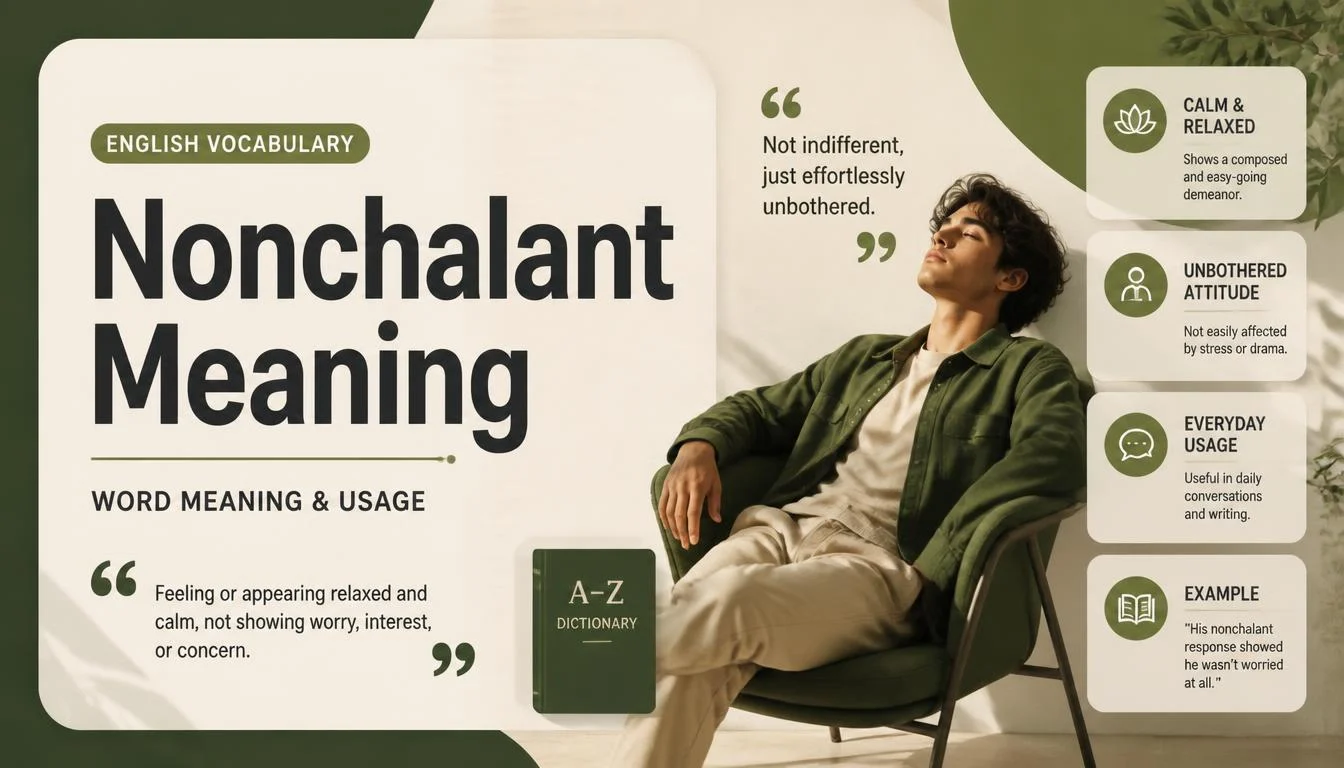
Nonchalant means appearing calm, casual, and unconcerned about something, even when others might react strongly. A nonchalant person often seems relaxed, unbothered, or emotionally unaffected by a situation.
Example: “She acted nonchalant about the exam results, even though she was nervous inside.”
The nonchalant meaning refers to appearing calm, relaxed, and unconcerned, especially in situations that might make other people feel nervous, excited, or worried. Someone who acts nonchalant may seem confident and emotionally unaffected, even when something important is happening. The word is commonly used in everyday conversations, literature, and social media to describe a person’s attitude or behavior.
In modern slang, being nonchalant can also mean acting unbothered or showing little interest in a situation, particularly in friendships, dating, and online interactions. Depending on the context, this attitude may come across as cool and confident or as distant and indifferent. Understanding the nonchalant meaning helps you recognize how people use the word to describe emotions, reactions, and social behavior.
What Does Nonchalant Mean?
The adjective nonchalant describes someone who appears unconcerned, relaxed, or emotionally unaffected by what is happening around them. Rather than reacting strongly, the person maintains a casual attitude and gives little outward indication that the situation matters to them.
For example, imagine two students waiting to receive their exam results. One keeps checking the time, asking questions, and nervously tapping a foot. The other sits comfortably, chats with a friend, and waits without showing much concern. The second student appears nonchalant, although their calm behavior does not prove they feel no anxiety.
Three qualities are commonly associated with the word:
- Calmness: The person remains relaxed instead of reacting dramatically.
- Apparent indifference: They seem relatively unconcerned about the outcome.
- Composure: They maintain control over their visible emotional reactions.
The word is especially useful when someone seems casual in a situation where a stronger reaction might be expected. A person who receives a major compliment without becoming visibly excited may appear nonchalant. So might someone who responds to an awkward comment with a small smile and moves on.
However, being nonchalant does not necessarily mean feeling nothing. A person can be nervous, excited, embarrassed, or deeply interested while choosing not to show it. The term describes their apparent attitude, not a guaranteed explanation of their private emotions.
Origin and History of the Word
The word nonchalant comes from French. It is related to the French verb nonchaloir, meaning to disregard or be unconcerned, which developed from an older expression associated with a lack of warmth or concern.
The word entered English in the eighteenth century and retained its association with a relaxed, unconcerned manner. Over time, it became a familiar adjective for describing people who appear calm even when circumstances might call for a more noticeable reaction.
Its history helps explain an important distinction. Nonchalance is not simply the absence of excitement; it suggests a particular way of displaying one’s attitude. Someone may feel excited about an opportunity but respond with an understated “That sounds good” rather than jumping up and celebrating.
The word can also carry a subtle judgment. Depending on the speaker’s tone, describing someone as nonchalant might be praise for their composure or criticism of their apparent lack of concern. The surrounding situation determines which interpretation makes more sense.
How to Use Nonchalant in Everyday Situations
The word is flexible enough to describe behavior at school, work, social gatherings, and in personal relationships. In each setting, it usually highlights the difference between what is happening and how little emotion someone appears to display.
1. In Social Situations
A nonchalant person may seem comfortable in unfamiliar surroundings. They might enter a party, greet people casually, and begin conversations without appearing nervous or desperate to impress anyone.
For example, someone attending their first networking event might introduce themselves, listen to others, and move naturally between conversations. Their relaxed manner could be described as nonchalant because they do not appear overwhelmed by the unfamiliar environment.
Still, a quiet person is not automatically nonchalant. They might simply be shy, tired, or unsure what to say. The word fits best when the person’s behavior suggests an unconcerned or deliberately relaxed attitude.
2. At Work or School
In professional and academic settings, the term can describe someone who remains composed under pressure.
Imagine a colleague presenting a difficult project to senior managers. They answer questions calmly, explain their decisions, and avoid showing visible panic when challenged. Their nonchalant manner may help them appear confident and prepared.
There is a limit, though. If the same person ignores an important deadline or dismisses a serious mistake, their behavior might come across as careless rather than impressively calm. A relaxed attitude is useful when it supports good judgment, not when it replaces responsibility.
3. In Romantic Relationships
The word frequently appears when people discuss attraction, dating, and emotional vulnerability.
Someone who likes another person might deliberately avoid showing too much interest. They may reply casually to a message, act relaxed during a date, or avoid making their feelings obvious. Friends might describe this behavior as acting nonchalant.
For example, a person might be thrilled that their crush invited them to dinner but respond, “Sure, sounds good,” as if the invitation were no big deal. Their words and behavior appear casual even though they may feel quite excited.
This behavior can sometimes help people avoid feeling exposed or embarrassed. However, consistently appearing uninterested can create confusion. The other person may interpret the attitude as a lack of attraction rather than an attempt to stay composed.
4. During Stressful Situations
Nonchalance can also describe a person who remains calm when something unexpected happens.
Suppose a traveler discovers that their train has been delayed. Instead of complaining immediately, they check the schedule, find another option, and continue with their day. Their reaction seems nonchalant because they do not allow the inconvenience to produce an obvious emotional outburst.
That does not mean every serious situation should be met with indifference. If someone responds casually to another person’s distress, their behavior may seem insensitive. The word describes the manner of the response, not whether that response is appropriate.
Nonchalant Examples in Conversations
The easiest way to understand a word is to see how it works in natural sentences. These examples show how the adjective can describe a person’s manner, reaction, or attitude.
| Situation | Example sentence | What it suggests |
|---|---|---|
| Receiving praise | “She gave a nonchalant smile after the compliment.” | She appeared relaxed rather than excited or embarrassed. |
| Dating | “He acted nonchalant around his crush.” | He seemed casual and may have been hiding his interest. |
| Taking a test | “Maya remained nonchalant before the exam.” | She appeared calm instead of nervous. |
| Workplace discussion | “His nonchalant response surprised the manager.” | He reacted with little visible concern. |
| Social gathering | “She walked in with a nonchalant attitude.” | She appeared comfortable and unconcerned. |
| Unexpected news | “He sounded nonchalant when he heard the announcement.” | His voice showed little obvious emotion. |
Here are a few additional examples that demonstrate different shades of meaning:
- “Despite the attention, Jordan remained nonchalant.”
- “She casually mentioned the award in a nonchalant way.”
- “His nonchalant attitude made it difficult to tell whether he cared.”
- “I tried to look nonchalant, but my nervous smile gave me away.”
- “He gave a nonchalant shrug and changed the subject.”
Notice that the word often appears alongside descriptions of facial expressions, gestures, and speech. A shrug, an understated reply, or a relaxed smile can contribute to the impression, but none of these actions automatically proves that someone is unconcerned.
Nonchalant Meaning in Texting and Social Media
In online conversations, the word often describes someone who appears unbothered, emotionally distant, or unwilling to show how much they care. It is particularly common in discussions about dating, friendships, and social interactions.
Imagine sending someone a message and receiving a simple “okay” several hours later. A friend might say the person is being nonchalant, especially if they expected a more enthusiastic response. However, a short reply alone cannot reveal the person’s actual feelings. They might be busy, distracted, or simply not expressive over text.
The term can also describe an intentional online persona. Someone may post casually about an achievement rather than celebrating it dramatically, creating the impression that success comes naturally to them. Another person might deliberately avoid double-texting or discussing their feelings because they want to appear less invested.
In these contexts, the word often suggests a gap between what someone might feel and what they choose to display. That gap is not always intentional, though.
Examples of Nonchalant Text Messages
- “Oh nice, congrats!” — a relaxed response to someone’s good news.
- “No worries, it’s fine.” — a casual reply that may suggest the person is unbothered.
- “Sure, whenever you’re free.” — a low-pressure response to making plans.
- “Haha, yeah, I noticed.” — a restrained reaction that avoids showing strong excitement.
These messages can sound nonchalant depending on the relationship and conversation. The same words may seem warm in one exchange and distant in another.
If you want to sound relaxed without appearing uninterested, keep your messages natural and clear. You do not need to hide every sign of excitement or affection to come across as confident.
Nonchalant vs. Indifferent vs. Unbothered
These words overlap because all three can describe someone who does not show much concern. However, they emphasize different aspects of a person’s attitude.
| Word | Main emphasis | Typical impression | Example |
|---|---|---|---|
| Nonchalant | A relaxed, unconcerned manner | Casual and composed | “She gave a nonchalant answer.” |
| Indifferent | A lack of interest or preference | Uninvested or unconcerned | “He was indifferent to the result.” |
| Unbothered | Not upset or disturbed by something | Calm, unaffected, or confident | “She stayed unbothered by the criticism.” |
| Carefree | Freedom from worry or responsibility | Lighthearted and relaxed | “They spent a carefree afternoon together.” |
| Aloof | Emotional distance from other people | Reserved or detached | “He seemed aloof at the gathering.” |
Nonchalant vs. Indifferent
The main difference is between how someone behaves and how much they care. Nonchalant describes an outward manner, while indifferent more directly suggests a lack of interest, concern, or preference.
For example, a student who studies hard but appears relaxed before an exam may be nonchalant. A student who genuinely does not care whether they pass may be indifferent.
A person can be both, of course. Someone who has little interest in a situation may display that indifference through nonchalant behavior.
Nonchalant vs. Unbothered
Unbothered usually suggests that something has failed to upset or disturb a person. Nonchalant focuses more on the casual manner in which the person responds.
Someone who receives criticism and calmly continues their work may appear unbothered. If they respond with a casual shrug and an unconcerned expression, they may also seem nonchalant.
The difference is subtle, but useful: one emphasizes the lack of disturbance, while the other emphasizes the relaxed display.
Nonchalant vs. Aloof
An aloof person often appears emotionally distant or difficult to approach. A nonchalant person may be friendly and approachable while remaining relaxed about a particular situation.
For example, someone who smiles, chats with everyone, and reacts casually to unexpected news may be nonchalant. Someone who avoids conversation and keeps others at a distance may seem aloof.
Is Being Nonchalant a Good or Bad Thing?
Being nonchalant is neither automatically good nor automatically bad. Its effect depends on the circumstances, the person’s intentions, and how others interpret the behavior.
When It Can Be Positive
A nonchalant attitude can help someone avoid unnecessary drama. Remaining calm during a disagreement, accepting a small mistake without overreacting, or responding gracefully to an awkward moment can make social interactions easier.
It can also communicate confidence. People who do not appear desperate for approval may seem comfortable with themselves, particularly when they remain respectful and attentive to others.
For example, a job candidate who answers difficult interview questions without rushing or becoming visibly defensive may create a positive impression. Their relaxed manner suggests that they can handle pressure.
When It Can Become a Problem
The same behavior can cause misunderstandings when other people need reassurance or emotional engagement.
If a friend shares upsetting news and receives a casual shrug in response, they may feel dismissed. Similarly, a partner who never expresses affection or enthusiasm may appear uninterested, even if they care deeply.
There is also a difference between composure and avoidance. Someone who refuses to discuss problems because they want to seem unaffected may allow resentment or confusion to build over time.
The goal is not to eliminate a relaxed attitude. It is to recognize when the situation calls for a clearer emotional response. Calmness can be helpful, but genuine communication matters just as much.
How to Tell When Someone Is Acting Nonchalant
A person’s behavior can provide clues, but it is important not to assume that outward calm reveals their complete emotional state.
Common signs of a nonchalant manner include:
- Understated reactions: They respond to surprising news without much visible excitement.
- Relaxed body language: Their posture, gestures, and facial expressions appear comfortable.
- Casual speech: They use simple, matter-of-fact language rather than dramatic expressions.
- Limited visible concern: They do not seem especially worried about an outcome.
- Quick recovery: They move on from an awkward moment without dwelling on it.
These are observations, not reliable tests of someone’s feelings. A person may be naturally reserved, emotionally tired, distracted, or simply comfortable expressing less emotion.
Someone might also consciously act nonchalant to protect their privacy or avoid embarrassment. For instance, a person who feels rejected may behave casually because they do not want others to see their disappointment.
If their attitude matters to you, pay attention to the broader pattern rather than one message or facial expression. When appropriate, a direct and respectful conversation is more reliable than trying to interpret every small gesture.
FAQs
1. What is the opposite of nonchalant?
Possible opposites include concerned, anxious, agitated, and emotional, depending on the context. If someone reacts strongly to a situation instead of appearing relaxed, they may be described as visibly worried or excited. The best opposite depends on the emotion being expressed.
2. Is nonchalant a formal word?
Yes. It is a standard English adjective used in formal writing, journalism, literature, and everyday conversation. It can describe behavior in professional settings as well as casual social interactions. Although it appears frequently in informal discussions about dating and social media, it is not slang.
3. How do you pronounce nonchalant?
Nonchalant is commonly pronounced non-shuh-LAHNT, with the strongest emphasis on the final syllable. The pronunciation reflects its French origin, although English speakers may vary slightly in how they say it.
4. What is the noun form of nonchalant?
The noun form is nonchalance, which refers to the state or manner of appearing calm and unconcerned. For example, “Her nonchalance during the interview impressed the panel” describes her relaxed attitude during the interview.
5. Can someone be nonchalant but still care deeply?
Yes. A person may care a great deal about an outcome while choosing not to display strong emotions. Someone might appear relaxed before an important performance because they have learned to manage their nerves, or they might hide their romantic feelings to avoid embarrassment. Their outward behavior alone does not establish how much they care.
Conclusion
A nonchalant attitude can make someone appear confident, relaxed, or difficult to read, depending on the situation. The word is most useful when describing how a person responds outwardly rather than making assumptions about their private feelings. In conversation, relationships, and professional settings, the distinction between genuine indifference and calm self-control matters. A relaxed response can be a strength, provided it does not prevent honest communication or make others feel ignored.