Quick Answer
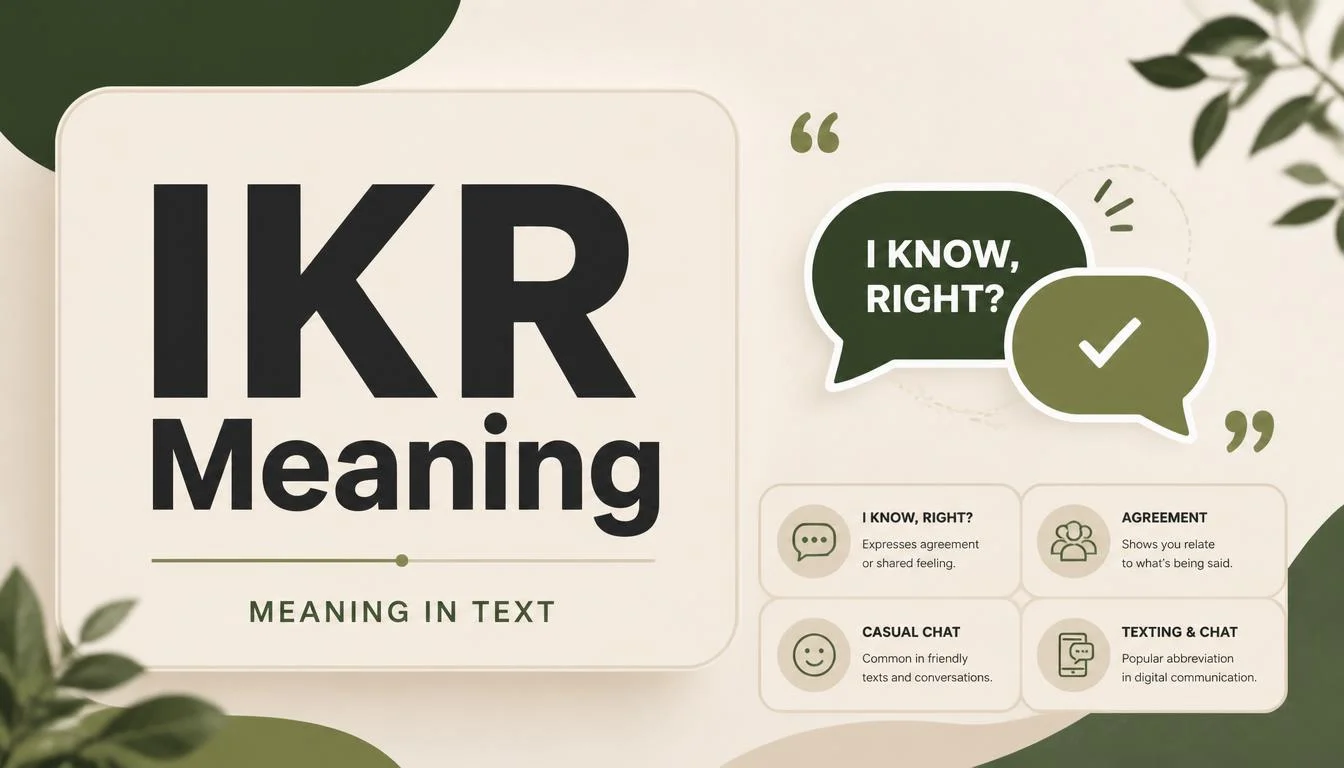
IKR stands for “I know, right?” It’s used to agree with something someone just said, usually with a bit of emotion behind it surprise, frustration, amusement, or relief that someone else feels the same way. You’ll see it in texts, group chats, comment sections, and social media replies. It works as a standalone reply or tacked onto the end of a sentence.
IKR meaning in text is “I Know, Right?” People use this popular abbreviation in texting, social media comments, and online chats to show agreement with someone else’s opinion or reaction. It often expresses shared feelings, excitement, surprise, or frustration without requiring a lengthy response.
Understanding the IKR meaning helps you follow casual conversations more naturally, especially when chatting with friends or browsing platforms like TikTok, Instagram, and Snapchat. Whether someone shares exciting news or complains about something frustrating, replying with IKR shows that you agree and feel the same way.
Where IKR Actually Comes From
IKR didn’t start on the internet, even though that’s where most people encounter it now. “I know, right?” has been a spoken phrase in American English since at least the 1980s, often tied to Valley girl speech patterns and teen slang from California. The internet didn’t invent the phrase it just shortened it and gave it a permanent home in text messages and comment threads.
The abbreviation itself took off once SMS texting became common in the early 2000s, when character limits and slow T9 keyboards made shorthand genuinely useful rather than just trendy. By the time instant messaging platforms and early social media sites like MySpace and AIM were popular, IKR had already settled into casual online vocabulary as a quick, low-effort way to show agreement.
Breaking Down the Phrase Word by Word
“I know, right?” works as a mini conversation on its own. The “I know” part confirms that you already had the same thought or reaction. The “right?” part isn’t really a question it’s a verbal nod, almost like saying “doesn’t it feel that way to you too?” Put together, the phrase signals shared understanding rather than new information.
This is why IKR feels different from a plain “yes” or “I agree.” Those responses are flat. IKR carries a little emotional charge, a sense that the person typing it was already thinking the exact same thing before you said it.
How People Use IKR in Real Conversations
IKR shows up most often in these situations:
- Reacting to something relatable or funny someone shared
- Agreeing with a complaint, like bad weather, a long commute, or an annoying coworker
- Responding to a surprising piece of news or gossip
- Backing up a friend’s opinion in a group chat
A typical exchange might look like this: one person texts “ugh, Mondays are the worst,” and the reply is simply “ikr.” No extra explanation needed. The context carries the meaning, and that’s part of why the abbreviation works so well in fast-moving conversations.
IKR vs Similar Agreement Slang
People often mix up IKR with other short agreement phrases, but they don’t all carry the same tone. Here’s how they stack up.
| Slang Term | Full Meaning | Typical Tone | Best Used When |
|---|---|---|---|
| IKR | I know, right? | Emotional, relatable agreement | Reacting to something shared or surprising |
| FR | For real | Sincere, serious agreement | Confirming something is genuinely true |
| TBH | To be honest | Honest opinion, sometimes blunt | Sharing a personal take |
| NGL | Not gonna lie | Reluctant honesty | Admitting something you weren’t planning to say |
| SMH | Shaking my head | Disapproval or disbelief | Reacting to something frustrating or silly |
IKR leans more toward shared emotional reaction, while something like FR is closer to backing up a factual claim. TBH and NGL both introduce an opinion rather than agreeing with one that’s already been said. Knowing these small differences helps avoid replying with the wrong energy in a conversation.
The Rise of “Unspoken Slang” Moments
One pattern getting more attention lately, though there’s not much formal research on it yet, is what some younger social media users have started calling “silent agreement slang.” This is the use of short phrases like IKR, FR, or “same” without any further comment, almost as a way to close out a topic quickly rather than extend the conversation. Instead of starting a longer back-and-forth, the reply itself signals that nothing more needs to be said. This shift toward brevity-as-closure is hard to quantify, since there isn’t solid published data tracking it, but it’s a noticeable habit in how group chats and comment sections move today.
Tone Shifting: Why the Same Three Letters Can Mean Different Things
A detail that doesn’t get discussed much is how IKR changes meaning based on punctuation and capitalization, even though the letters themselves never change. Lowercase “ikr” with no punctuation tends to read as casual and low-key, almost offhand. “IKR!!” in all caps with exclamation points reads as excited or validated, like the person is genuinely thrilled someone agrees with them. A flat “ikr.” with a period can sometimes come across as sarcastic or even a little annoyed, depending on the conversation.
This kind of tone-through-formatting isn’t unique to IKR, but it’s a good example of how internet shorthand carries more emotional weight than its letter count would suggest. Three characters can land as enthusiastic, bored, or sarcastic depending entirely on how they’re typed.
Where You’ll See IKR Outside of Texting
IKR isn’t limited to text messages anymore. It shows up regularly in:
- Comment sections on video platforms and social media posts
- Live chat during streams, where fast replies matter more than full sentences
- Direct messages and group chats on apps like Discord and WhatsApp
- Captions or replies on short-form video apps
In faster-paced environments like live chat during a stream, IKR often appears repeated by multiple people reacting to the same moment, which can create a quick wave of agreement scrolling down the screen. That kind of rapid, repeated use is part of why the abbreviation has stayed relevant even as slang trends shift quickly.
Is IKR Considered Proper English?
No, and it’s not meant to be. IKR belongs firmly in informal, conversational writing. It fits texts, DMs, social captions, and casual chats, but it doesn’t belong in formal emails, school assignments, cover letters, or professional communication. Using it in the wrong setting can come across as careless rather than casual, since tone matters a lot in written communication where body language and vocal inflection are missing.
Style guides and dictionaries that track internet language, including major online dictionaries that regularly add internet slang entries, generally classify IKR the same way they classify other texting abbreviations: acceptable for informal digital communication, not for formal writing.
A Quick Note on Generational Use
IKR is often associated with younger texters, particularly teens and young adults, but it’s not exclusive to any single age group anymore. Plenty of older millennials and even some Gen X texters use it comfortably, especially those who were already texting regularly in the 2000s when the abbreviation first spread. What has changed more is the context it’s used in it started mostly in one-on-one texting and has since spread into public-facing spaces like comment sections and livestream chats, where the agreement is visible to strangers rather than just one friend.
Common Mistakes People Make With IKR
A few small misuses come up often enough to mention. Some people type “IKR?” with a question mark, treating it like an actual question that needs an answer, when it’s meant to function as a statement of agreement instead. Others overuse it in professional or semi-formal settings, like messaging a manager or writing a work-related comment, where it can read as too casual. There’s also confusion between IKR and “I know” used alone the “right?” part is what signals you’re inviting shared agreement, not just stating a fact, so dropping it changes the tone slightly.
FAQs
Is IKR Rude to Use?
No, IKR is not inherently rude. It is a casual way to agree with someone, and most people interpret it as friendly or relatable rather than dismissive. Its tone depends more on the context, punctuation, and relationship between the people chatting than on the abbreviation itself.
Can IKR Be Used Sarcastically?
Yes, IKR can sound sarcastic depending on the conversation and how it is written. It may express genuine agreement or mock someone’s statement, especially when the situation is exaggerated or the response feels intentionally flat.
Does IKR Work in Formal Writing?
No, IKR is generally unsuitable for formal writing, including professional emails, reports, and academic assignments. It is best reserved for casual texting, social media, and informal online conversations. In formal situations, use phrases such as “I agree” or “That’s exactly right.”
Is There a Difference Between “ikr” and “IKR” in All Caps?
The main difference is the tone they may convey. Lowercase “ikr” often feels relaxed and conversational, while uppercase “IKR” can express stronger agreement, excitement, or emphasis. However, capitalization does not always change the meaning, and the intended tone depends on the context.
What’s the Oldest Known Use of “I Know, Right?” as a Phrase?
The spoken phrase “I know, right?” existed before internet slang and text messaging became popular. It developed in informal English conversation before being shortened to IKR in digital communication. Pinpointing the oldest known use of the exact phrase or abbreviation is difficult without a verified historical record.
Is IKR Used the Same Way in Other English Speaking Countries?
IKR is widely understood in English speaking countries because of social media, texting, and global internet culture. Its use may be more common in some communities than others, but the basic meaning remains the same: expressing agreement with another person’s statement.
Conclusion
IKR is a small piece of language that says a lot with very little. It’s not complicated, but it carries real emotional texture depending on how and where it’s used. Understanding the difference between IKR and similar agreement slang, along with reading its tone correctly, makes texting and online conversation flow a lot more naturally. It’s one of those abbreviations that’s so common it barely registers anymore, which is honestly part of what makes it worth breaking down.