Quick Answer
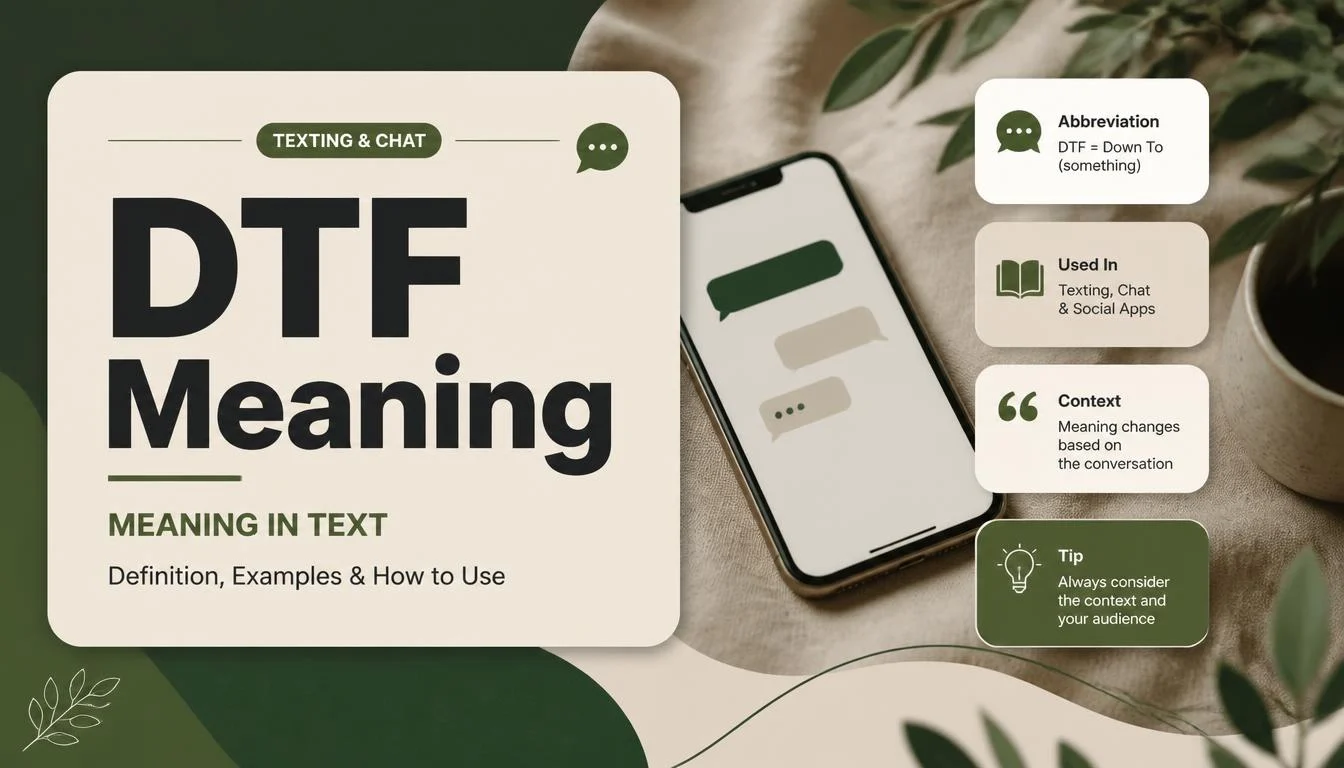
DTF stands for “down to f***” in texting and online slang. It usually means someone is open to sexual activity or a casual sexual encounter. The expression is informal and sexually explicit, so its meaning depends on the context and the people communicating.
DTF meaning in text is commonly understood as “down to f***,” a slang expression that indicates someone is willing to engage in sexual activity. It is frequently used in texting, dating apps, and social media conversations, especially when discussing attraction or casual relationships.
The meaning of DTF can depend on the conversation and the relationship between the people involved. While some people use it jokingly or flirtatiously, others use it to express genuine sexual interest. Understanding the context can help you interpret the message correctly and avoid misunderstandings.
Where the Term Actually Came From
Nobody can point to the exact person who coined DTF. That’s normal for slang that spreads through texts and comment sections rather than magazines or news articles. People who study internet language generally trace it back to the early-to-mid 2000s, when it floated around MySpace comments and early forums before texting turned it into something people could type with one thumb.
Dating apps pushed it into the mainstream. Tinder and similar apps built their whole interface around quick swipes and short bios, and that created the perfect home for a three-letter phrase that says a lot without using much space. By the 2010s, most people under 40 recognized DTF on sight, whether they used it themselves or just knew what it meant.
The Core Definition, Plain and Simple
DTF means someone feels willing, interested, or available for sex, usually with a casual framing attached. People rarely use it to describe wanting a relationship. The phrase carries an implied lack of emotional attachment it signals physical availability in the moment, not long-term interest.
Context changes the tone a lot. Friends might throw it around as a joke with zero real intent behind it. Someone sending it directly on a dating app usually means it as a straightforward proposition. The letters stay the same, but the weight behind them shifts depending on who says it and why.
Not Everyone Means It the Same Way Here’s the Breakdown
| Usage Context | What It Typically Signals | How Literally to Take It |
|---|---|---|
| Dating app opener | Genuine interest in a casual hookup | Usually literal |
| Group chat joke among friends | Humor, exaggeration, or sarcasm | Rarely literal |
| Social media caption or meme | A reference to the slang itself, often ironic | Almost never literal |
| Direct text after meeting someone | A serious proposition | Usually literal |
| Brand or influencer content | Attention-grabbing wordplay | Not literal at all |
This table matters more than it looks. A huge chunk of confusion around the term happens when someone reads a joking use as serious, or the other way around.
The Other DTF: Direct-to-Film Printing
Here’s where things get genuinely interesting, and where solid information gets harder to find. In the custom apparel world, DTF stands for direct-to-film, a transfer printing method that’s grown fast over the past few years. Printers create the design on a special film, coat it with adhesive powder, and then heat-press it onto the fabric instead of printing straight onto the shirt.
Print shops like this method because it works on cotton, polyester, and blends alike. Direct-to-garment printing struggles with that kind of range. Small businesses and on-demand merchandise sellers have adopted DTF printing quickly, since the equipment costs less than a traditional screen printing setup and the results hold up across more fabric types.
This meaning is newer to mainstream awareness, and the technology itself keeps evolving, so you won’t find the kind of deep, long-established data you’d find around something like screen printing. Industry forums and supplier guides usually offer the best current specifics, since small manufacturers are still refining the technique rather than textbook authors documenting it.
Reading the Room: When DTF Shows Up in a Conversation
Getting a DTF text doesn’t obligate you to respond a certain way. A few honest, low-drama options exist:
- Give a direct yes or no, without over-explaining.
- Deflect with humor (“lol not really my thing”) if the interest isn’t mutual.
- Skip responding altogether, which usually reads as a no, fair or not.
- Redirect the conversation if you’re interested but the blunt framing feels off.
None of these choices need justification. Dating app culture rewards directness, but that doesn’t mean every DTF message deserves a long reply.
DTF vs. Similar Slang: Knowing the Difference
People often lump DTF in with other casual-relationship acronyms, but the terms don’t mean the same thing.
| Term | Meaning | Implies Ongoing Contact? |
|---|---|---|
| DTF | Open to casual sex, often one-time | Not necessarily |
| FWB (Friends With Benefits) | An ongoing physical relationship between friends | Yes |
| NSA | No strings attached, typically repeated encounters | Sometimes |
| ONS | One-night stand, explicitly a single encounter | No |
The key distinction: DTF describes a state of willingness in the moment, while FWB and NSA describe an arrangement with some expectation of repetition. ONS comes closest to DTF, since both terms assume a single encounter rather than a relationship.
Why This Kind of Slang Spreads So Fast
Short acronyms like DTF thrive because they’re efficient and a little taboo, and they let someone drop a loaded idea into a conversation without spelling it out fully. They also carry built-in deniability three letters get played off as a joke far more easily than a full sentence does. That ambiguity partly explains why the term has stuck around for roughly two decades while plenty of slang from the same era faded out.
Social platforms speed this up even further. A phrase that works as a punchline, a meme caption, and a genuine proposition all at once has real staying power, because people keep reusing it across completely different contexts without losing the original recognition.
A Word on Consent and Context
Because DTF almost always ties back to sexual availability, how and where you use it matters. Sending it to someone who hasn’t shown interest, or dropping it in a workplace or professional setting, turns casual slang into something inappropriate fast. The same goes for mistaking a friend’s joking use of the term for a genuine invitation that mismatch causes a lot of awkward, unwanted situations. Reading the relationship and the platform before you use or respond to the phrase goes a long way toward avoiding mixed signals.
New-ish Twists on DTF Worth Knowing
A few newer wrinkles around this term haven’t fully settled into common knowledge yet, mostly because they’re recent enough that solid data hasn’t caught up.
DTF as a filter or sorting term on apps. Some dating platforms now let users signal intent more explicitly through profile prompts or preference tags, which has slightly reduced reliance on typing out DTF directly. Instead of texting the phrase, users increasingly select intent categories built into the app itself, though plenty of people still prefer the direct, unmistakable text.
DTF printing’s overlap with small-batch fashion trends. As print-on-demand businesses and small apparel brands have grown on social platforms, direct-to-film printing has become a quiet favorite for low-volume runs. Because so few large studies track this corner of the printing industry yet, most useful information still comes from supplier blogs, printing community forums, and hands-on reviews from small shop owners rather than formal research.
Regional and generational drift in meaning. Younger users on some platforms have started using DTF more loosely, closer to “down for” anything rather than strictly sexual availability. This shift isn’t uniform or well documented across regions yet, so treating it as an emerging pattern rather than a settled rule makes more sense right now.
FAQs
Is DTF Considered Rude or Offensive to Say?
It’s blunt, but not automatically offensive. It depends heavily on who you say it to and the relationship between you. Sending it to a stranger without context can come across as crude, while using it with an established dating app match may feel more normalized.
Did DTF Originate From a Specific Show or Movie?
No single show or movie is known to have created the term. It developed through online slang and texting culture rather than originating from a specific TV show, song, or movie reference.
Can People Use DTF in a Non-Sexual, Joking Way?
Yes, and it happens frequently. Friends may use it sarcastically to mean they are “down for” almost anything, such as food, an activity, or a spontaneous plan. In these situations, the surrounding context can remove the usual sexual meaning.
Why Does Literal Use of DTF Show Up More on Dating Apps Than on Social Media?
Dating apps are designed to help people express romantic or sexual interest, so DTF often carries its literal sexual meaning there. Social media posts, on the other hand, are frequently public and humorous, making the abbreviation more likely to appear in jokes, memes, or exaggerated statements.
Will Direct-to-Film Printing Replace Other Printing Methods?
Direct-to-film (DTF) printing is becoming popular for small batches and on-demand orders because it works with a range of fabrics. However, established methods such as screen printing remain competitive for large bulk orders, where lower costs per item can be more important than flexibility.
How Do I Know Which Meaning Someone Intends?
Context usually provides the clearest answer. A message on a dating app or in a flirty conversation likely uses DTF to mean “down to fuck.” However, a discussion about custom apparel, merchandise, or printing equipment probably refers to direct-to-film printing.
Conclusion
DTF is one of those rare acronyms that means two almost comically unrelated things depending on where you encounter it blunt dating slang in one context, a legitimate printing technique in another. Figuring out which one applies just takes a quick read of the surrounding conversation. Whether someone’s texting it on a dating app or a print shop is advertising it on a product listing, the letters alone won’t tell you much without that context attached.