Quick Answer
Myrrh is a fragrant resin obtained from certain trees in the Commiphora genus, native to parts of Africa and the Middle East. It has been used for centuries in perfumes, incense, traditional remedies, and religious ceremonies. Myrrh is also famous in the Bible as one of the three gifts presented to baby Jesus by the Wise Men.
The myrrh meaning refers to an aromatic, bitter resin valued for its distinctive scent and historical importance. People have used myrrh for thousands of years in incense, perfumes, and traditional practices. Its warm, earthy fragrance and connection to ancient cultures make it a meaningful substance in history and spirituality.
You may encounter myrrh in biblical stories, religious ceremonies, essential oils, or natural fragrance products. It is especially well known as one of the three gifts brought to Jesus, alongside gold and frankincense. Understanding the meaning of myrrh helps you appreciate its cultural significance, symbolic associations, and traditional uses throughout history.
What Does Myrrh Mean in English?
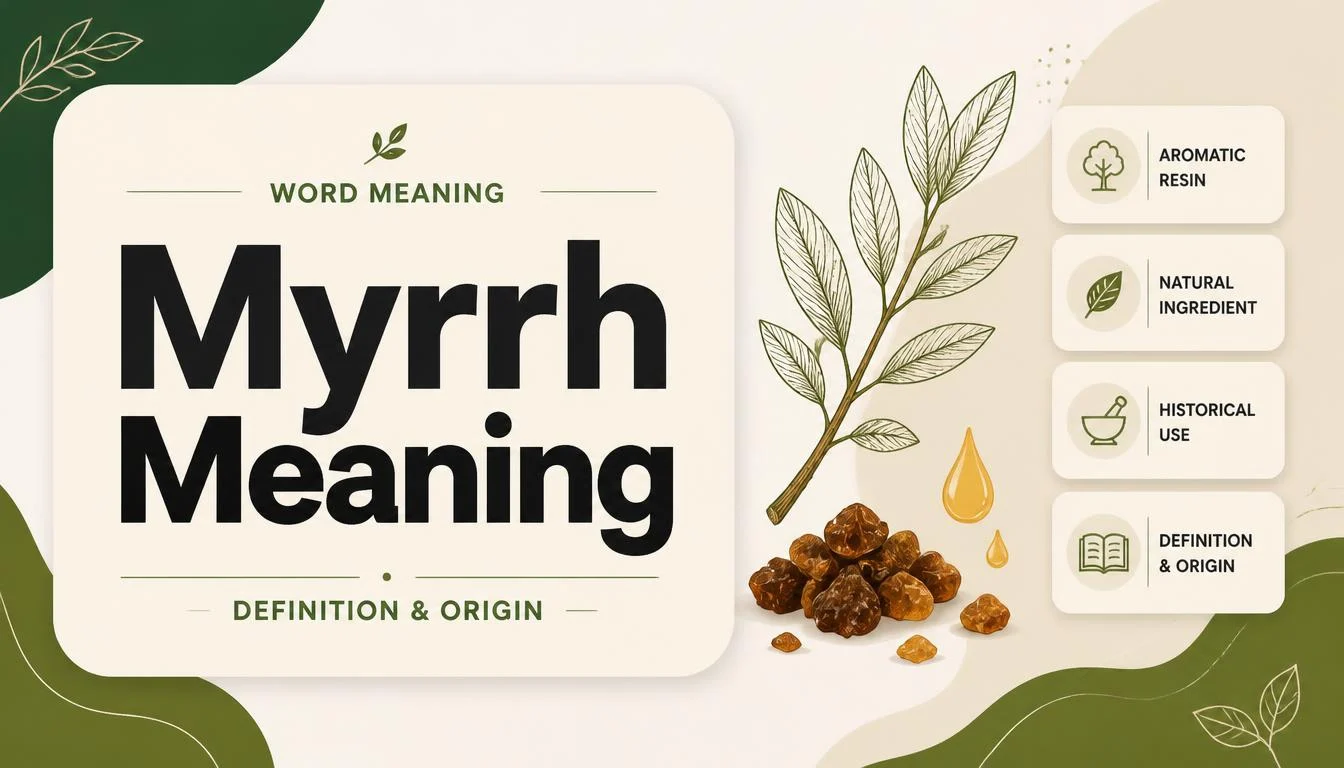
The myrrh definition is simple: it is an aromatic gum resin obtained from certain trees and shrubs. The substance forms when resinous material seeps from the plant and hardens after exposure to air. Its color can range from yellowish brown to reddish brown.
In everyday English, myrrh refers to this natural substance rather than a general type of perfume or incense. People may burn the resin for its fragrance or use myrrh derived ingredients in perfumes and selected personal care products.
Myrrh Pronunciation
The standard American English pronunciation of myrrh is /mɜr/. It sounds like the word “myrrh” rhymes with “fur” and “stir” in many American accents.
The spelling can make the word look more complicated than it sounds. The final letters do not create another syllable, so you pronounce it as one short word.
Myrrh in a Sentence
Here are a few examples that show how to use the word naturally:
- The ancient temple used myrrh as a fragrant incense.
- Myrrh was one of the gifts presented to Jesus in the Bible.
- The perfumer added myrrh to create a warm, earthy fragrance.
What Is Myrrh Made From?
Myrrh comes from trees and shrubs in the Commiphora genus. These plants grow in parts of Africa and the Arabian Peninsula, where many species can survive in dry environments. One well known source of traditional myrrh is Commiphora myrrha.
The resin develops when the plant releases a sticky substance through its bark. Collectors gather this material after it hardens into irregular pieces. Although people sometimes call myrrh fragrant tree sap, gum resin is the more accurate description.
What Does Myrrh Look Like and Smell Like?
Raw myrrh often appears as small, uneven chunks or hardened resin droplets. Its color varies with the source and quality. Some pieces look pale yellow or amber, while others have reddish brown tones.
Its scent is rich and earthy, with woody, warm and balsamic notes. Some varieties also have a smoky or slightly sweet character. The resin itself has a distinctly bitter taste, which is one reason the word myrrh is often associated with bitterness in discussions of its history.
How Is Myrrh Harvested?
Harvesting usually involves making small cuts in the bark of a suitable tree. The plant releases resin through these openings, and the material gradually hardens. Collectors then gather the dried resin for sorting and further use.
Harvesting practices vary by species and location. Responsible collection matters because excessive damage can weaken plants and affect future resin production. The exact appearance and quality of the final material also depend on the species, growing conditions and processing methods.
Myrrh Origin and Etymology
The word myrrh entered English through Latin myrrha and Greek myrrha. Its deeper linguistic history is commonly connected with Semitic words associated with bitterness. This connection fits the resin’s naturally bitter taste.
However, the word’s linguistic origin is different from the plant’s geographic origin. Myrrh has a long history in regions that include the Horn of Africa and the Arabian Peninsula. From these areas, the resin traveled through trade networks into the Mediterranean world and beyond.
Because it was valued for its fragrance and ritual uses, myrrh became an important traded commodity. Its movement between regions also helped spread knowledge of aromatic resins and their applications.
What Does Myrrh Mean in the Bible?
The biblical meaning of myrrh is one of the most common reasons people search for this word. Myrrh appears in several passages of the Bible, including accounts connected with Jesus’ birth, crucifixion and burial. These references give the resin a lasting place in Christian history.
Myrrh as One of the Gifts of the Magi
Matthew 2:11 describes the Magi entering the house, seeing the child Jesus with Mary and presenting gifts of gold, frankincense and myrrh. These gifts were valuable substances in the world of the biblical narrative.
The passage names the three gifts but does not directly explain what each one symbolizes. Christian tradition later developed interpretations that connect them with Jesus’ identity and life. These interpretations remain influential in sermons, religious art and Christmas celebrations.
Gold is traditionally associated with kingship. Frankincense is often linked with worship and divinity. Myrrh, because of its other historical and biblical associations, is commonly connected with suffering, mortality and burial.
Why Did the Wise Men Bring Myrrh to Jesus?
Myrrh was a valuable aromatic substance in the ancient world. People used it in perfumes, incense and other preparations, which made it a meaningful gift rather than an ordinary household item.
Its symbolic meaning became especially important in Christian interpretation. Some traditions understand the gift as a reference to the suffering and death Jesus would experience later in life. This reading creates a connection between the Nativity story and the events surrounding the crucifixion.
It is important to distinguish this interpretation from the biblical text itself. Matthew records the gift but does not explicitly state why the Magi selected myrrh or assign a specific symbolic meaning to it.
Myrrh in the Old Testament
Myrrh also appears in the Old Testament. Exodus 30:23 includes liquid myrrh among the ingredients used in the sacred anointing oil described in the text. This reference connects myrrh with religious preparation and ritual practice.
Esther 2:12 mentions myrrh oil in the preparation of women before their turn to enter King Ahasuerus. In this context, myrrh appears as part of a process involving fragrance and personal preparation.
These passages show that myrrh had uses beyond the story of Jesus’ birth. It was already associated with valued oils, fragrances and ceremonial settings in the ancient world.
Myrrh at the Crucifixion and Burial of Jesus
The Gospel of Mark mentions myrrh in Mark 15:23. In this passage, Jesus is offered wine mixed with myrrh before his crucifixion, though he does not take it. The passage records the substance’s presence without fully explaining its purpose.
John 19:39 to 40 describes Nicodemus bringing a mixture of myrrh and aloes for Jesus’ burial. The materials were used in preparing the body according to the burial customs described in the account.
These references help explain why Christian tradition connects myrrh with death and burial. When readers interpret the gift of myrrh in Matthew alongside these later passages, they often see a symbolic link between Jesus’ birth and his eventual death.
What Is the Spiritual Meaning of Myrrh?
The spiritual meaning of myrrh depends on the religious or cultural context in which people use it. In Christianity, its strongest symbolic associations include sacrifice, mortality, devotion and burial. Other spiritual practices may connect its fragrance with reflection, ritual or a sense of calm.
These meanings are interpretations rather than universal definitions. A person who encounters myrrh in a biblical passage may understand it differently from someone who uses it in a fragrance blend or meditation practice.
Myrrh Symbolism in Christianity
Christian interpretations commonly associate myrrh with several themes.
Suffering and sacrifice: Myrrh’s connection with Jesus’ crucifixion and burial gives it a place in reflections on suffering and sacrifice.
Mortality and death: The burial account in John connects myrrh with the preparation of Jesus’ body after his death.
Devotion and reverence: Its appearance in sacred preparations and as a valuable gift can suggest honor and religious devotion.
Preparation and anointing: References to myrrh in oils and ceremonial preparations connect it with sacred practices in biblical settings.
Not every Christian tradition explains these associations in exactly the same way. The meanings are best understood through the relevant passages and the interpretations built around them.
Myrrh and Spiritual Purification
Myrrh has been used in incense and ceremonial settings across different historical traditions. Its presence in these practices sometimes leads people to associate it with purification, reflection or the preparation of a sacred space.
Such associations are cultural and spiritual in nature. Burning myrrh does not establish that a room has been cleansed of harmful energy or that a supernatural effect has occurred. Its fragrance and place in a ritual can still hold personal or religious meaning for those who use it.
Myrrh Spiritual Meaning Today
Today, some people include myrrh incense or fragrance products in meditation, prayer and personal rituals. Others value its connection with ancient history and biblical symbolism.
For Christian readers, myrrh may prompt reflection on the life of Jesus and the relationship between his birth, suffering and death. For others, it may simply represent a historic fragrance with a rich cultural background. The meaning depends on the context rather than one fixed spiritual rule.
What Is Myrrh Used For?
Myrrh has several traditional and modern applications. Its fragrance and resinous properties have made it useful in incense, perfumery and selected personal care products. Some uses also come from longstanding herbal traditions, although historical use does not automatically prove medical effectiveness.
Myrrh in Incense and Religious Ceremonies
People have burned aromatic resins for centuries to produce fragrance during ceremonies and other gatherings. Myrrh is valued for its warm, earthy scent, which can create a distinctive atmosphere when used as incense.
Its role varies across religious and cultural traditions. Some communities use aromatic resins in worship, while others use them in personal rituals or fragrance practices. Myrrh’s presence in ancient religious settings helps explain its continuing association with sacred spaces.
Myrrh in Perfumes and Fragrances
Perfumers use myrrh for its deep, resinous aroma. It can add warmth and complexity to blends that include woody, spicy or balsamic notes. Depending on the formulation, myrrh may contribute a dry, earthy quality or a softer, slightly sweet character.
The resin, an extract and an essential oil are not interchangeable products. Their composition and fragrance can differ according to how manufacturers process the material. A perfume containing myrrh may also include many other ingredients.
Myrrh in Traditional Medicine and Oral Care
Myrrh has a long history in traditional remedies. Preparations containing myrrh have also appeared in oral care products, including some mouthwashes and other formulations intended for the mouth.
However, traditional use should not be confused with proven treatment. Evidence for specific medical benefits varies, and it is not appropriate to assume that myrrh can cure infections, heal serious wounds or replace professional dental care.
People who want to use myrrh medicinally should consider the product’s ingredients, intended use and safety information. A qualified healthcare professional can help assess whether a particular preparation is suitable.
What Is Myrrh Essential Oil?
Myrrh essential oil is an aromatic product derived from suitable myrrh material through an extraction process. It differs from the raw gum resin, which contains a broader mixture of resinous and water soluble components.
The oil is used in some fragrance blends, cosmetics and aromatherapy products. Its concentrated nature means that it should not automatically be applied directly to the skin or swallowed. Product directions and appropriate safety precautions matter.
People who are pregnant, take medication or have sensitive skin should seek qualified advice before using myrrh products for health related purposes.
What Is the Difference Between Myrrh and Frankincense?
Myrrh and frankincense are both aromatic plant resins, and the Bible mentions them together in Matthew 2:11. Despite their shared history, they come from different botanical sources and have distinct fragrance profiles.
| Feature | Myrrh | Frankincense |
|---|---|---|
| Botanical source | Commiphora species | Boswellia species |
| Material | Gum resin | Gum resin |
| Typical aroma | Earthy, warm, woody and often bitter | Often fresh, citrusy, pine like or resinous |
| Traditional uses | Incense, perfumes and traditional preparations | Incense, perfumes and traditional preparations |
| Biblical association | Gift of the Magi and later associations with burial | Gift of the Magi and traditional associations with worship |
Both resins have been valued in fragrance and ceremonial practices. Their similarities explain why people often mention them together, but they should not be mistaken for the same substance.
Why Was Myrrh Valuable in Ancient Times?
Myrrh’s value came from its fragrance, its place in ritual practices and the effort involved in collecting and transporting it. Before modern fragrance manufacturing, aromatic resins provided important ingredients for perfumes and scented preparations.
Myrrh in Ancient Egypt
Myrrh was used in ancient Egyptian fragrance and ritual practices. Aromatic substances also played roles in some embalming preparations, although the exact ingredients varied across periods and methods.
These uses help explain myrrh’s place in the wider history of ancient perfumery and funerary practices. It should not be assumed that every Egyptian burial or embalming process included myrrh.
Myrrh and Ancient Trade Routes
Myrrh traveled through trade networks connecting parts of Africa and Arabia with Mediterranean markets. Its value as an aromatic commodity helped make it a sought after product in the ancient world.
Transporting resins over long distances required organized trade and access to suitable growing regions. This history gives myrrh significance beyond religion because it formed part of the exchange of goods between different societies.
Myrrh in Ancient Perfume and Ritual Practices
People valued myrrh for its distinctive scent and its ability to contribute to aromatic preparations. It appeared in perfumes, incense and other products used in personal or ceremonial settings.
Its use in several different contexts explains why myrrh appears in both historical records and religious texts. It was a practical fragrance material as well as a substance that could carry cultural or symbolic meaning.
Is Myrrh Still Used Today?
Yes. Myrrh remains relevant in several modern products and practices.
- Perfumery: Fragrance makers use myrrh in selected perfume compositions.
- Incense: The resin remains an option for people who enjoy traditional aromatic materials.
- Personal care: Some oral care and cosmetic formulations contain myrrh derived ingredients.
- Traditional preparations: Myrrh continues to appear in certain herbal products.
- Aromatherapy: Some products use myrrh essential oil for its fragrance.
The safety and suitability of myrrh depend on the specific product and how it is used. A raw resin, a concentrated essential oil and a finished mouthwash have different compositions and directions for use.
FAQs
What Does Myrrh Mean in Simple Terms?
Myrrh is a fragrant, bitter gum resin collected from certain Commiphora trees and shrubs. It has been used in incense, perfumes, traditional preparations and religious ceremonies for centuries.
What Does Myrrh Symbolize in Christianity?
Myrrh is traditionally associated with suffering, sacrifice, mortality and burial. These associations draw partly from the biblical accounts of myrrh at Jesus’ crucifixion and burial.
Why Did the Three Wise Men Bring Myrrh to Jesus?
Matthew 2:11 records myrrh as one of the gifts presented to Jesus by the Magi. It was a valuable aromatic substance, and Christian tradition later connected it with Jesus’ future suffering and death.
What Does Myrrh Smell Like?
Myrrh typically has a warm, earthy and woody fragrance. Depending on the variety and preparation, it may also smell balsamic, smoky or slightly sweet.
Is Myrrh the Same as Frankincense?
No. Myrrh comes from Commiphora species, while frankincense comes from Boswellia species. Both are aromatic resins with long histories of use in perfumes and religious ceremonies.
What Is Myrrh Resin Used For?
Myrrh resin is used in incense, perfumery and some traditional preparations. Myrrh derived ingredients also appear in selected personal care products.
What Is the Difference Between Myrrh Resin and Myrrh Essential Oil?
Myrrh resin is the solid gum resin collected from the plant. Myrrh essential oil is a concentrated aromatic product obtained through extraction, so its composition and uses differ from those of the raw resin.
Is Myrrh Mentioned in the Bible?
Yes. Myrrh appears in Matthew 2:11 as one of the gifts presented to Jesus. Other references include Exodus 30:23, Mark 15:23 and John 19:39 to 40.
Conclusion
The meaning of myrrh combines a simple botanical definition with a long history of cultural and religious significance. This aromatic resin has played a role in incense, perfumery, traditional preparations and ancient trade.
In the Bible, myrrh is especially remembered as one of the gifts of the Magi and is traditionally associated with suffering and burial in Christian interpretation. Knowing both its literal meaning and its historical context helps explain why myrrh remains a meaningful word today.