Quick Answer:
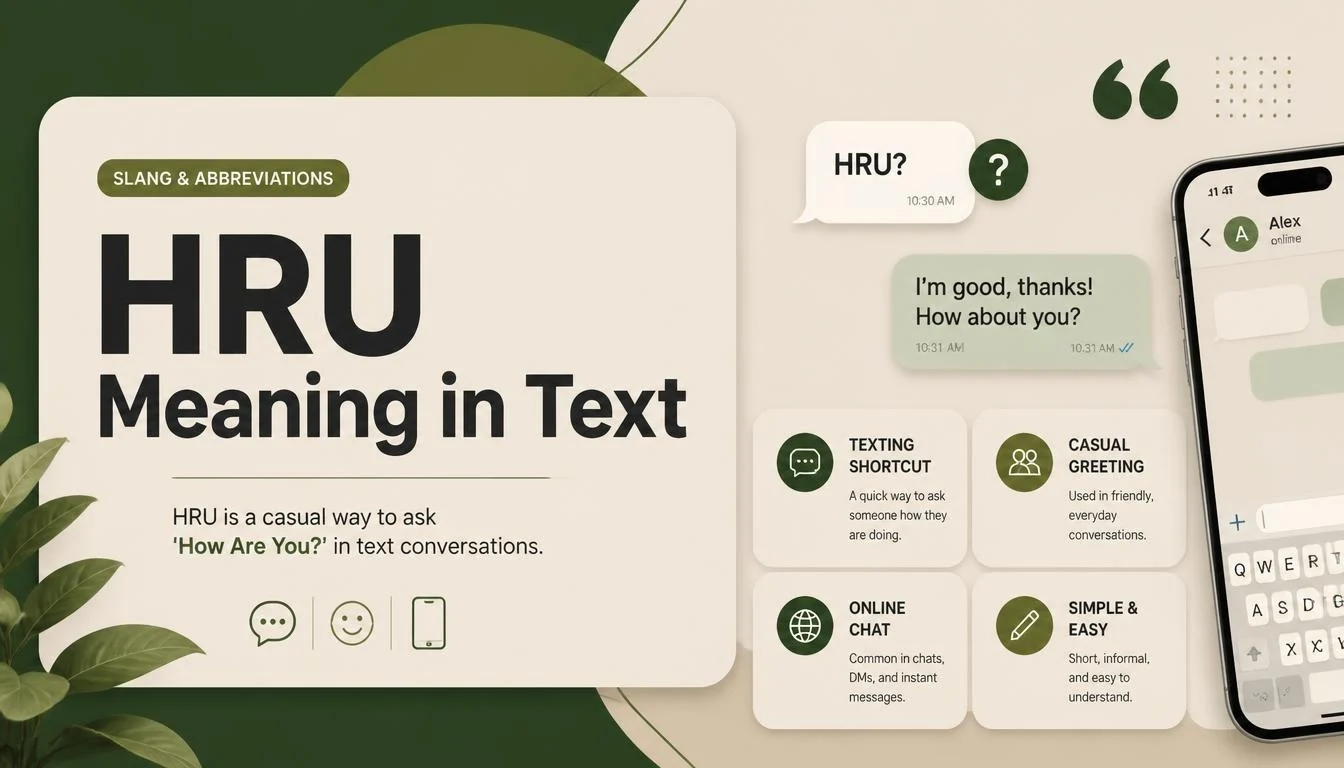
HRU means “How Are You?” in text messages and online chats. People use this abbreviation to ask how someone is feeling or what they’re doing. For example, if someone texts “Hey, HRU?” they’re simply asking how you’re doing.
The abbreviation HRU meaning in text is quite simple. It stands for “How Are You?” and is commonly used in text messages, social media chats, and casual online conversations. Instead of typing the complete question, people use these three letters to check in with someone quickly.
You’ll often see HRU in conversations between friends, family members, classmates, or people getting to know each other. It’s a casual and friendly way to start a conversation or show interest in someone. Depending on the context, you can reply with something like “I’m good, hbu?” or “Doing great, thanks!”
What Does HRU Mean in Text?
If someone sends you HRU, they’re asking how you’re doing. It’s a shortened version of “How Are You?” that makes texting quicker and easier.
For example, a friend might message you:
“Hey! HRU?”
They’re simply checking in and giving you a chance to share how you’re feeling. You can answer with something as simple as “I’m good, thanks. How about you?”
HRU is common in casual digital conversations. It isn’t usually appropriate for formal emails, business messages or professional communication.
The abbreviation can also help someone restart a conversation. If you haven’t spoken to a person in a while, HRU gives you an easy way to say hello.
What Does HRU Stand For?
HRU stands for How Are You?
Each letter represents part of the original question:
| Letter | Meaning |
|---|---|
| H | How |
| R | Are |
| U | You |
The abbreviation uses the letter R to represent the word “are” because R sounds like the word’s name when spoken.
Similarly, U represents “you.” This texting style became popular because it saves time and reduces typing.
You may also see the same phrase written as:
- How are you?
- How r u?
- Hru?
- HRU
All these versions communicate the same basic question. However, HRU is shorter and often feels more casual.
What Does HRU Mean in Different Conversations?
The meaning of HRU generally stays the same across messaging apps. However, the reason someone sends it can depend on your relationship and the conversation.
HRU in Regular Text Messages
In everyday texting, HRU is usually a friendly way to check on someone.
A friend might send it after saying hello. Someone you know casually might use it to begin a conversation.
Example:
Person A: Hey, HRU?
Person B: I’m doing pretty well! What about you?
Person A: I’m good too. Just relaxing at home.
Here, HRU works as a simple conversation starter. It doesn’t suggest anything romantic by itself.
HRU on Snapchat
On Snapchat, HRU often appears in quick messages between friends or people getting to know each other.
Someone might send HRU after adding you or replying to your story. They may want to start chatting without making the first message feel too serious.
Example:
Person A: Heyyy, HRU?
Person B: Pretty good! Just watching Netflix. You?
The message is casual and friendly. Its exact tone depends on the person and your existing relationship.
HRU on Instagram
On Instagram, HRU can appear in direct messages after someone reacts to your story or starts a new conversation.
For example, someone might reply to your travel picture with:
“Looks amazing! HRU?”
They may be showing interest in your life and trying to keep the conversation going.
HRU on WhatsApp
People also use HRU on WhatsApp when chatting with friends, relatives or acquaintances.
It can be a quick check in after some time apart. You might receive it from someone who wants to know how things are going.
Example:
Friend: Hi! HRU these days?
You: I’m good. Just busy with work lately. How about you?
The abbreviation keeps the conversation relaxed and informal.
What Does HRU Mean From a Girl?
When a girl texts you HRU, she is usually asking how you’re doing.
She might be checking in, starting a friendly conversation or giving you an opportunity to talk. If you already know each other, it could simply be her usual texting style.
For example:
Girl: Hey, HRU?
You: I’m good! How’s your day going?
Girl: Pretty good. Just got back from college.
This is a normal friendly exchange. You shouldn’t assume she is flirting just because she used HRU.
Look at the rest of the conversation to understand her tone. If she asks personal questions, keeps the conversation going and shows genuine interest, those details may tell you more.
What Does HRU Mean From a Guy?
When a guy sends HRU, he is generally asking how you’re doing.
He might be saying hello, checking in after a busy day or trying to start a conversation. The abbreviation doesn’t automatically mean he has romantic feelings.
Example:
Guy: Hey, HRU?
You: I’m doing great. What about you?
Guy: Not bad. Just finished work.
If he continues asking questions and seems interested in talking, he may want to get to know you better. However, the meaning depends on the overall conversation rather than those three letters.
Is HRU Flirty or Just Friendly?
HRU is usually friendly rather than flirty.
It’s a simple question that people use to check on someone or start a conversation. It doesn’t carry a romantic meaning on its own.
However, the context can change how the message feels.
Consider these two examples:
Friendly conversation:
“Hey HRU? Haven’t talked to you in a while.”
Potentially flirty conversation:
“HRU? I’ve been waiting to talk to you all day 😊”
The second message feels more personal because of the additional words and emoji. The abbreviation itself still means “How Are You?”
If you’re unsure about someone’s intentions, pay attention to their overall communication. Notice whether they make an effort to talk, ask about your life and respond thoughtfully.
One short message isn’t enough to determine someone’s feelings.
How to Respond to HRU in Text
The best response depends on how you feel and who sent the message. You don’t need to write a long reply. A natural answer is usually enough.
Here are several ways to respond to HRU in different situations.
1. Casual Replies to HRU
If a friend or acquaintance sends HRU, keep your answer simple.
Try these responses:
- I’m good, thanks! You?
- Doing great. How about you?
- Pretty good, just chilling.
- I’m fine. What’s up?
- Not bad! How’s your day?
- All good here. What about you?
- Doing well, thanks for asking.
These replies answer the question and give the other person a chance to continue chatting.
2. Funny Replies to HRU
If you’re talking to someone with a good sense of humor, a funny answer can make the conversation more entertaining.
You could say:
- Surviving one day at a time!
- Still alive, so that’s a win.
- Better now that you texted.
- Running on coffee and good vibes.
- Mentally on vacation.
- Just pretending to have my life together.
- Somewhere between amazing and exhausted.
Choose a response that matches your personality. A funny reply works best when it feels natural rather than forced.
3. Flirty Replies to HRU
If you like the person and want to add a little flirtation, try a playful response.
Here are some ideas:
- Better now that you’re here.
- I was good, but now I’m smiling.
- Pretty good. Missing someone though.
- Great! What about you, cutie?
- Even better after your message.
- Doing fine. How’s my favorite person?
- Good, but talking to you would make it better.
These responses show interest without making the conversation too serious.
Use them when you already have a comfortable connection. If you’re still getting to know each other, a lighter reply may feel more appropriate.
4. Cute and Sweet Replies to HRU
A sweet response can help you sound warm and thoughtful.
Try one of these:
- I’m doing good. Hope you are too!
- Much better after hearing from you.
- I’m happy today. How about you?
- Pretty good, thanks for checking on me.
- Doing well! Sending you good vibes.
- I’m fine. How has your day been?
- All good here. Hope everything’s great with you.
These replies are useful when someone is being kind or checking in on you.
5. Short Replies to HRU
Sometimes you don’t have much to say. That’s perfectly fine.
You can respond with:
- Good, u?
- Fine, hbu?
- Great!
- Not bad.
- All good.
- Pretty okay.
- Can’t complain.
- Doing well.
Short replies are useful for quick conversations. However, if you want to keep chatting, add a question at the end.
For example, “Good, u?” gives the other person an easy way to respond.
6. Replies When You’re Not Doing Well
You don’t have to pretend everything is perfect when someone asks HRU.
If you’re having a difficult day, you can answer honestly without sharing more than you’re comfortable with.
Some natural responses include:
- Honestly, it’s been a long day.
- Not the best, but I’m managing.
- A little tired today.
- I’ve had better days.
- Feeling a bit stressed lately.
- I’m okay. Just dealing with a few things.
- Could be better, but thanks for asking.
If the person is someone you trust, you might want to explain what’s happening. Otherwise, a short answer is enough.
HRU Conversation Examples
Seeing HRU in a real conversation makes its meaning easier to understand. Here are a few examples of how people might use it.
Example 1: Friends Checking In
Alex: Hey, HRU?
Sam: I’m good! Just finished dinner. You?
Alex: Doing great. Want to play a game?
In this conversation, HRU is a casual way to check in before making plans.
Example 2: Starting a New Conversation
Person A: Hey! HRU?
Person B: Pretty good. How about you?
Person A: I’m good too. What are you up to?
Here, the sender uses HRU to break the ice and begin chatting.
Example 3: A Friendly Check In
Person A: Haven’t heard from you in ages. HRU?
Person B: I’m doing well! Just been busy with work. How are things with you?
Person A: Same here. We should catch up soon.
The question helps reconnect two people who haven’t talked recently.
Example 4: A Flirty Exchange
Person A: Hey, HRU? 😊
Person B: Better now that you’re texting me.
Person A: Haha, smooth!
The playful reply gives the conversation a flirty tone. The emoji and surrounding messages help create that impression.
Example 5: A Short Everyday Chat
- Person A: HRU?
- Person B: Good, hbu?
- Person A: Pretty good!
This is a quick exchange between people who don’t need a detailed conversation.
Difference Between HRU, HBU and WYD
HRU, HBU and WYD are common texting abbreviations. They may appear together, but each one has a different purpose.
| Abbreviation | Full Form | Meaning |
|---|---|---|
| HRU | How Are You? | Asks how someone is doing |
| HBU | How About You? | Asks the other person the same question |
| WYD | What You Doing? | Asks what someone is doing right now |
| HYD | How You Doing? | A casual way to ask about someone’s well being |
| WSP | What’s Up? | A casual greeting or conversation starter |
| SUP | What’s Up? | Another informal way to start a conversation |
HRU vs HBU
HRU asks about someone’s general condition or feelings.
HBU means “How About You?” and is often used after answering someone else’s question.
Example:
- Person A: HRU?
- Person B: I’m great, HBU?
- Person B answers the original question and asks the same thing in return.
HRU vs WYD
HRU asks how someone is feeling or doing. WYD asks what someone is currently doing.
Example:
HRU: “How are you feeling today?”
WYD: “What are you doing right now?”
Someone might send both abbreviations in the same conversation:
“Hey, HRU? WYD today?”
They’re asking how you’re doing and what you’re up to.
HRU vs HYD
HRU and HYD are very similar. Both are casual ways to ask how someone is doing.
HRU expands to “How Are You?” while HYD expands to “How You Doing?”
The difference is mostly in wording and personal texting style. Both are informal and work well in everyday chats.
When Should You Use HRU?
HRU is suitable for relaxed conversations where people are comfortable using texting abbreviations.
You can use it when:
- Messaging friends or classmates.
- Checking in on someone you know.
- Starting a casual conversation.
- Replying to someone’s social media story.
- Reconnecting with an old friend.
- Chatting with someone who already uses informal language.
It can make a message feel quick and friendly.
However, consider the person you’re messaging. Not everyone understands texting abbreviations, especially if they don’t use them regularly.
When Should You Avoid Using HRU?
HRU isn’t the best choice for every situation.
Avoid it in formal emails, job applications, professional messages and conversations with people who expect polite, complete sentences.
For example, instead of writing:
“Hello, HRU?”
You could write:
“Hello, I hope you’re doing well.”
The second version sounds more appropriate in a professional setting.
You should also avoid using HRU when you need to communicate something serious. A complete question can sound more thoughtful and personal.
Is HRU Still Common in Texting?
Yes. HRU is still understandable and appears in casual digital conversations.
People often use shorter expressions because they make messages quick to type. However, texting habits vary between age groups, social circles and platforms.
Some people prefer HRU because it’s familiar and convenient. Others simply type “How are you?” or use alternatives such as “How’s it going?”
You might see HRU in text messages, social media comments and private chats. Its meaning remains the same across these platforms.
It’s also worth remembering that not every abbreviation is equally popular with everyone. If someone doesn’t understand HRU, writing the full question is an easy alternative.
FAQs
1. What Does HRU Mean in Texting?
HRU means “How Are You?” in texting. People use it to ask how someone is feeling or doing. It’s a casual abbreviation commonly found in messages and online chats.
2. What Is the Full Form of HRU?
The full form of HRU is “How Are You?” The letter H represents “How,” R represents “Are” and U represents “You.”
3. What Does HRU Mean From a Girl?
When a girl sends HRU, she is usually asking how you’re doing. It can be a friendly check in or a way to start a conversation. It doesn’t automatically mean she’s flirting.
4. What Does HRU Mean From a Guy?
When a guy texts HRU, he generally wants to know how you’re doing. He might be checking in or trying to start a conversation. The surrounding messages can help you understand his intentions.
5. Is HRU a Flirty Text?
HRU isn’t naturally flirty. It’s a simple question that people use in everyday conversations. However, it can feel flirtatious when combined with affectionate words, playful messages or romantic emojis.
6. How Do You Reply to HRU?
You can reply with “I’m good, thanks! How about you?” Other options include “Pretty good,” “Doing great” or “Not bad.” Choose a response that matches your mood and relationship with the sender.
7. What Does HRU Mean on Snapchat?
HRU means “How Are You?” on Snapchat. Someone might send it to start a conversation, reply to your story or check in after adding you.
8. What Is the Difference Between HRU and HBU?
HRU means “How Are You?” while HBU means “How About You?” HRU usually starts the question. HBU often returns the question after someone has answered.
9. Is HRU the Same as How R U?
Yes. Both expressions mean “How Are You?” HRU is a shorter version that uses three letters instead of the full phrase.
10. Is HRU Formal or Informal?
HRU is informal. It’s suitable for casual messages with friends and acquaintances. For professional emails or formal conversations, use the complete phrase “How are you?”
Conclusion
HRU means “How Are You?” and is a simple abbreviation used in everyday texting and online conversations. It’s a quick way to check in, greet someone or start a chat.
When someone sends you HRU, you can respond with a casual, funny, sweet or flirty message depending on your relationship. Just remember that HRU is usually friendly, not automatically romantic.
Now that you know what HRU means in text, you’ll know exactly how to understand it and reply naturally the next time it appears in your messages.